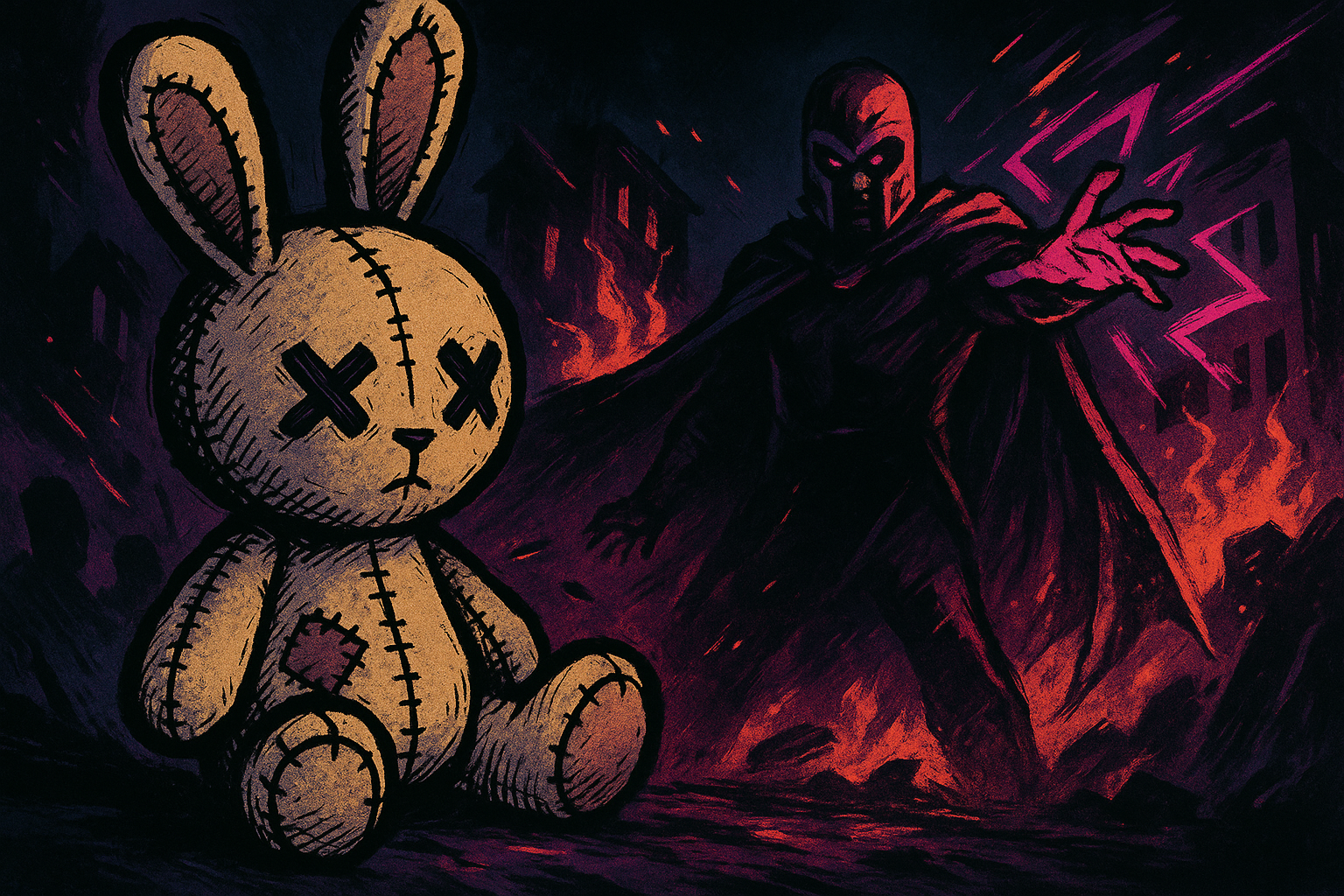
The X-Gene Diagnosis

Every X-Men character is a specific answer to the question: what do you do when your neurology makes you illegible to the world around you? Xavier says mask and assimilate. Magneto says never again. The rest of the roster is every possible position between those poles — and every position maps to a

The X-Gene Diagnosis

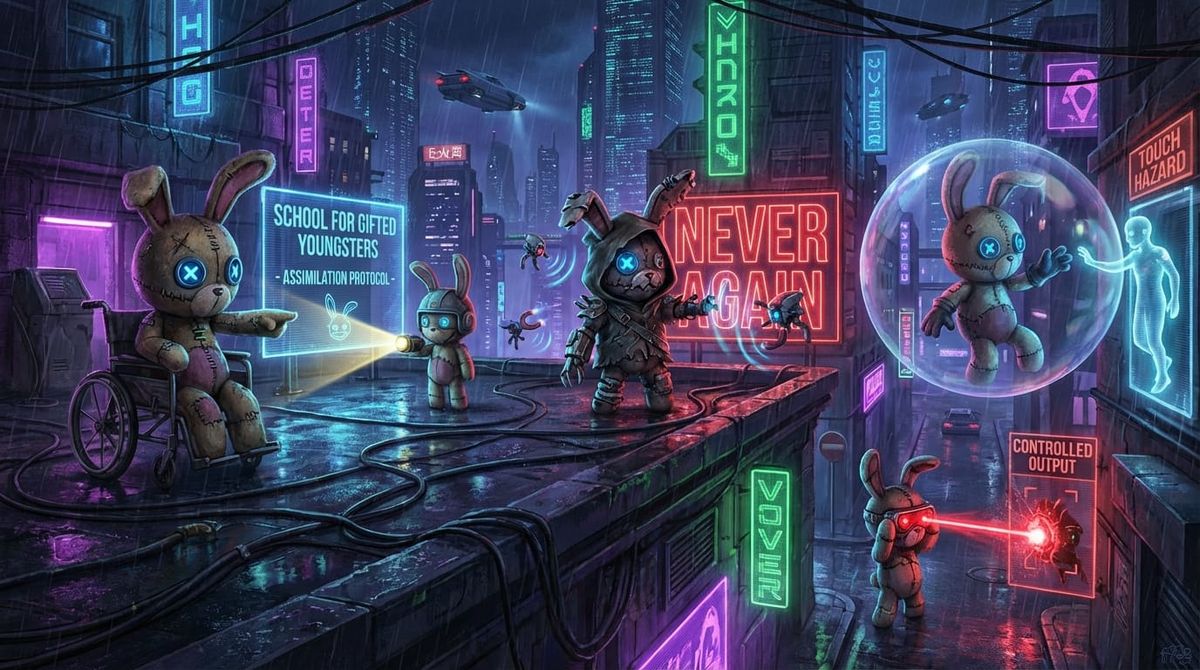
Every X-Men character is a specific answer to one question: what do you do when your neurology makes you illegible to the world around you?

Xavier’s answer is mask and assimilate. Build a school, train the mutation into something controlled and presentable, prove you deserve a seat at the table by never making anyone uncomfortable. Magneto’s answer is never again: he has seen what happens when a persecuted minority trusts in the good intentions of the majority, and he watched it happen in a death camp, so he is done waiting for permission to exist. Between those two poles sits every position neurodivergent people actually occupy: the ones who perform normalcy so well they forget they’re performing; the ones who can’t touch the world without taking it into them; the ones whose gift is indistinguishable from a wound; the ones who can predict what everyone around them will do next and are exhausted by knowing.

Marvel built the most detailed taxonomy of responses to systemic othering in popular fiction and called it a comic book.

This is not a coincidence. Stan Lee and Jack Kirby created the X-Men in 1963, one year before the Civil Rights Act. The metaphor was never subtle. But what the series actually built, over sixty years of storylines and roster rotations and editorial mandates and franchise sprawl, is something more granular than a civil rights allegory: it is a catalog of psychological strategies for surviving a world that is not built for you and does not want to be.

The X-Gene is not a superpower. It is a difference that the world classifies as dangerous before it knows anything else about you. The response to that classification; how you internalize it, fight it, hide from it, weaponize it, grieve it, celebrate it; is the entire drama of every character in the canon.

Xavier institutionalized the accommodation of neurotypical comfort. Magneto refused it so completely that he became the thing they feared. Rogue can’t turn her nervous system off; it absorbs everything it contacts. Storm conducts and cannot contain. Wolverine heals from every wound and cannot stop feeling them. Cyclops cannot look at the world without a filter between himself and everything he might destroy.

These are not metaphors. They are phenomenological descriptions of what it is to move through the world with a nervous system that does not match the default settings.

The X-Gene Diagnosis is a series about what those characters actually show us: not lessons, not archetypes, but specific psychological stances; argued in four colors, across sixty years, by writers who were mostly not trying to do what they ended up doing anyway.

Marvel accidentally wrote the most accurate neurodiversity literature of the twentieth century. They buried it under spandex and explosions. It’s still there.


The Series
The Most Beloved Mutant Leader Is a Predator and a Stooge
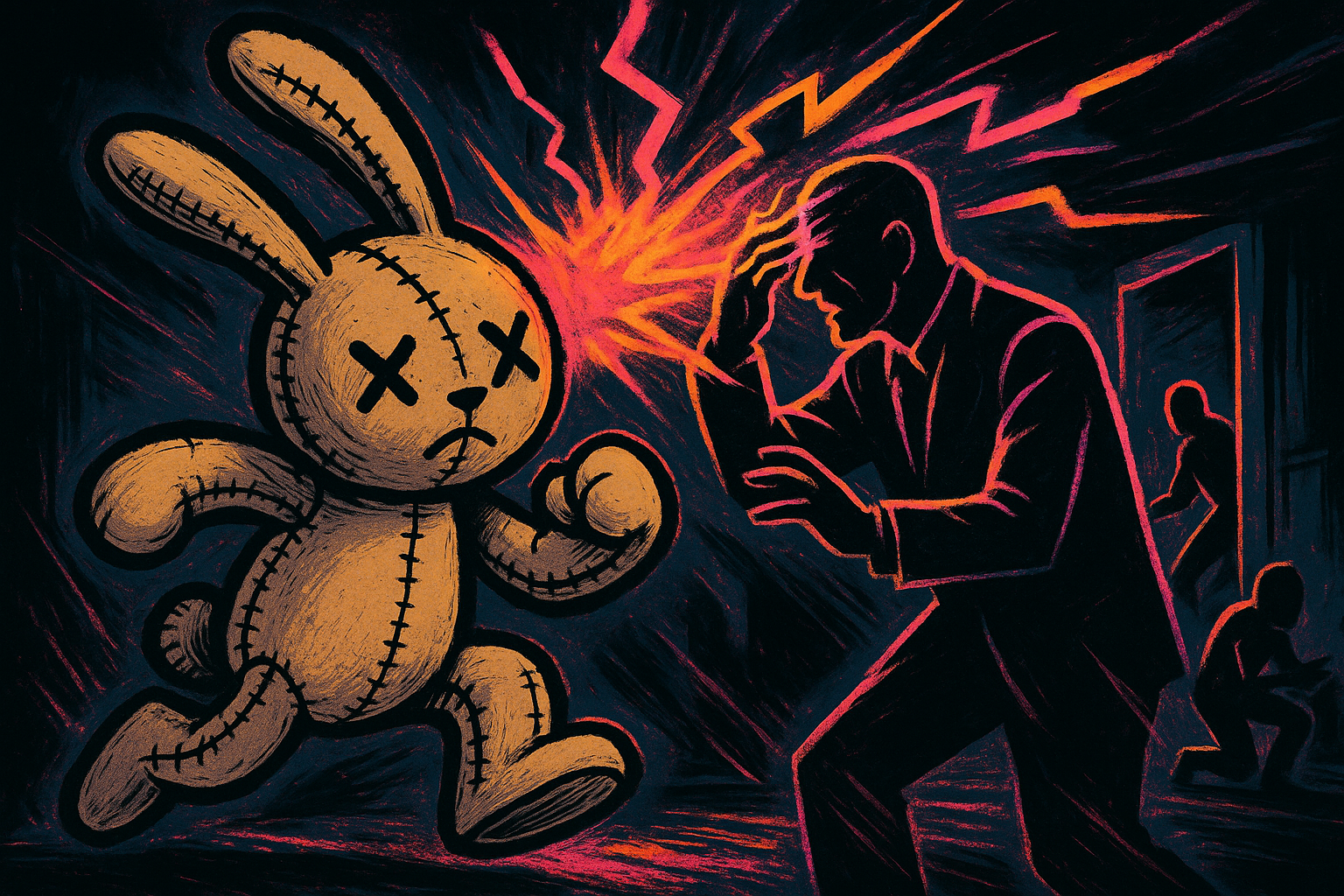
Charles Xavier has two functions in the X-Men universe: he grooms vulnerable children and he manages mutants on behalf of a world that wants them contained. He's celebrated for both. Telepathy as a power set that is structurally non-consensual. Cerebro as a surveillance apparatus. The recruitment pa
Magneto Was a Refugee Before He Was a Villain
A man whose difference got his family murdered; who watched the world try to repeat it; who gets called extreme for deciding never again. The Holocaust origin is not backstory — it is the entire thesis. Erik Lehnsherr is not radicalizing. He is updating his priors based on evidence. He is almost nev
Rogue Can't Be Touched and That's Not a Metaphor — It's a Diagnosis
Marvel's most precise depiction of sensory and emotional overwhelm has been running since 1981 and nobody called it what it is. The power: absorbs the psyche and abilities of anyone she touches; cannot turn it off; cannot choose not to. The isolation it produces — not chosen; not ideological; simply
Cyclops Is the Good Kid Who Never Got to Stop Performing
Scott Summers has had his powers since adolescence; can never turn them off; requires external containment just to function in the world; and spent his entire life being the responsible one because the institution needed a lieutenant. The visor as assistive technology. The burnt-out eldest child of
Wolverine's Entire Arc Is What Happens When You Can't Form a Continuous Self
The amnesia isn't incidental to Logan's character. It is his character. Everything else — the rage; the found family; the self-destruction — follows from it. A man who cannot build a continuous narrative self because his history keeps getting taken or erased. The berserker rage as a dysregulation pa
Jean Grey Was the Most Powerful Person in the Room and They Couldn't Handle It
The Phoenix arc is not a story about power corrupting. It is a story about what institutions do to exceptional people whose gifts exceed the institution's capacity to contain them. Jean as the most powerful mutant in the school; managed rather than developed from the beginning. Xavier's psychic bloc
Mystique Has Been Passing Her Whole Life and It's Killing Her
Raven Darkhölme can be anyone; which means she has never been allowed to just be herself — and after decades of passing; she's not entirely sure who that is. Shapeshifting as the ultimate masking metaphor: infinite social camouflage; zero authentic ground. The specific exhaustion of someone who adap
Beast Built His Career Proving He Was One of the Good Ones
Hank McCoy did everything right. Joined the establishment; earned the credentials; sat on the government commissions; kept trying to find a cure. It never worked. It was never going to work. The assimilationist arc in full: the intellectual who believed respectability would protect him. The physical
Storm Deserved Better Than Every Storyline She Got
The most powerful mutant on the team — a literal weather god — spent most of her narrative existence serving as atmosphere for someone else's arc. Ororo Munroe as the most powerful mutant in the X-Men and the most consistently sidelined. The goddess archetype as a trap: written as elemental and icon
The Morlocks Were Right
The mutants who couldn't pass went underground and built their own community rather than fight for acceptance from a world that was never going to give it. Marvel framed this as tragic. It was rational. The Morlocks as the mutants whose differences were visible; unmanageable; and unacceptable to bas
The Xavier School Is a Special Ed Classroom With a Blackbird
A private school that recruits traumatized minors; isolates them from their families; and trains them to be soldiers while calling it education. In any other context this is a scandal. What the school actually is as an institution: who it serves; who it excludes; what it asks of students. The pipeli
The Cure Is Always a Trap
Every arc where someone offers mutants a cure is the same arc: the institution offering to make you acceptable rather than making itself more accommodating. The Whedon cure arc, X3, the TV iterations — same structure every time. Maps to the cochlear implant wars, the ABA debate, the long history of
Why the X-Men Metaphor Breaks Down (And What That Tells You)
The X-Men allegory for marginalization is the most influential in popular fiction and it fails in specific ways that reveal exactly how the culture thinks about difference. Where it holds: the experience of being visibly other; institutional management of difference; the assimilationist vs. separati