Beast Built His Career Proving He Was One of the Good Ones

Hank McCoy has a PhD in biophysics. He has served on government commissions, worked inside the NSA, consulted for SHIELD, sat at negotiating tables with senators. He has published peer-reviewed research. He has apologized on behalf of mutantkind in venues where no apology was required. He has done everything the world asked of a mutant who wanted to be taken seriously, and the world has returned the favor by using him and discarding him every single time, with the clean conscience of institutions that believe they are doing you a favor.
The arc of Hank McCoy is the arc of respectability politics carried to its logical conclusion: a man who spent decades trying to earn his way into acceptability, whose body kept refusing to cooperate with that project, and who kept doubling down on the strategy even as the evidence accumulated against it. He is not a cautionary tale in the cheap sense. He is a structural argument. The story his comics tell, often without meaning to, is that no amount of credential, cooperation, or good behavior can make a body that reads as wrong read as right. The problem was never his behavior. It was that the people doing the reading were never going to change the criteria.
The Credential as Shield, and the Shield as Paper
The thing to understand about Beast’s relationship to institutions is that he didn’t stumble into them. He pursued them deliberately, strategically, with the clear-eyed understanding that a blue-furred mutant with enhanced strength and agility had exactly one viable path to legitimacy in a world that wanted to contain or eliminate him: become indispensable. Become so credentialed, so expert, so reasonable, that they couldn’t dismiss you. Become the mutant they could point to when they needed to prove they weren’t bigoted.
This is the assimilationist gambit, and it is not stupid. It has worked for people in analogous positions throughout history, in the sense that individual people have sometimes navigated impossible situations by becoming too useful to destroy. But the word “sometimes” is doing enormous work in that sentence, because the structural condition underneath never changes. The credential doesn’t change what you are. It changes what they can do with you, temporarily, until a better tool comes along or the political winds shift and suddenly your presence in the room is a liability rather than an asset.
Hank joined the Avengers. He joined the government’s mutant monitoring programs. He worked inside the Department of Defense. He sat on the scientific advisory boards that his own community should have been the subjects of, not the consultants for. Each of these affiliations was presented, in the comics and by Hank himself, as progress: a mutant at the table, a mutant with clearance, a mutant with the ear of the people making decisions. What they were, actually, was a mutant being useful to institutions that had no interest in changing the underlying situation. He got to be in the room. Mutant rights didn’t advance.
The pattern repeats with mechanical consistency across his publishing history. Hank integrates into an institution. He works earnestly within it. He provides expertise, credibility, a face that can go on television and speak calmly about the mutant situation without scaring the moderates. And then: the institution pivots, or the political situation changes, or a new threat arises that makes his presence complicated, and he finds himself outside again. Used. Grateful for having been included. Ready to try the next institution.
The Body That Won’t Cooperate
The detail that Marvel built into Hank McCoy that makes him genuinely interesting as a character study is this: his physical mutation keeps getting worse. The original Beast was a big guy with oversized hands and feet, acrobatic and strong but passably human at a distance. The Hank McCoy of later decades is covered in blue fur, has a cat-like face, stands closer to a predator than a professor. The mutation that he has spent his career trying to outrun by being intellectually impeccable has been visually escalating the whole time, making the project of appearing acceptable increasingly absurd.
This is either an accident of continuity or a piece of unconscious storytelling genius, and the effect is the same either way: the body is the argument. No matter how many commissions he sits on, no matter how measured and calm and credentialed he presents himself, the body is getting more illegible to baseline humanity with each passing decade. He cannot outperform his own genetics. The respectability project runs on the assumption that if you behave correctly, present correctly, produce the right credentials, you can achieve a stable acceptability. His body keeps calling that bluff. The mutation doesn’t care what he’s accomplished. It is doing what it does, and the world sees it before it sees anything else.
This is the experience that the neurodiversity framework keeps trying to articulate: that the accommodation being asked of disabled and neurodivergent people is to perform normalcy well enough that their difference stops being visible, stops being the first thing anyone reads. The problem with the accommodation is that it fails the people whose differences are most visible, most unmanageable, most resistant to performance. Hank’s mutation is the version of this that keeps escalating past the point where performance is possible. He can write the papers and sit on the panels and speak in the measured tones of a reasonable man, and he still walks into every room looking like something from a cautionary tale about genetic science.
The gap between those two realities, between what he has achieved and what the room registers when he walks in, is where respectability politics breaks down most completely. The credential was supposed to close that gap. Every committee appointment, every television appearance where he modeled calm and reason, every time he translated mutant experience into language that made moderates comfortable: all of it was meant to shift how the body was read. None of it did. The body preceded him everywhere. The reading happened before the curriculum vitae had a chance.
The Cure Obsession as Internalized Ableism
The through-line that defines Hank McCoy more than anything else, the one that makes him genuinely painful to read across his long history, is the cure obsession. He has spent decades trying to find a way to make himself genetically acceptable. The research effort is framed as scientific inquiry, as concern for his community, as pragmatic harm reduction for a world that isn’t ready. It is none of those things. It is a man trying to become something the world will accept because he has decided, somewhere below the level of conscious articulation, that the world’s refusal to accept what he is represents a fair assessment.
Internalized ableism doesn’t always announce itself. It often looks like reasonable accommodation of social reality: of course the world is structured this way, of course I need to adapt to it, of course finding a way to reduce the visible markers of my difference is just being practical. The logic sounds like pragmatism and feels like self-preservation. What it actually is, structurally, is the acceptance of the oppressor’s framing: that the problem is what you are rather than how you are being treated.
The cure obsession in the X-Men universe is one of the more precise articulations of this in popular fiction. The Mutant Cure storyline makes it explicit by giving the cure a physical form, a drug, a choice: do you take the thing that makes you legible to the world, or do you stay what you are? What makes Beast’s relationship to the cure different from, say, Rogue’s (who has genuine quality-of-life reasons to want control over her power) is that his mutation doesn’t prevent him from functioning; it prevents him from passing. He can do everything he needs to do. He cannot look like he belongs in the places where he wants to belong. The cure he is pursuing is not about functionality. It is about legibility.
The tragedy here is not melodramatic. It’s structural. Every hour of research he has put into the cure question is an hour not put into the political and legal infrastructure that would make the cure unnecessary. Every time he has tried to make himself more acceptable, he has implicitly endorsed the acceptability standard being applied to him. He has been the most cooperative possible participant in his own subjugation, and he has done it in good faith, which is the part that actually stings.
Every Institution Ends the Same Way
Run the tape on his institutional affiliations and a pattern emerges that is almost boring in its consistency. He joins. He contributes. He proves himself valuable. The institution uses what he’s good for and then, when the political cost of association rises above the benefit, he finds himself on the outside. The Avengers have cycled him in and out multiple times. His government positions have evaporated when administrations changed or when mutant politics made him a liability. Even the X-Men, the team closest to home, have had periods where his presence was complicated by his institutional entanglements, where his relationships with the government bodies supposed to be monitoring mutant activity made him more useful as an asset than as a colleague.
The most damning example is the Dark Beast storyline and its aftermath, but more broadly damning is the pattern of how he’s been written in the Civil War and its mutant-adjacent politics: Hank McCoy consistently positions himself on the side of registration, regulation, institutional oversight, because he genuinely believes that cooperation and good faith participation in the system is the path forward. And the system consistently takes that cooperation and produces nothing for mutants as a class. He is not wrong that the alternative, open conflict, has its own costs. He is wrong that the alternative to conflict is the kind of integration he keeps attempting, which isn’t integration at all but controlled usefulness.
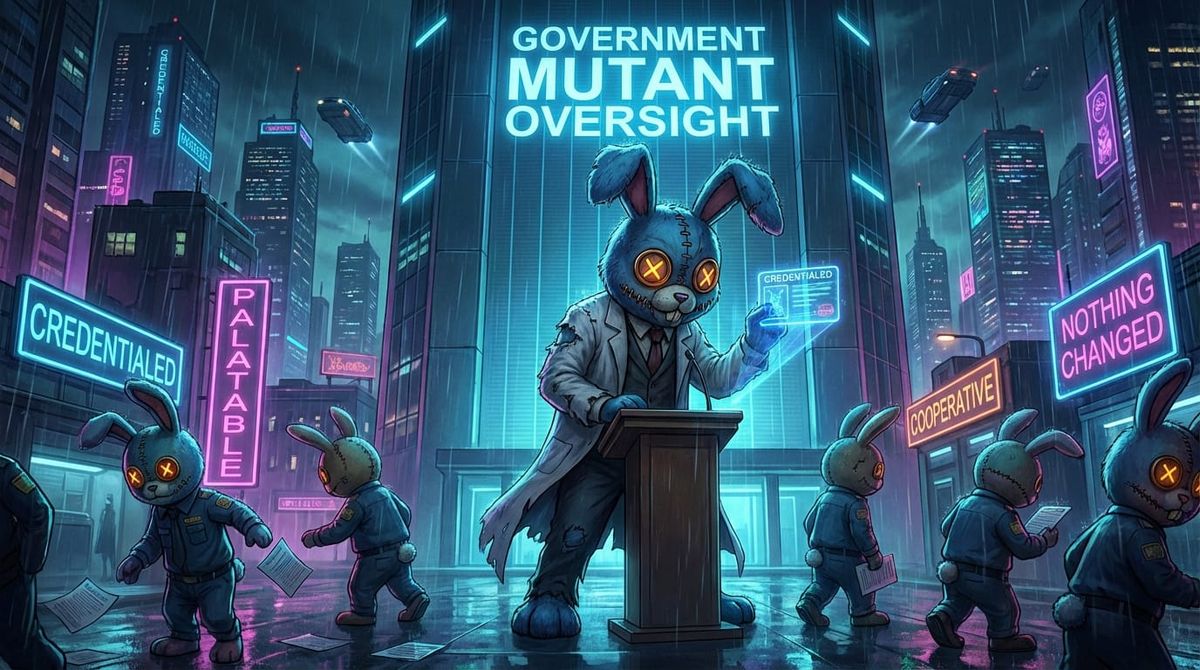
Credentialed. Palatable. Cooperative. And Nothing Changed.
There is a version of this analysis that would read Hank McCoy as simply stupid for not updating his strategy in the face of evidence. That reading is wrong and it is also ungenerous in a way that misunderstands what respectability politics actually is and why people choose it.
Respectability politics is not chosen because people are naive. It is chosen because the alternative is a direct confrontation with the power structures that hold you, and that confrontation is costly in ways that fall disproportionately on the people doing the confronting. Hank McCoy is not an idiot. He sees the pattern. He sees that every institution has used him and discarded him. He keeps trying anyway, because the alternative, which is to fully accept that no credential and no cooperation will change the underlying structure, requires him to abandon the project that has given his life its shape. He would have to become someone who accepts that he is what he is, that what he is is fine, and that the problem is structural rather than personal. He is not there yet. He may never get there. It costs him everything.
The cruelest irony in Hank McCoy’s biography is this: he is the most credentialed mutant in the X-Men roster. The most palatable. The most cooperative. The one who most consistently operates within systems rather than against them. And it has changed precisely nothing about his situation or the situation of mutants broadly. He has all the credentials and none of the protection. He has all the institutional access and none of the institutional change. He has made himself maximally acceptable and the terms of acceptability keep shifting to exclude him anyway.
This is what respectability politics ultimately delivers: a very sophisticated way of being failed. The failure is individualized, privatized, made to look like it was your fault for not trying hard enough or being credentialed enough or being cooperative enough. The structure that was always going to fail you gets to walk away clean. Hank McCoy has spent his entire career handing institutions the material they need to look like they tried. He has been, without meaning to be, their most useful tool in the project of containing mutants while appearing to include them.
He deserves better. He was never going to get it by asking politely.