Superheroes Are Our Modern Mythology (and What That Says About Us)
Superheroes do the job gods and demigods used to. The case, from Superman in 1938 to a Hugo-winning game about the underworld, and what our heroes say about us.
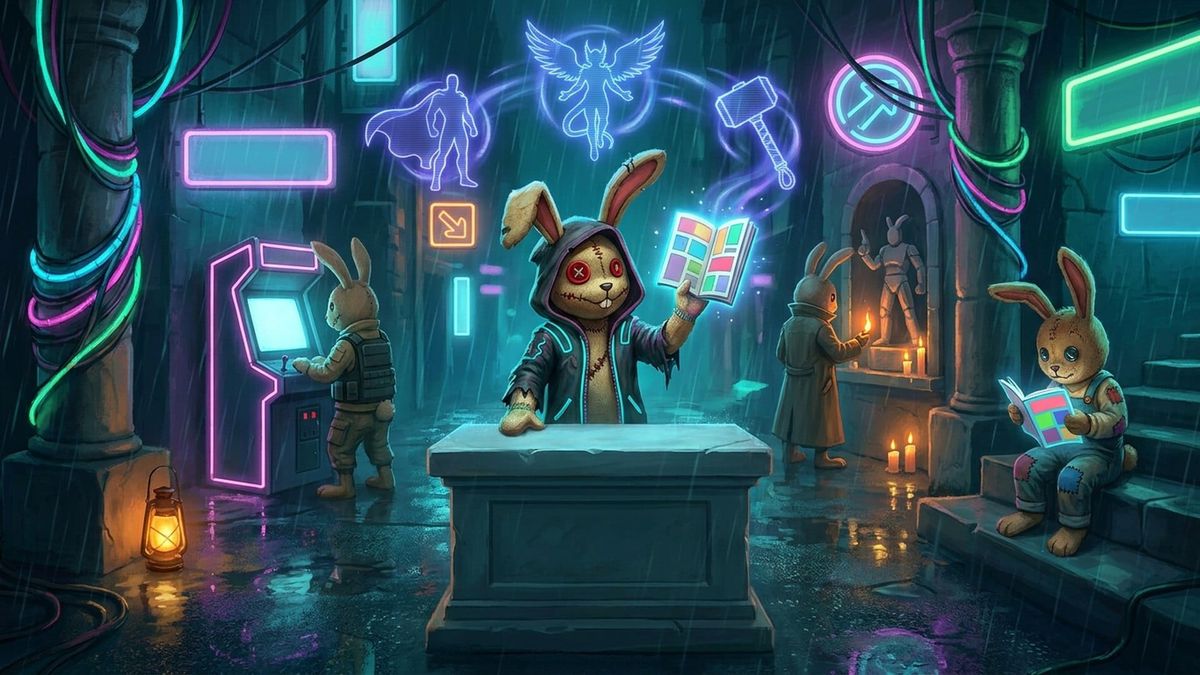
Superheroes are our modern mythology. That isn't a fan's exaggeration. It's how the people who make these stories describe what they're doing. Superheroes do the job gods and demigods used to: they give a culture larger-than-life figures for its hopes, fears and arguments about right and wrong. The difference is that our gods come with trademark notices and a release calendar.
The case in one sentence
Comics writer Grant Morrison made the argument outright in Supergods (2011). As WIRED summed up his thesis, superheroes have become "the spiritual paragons of our multimedia existence," with Superman cast as a 21st-century Christ. (WIRED) You don't have to believe in Superman for him to work on you. Nobody had to "believe in" Achilles for the Iliad, composed somewhere between the late 8th and mid 7th century BC, to shape more than 2,600 years of ideas about rage and honor. (Wikipedia, "Iliad")
Born in a crisis, like every good myth
Superman debuted in Action Comics #1, cover-dated June 1938 (Wikipedia, "Action Comics #1"), created by two young guys who met at Glenville High School in Cleveland, Jerry Siegel and Joe Shuster. (Wikipedia, "Superman") That's the tail end of the Depression, with fascism rising. A strongman from the sky who fights for the little guy is exactly the god a frightened country would invent.
Myths have always worked like that. They show up when people need a story big enough to hold what they're scared of. That's the premise of our whole Nerd section.
Then the old gods moved in
Marvel didn't even pretend. Thor, the actual Norse thunder god, showed up in Journey into Mystery #83 in 1962, from Stan Lee, Larry Lieber and Jack Kirby. (Wikipedia, "Thor (Marvel Comics)") The ancient myth got a costume and a monthly issue. Sixty years later, plenty of kids know Thor from the movies before they've heard of the Eddas.
And the blueprint underneath goes back further. George Lucas has said Joseph Campbell's The Hero with a Thousand Faces helped him shape Star Wars, and he later called Campbell his Yoda. (Joseph Campbell Foundation) Campbell's whole thesis was that the same hero story repeats across cultures. (Joseph Campbell Foundation) Hollywood just industrialized it.
Games are the new temple
If comics are the scripture, games are where people take part in the ritual. Hades, Supergiant's 2020 game about Zagreus, son of the god of the dead, trying to escape the underworld (Wikipedia, "Hades (video game)"), was named game of the year by more than 50 publications. (Supergiant Games) In 2021 it became the first video game to win a Hugo Award. (IGN)
Here's the speculation, flagged as speculation: playing through a myth may hit harder than hearing one. You don't watch Zagreus fail and try again. You are the one dying and going back, over and over. That's closer to an initiation rite than to a bedtime story.
What our heroes say about us
Every pantheon is a mirror. The Greeks got petty, horny, jealous gods because that's what they saw in power. What do we get?
- Batman: a billionaire who can only cope through violence and secrecy. We've argued his villains are really one dysfunctional polycule. For a darker cut of the same idea, see Bane and masochism. Our myths have always been kinky. Ask Zeus, or browse our kink field guide.
- The X-Men: a minority story that has stood in for civil rights, queerness and disability. It's powerful, and it breaks down in places, which is what happens when one myth has to carry every argument. Its favorite plot is a warning too: the cure is always a trap. Even the villain gets a case: Magneto was a refugee before he was a villain.
- Directors as priests: some filmmakers go straight for the sacred. Our Aronofsky Liturgy series reads his films as religious texts in disguise.
Our take: the shift from gods to superheroes swapped fate for origin stories. Greek heroes couldn't escape what the gods had decided. Ours get bitten, irradiated or orphaned, then choose what to do with it. That's a very modern belief, that trauma is a superpower if you make the right choices with it. Comforting, maybe. Also a little suspicious.
The bottom line
Superheroes aren't just entertainment that resembles mythology. They're doing mythology's job: telling a culture who to be afraid of, who to become, and what power costs. The capes are new. The job is very old. For the long reads that take each of these myths apart, browse the series index.
Sources
- Thill, S. (July 19, 2011). In Supergods, Grant Morrison Probes Superhero Myths. WIRED
- Wikipedia: Iliad
- Wikipedia: Action Comics #1
- Wikipedia: Superman
- Wikipedia: Thor (Marvel Comics)
- Joseph Campbell Foundation: Star Wars and the hero's journey
- Wikipedia: Hades (video game)
- Supergiant Games: Hades FAQ
- Bankhurst, A. (2021). Hades Makes History as the First Video Game to Win a Hugo Award. IGN
MoneySexNerd on Substack
The rabbit hole goes deeper.
This page is the field guide. The Substack is where the bunny gets weird: longer essays on sex, money and nerd culture, with more research, more opinions and nothing watered down for search engines.
Go deeper on Substack →Free to read. Unsubscribe whenever.