
Hotwife Dynamic, Explained: What It Means and How Couples Run It
A hotwife has sex with others with her partner's enthusiastic support, and it centers her pleasure. How it differs from cuckolding and what makes it work.

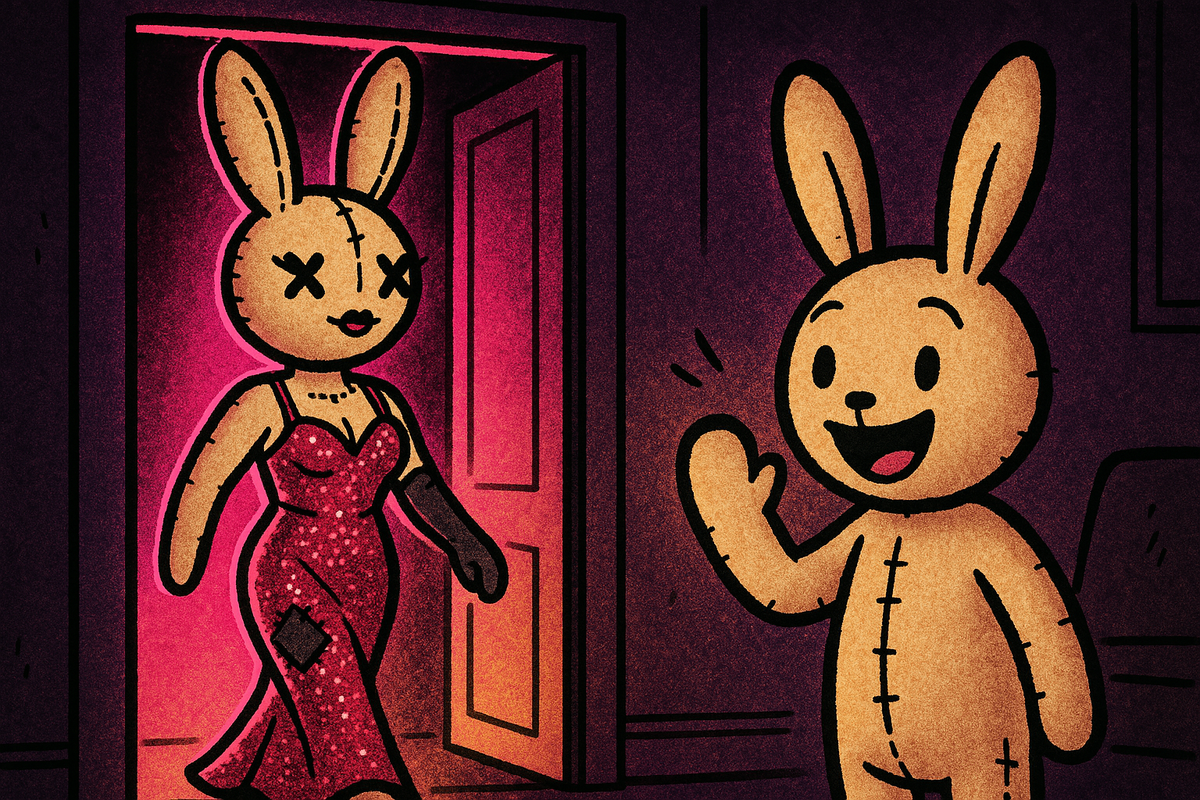
A hotwife is a married or partnered woman who has sex with other people with her partner's knowledge and enthusiastic support, and the whole arrangement centers her pleasure. It isn't cheating, and it isn't the same as cuckolding: most hotwife husbands feel pride or arousal, not humiliation.
It tends to work for couples who are secure and honest with each other, and to break the ones using it to cover problems. It's its own thing, with its own internal logic, and it works for more couples than most people assume.
What a Hotwife Is
The core elements:
Her pleasure is central. Unlike swinging, where both partners play, the focus is on her. She's the one having outside sex. His role is to witness, facilitate, or enjoy her enjoyment.
He knows and wants it. He's often the one who raised it. He may watch, hear about it afterward, or help choose partners.
Their bond is the context. The outside sex is meant to feed the couple's connection, not threaten it. She comes home to him. He's the one she tells.
The vocabulary, in a line each:
- Bull: the outside man she sleeps with, often confident and dominant in the scene.
- Stag: a husband who enjoys her being with others from a place of pride, arousal or control, with no humiliation.
- Vixen: the stag's partner; a term some couples prefer to "hotwife," often signaling that she and her stag play as a team.
- Cuck: a husband for whom humiliation or "losing" to the other man is part of the appeal.
There's more on the husband's side in the stag spectrum piece, and on hers in hotwife liberation.
Hotwife vs. Cuckold vs. Stag/Vixen vs. Swinging
The labels overlap and couples use them loosely, but the rough shape is this:
| Dynamic | Who has outside sex | His role | Humiliation involved? |
|---|---|---|---|
| Hotwife | Her | Supporter, watcher or listener | Usually not |
| Cuckold | Her | Watcher, often "inadequate" by design | Yes, central |
| Stag/Vixen | Her | Proud, often in control; sometimes joins in | No |
| Swinging | Both | Plays with others too | No |
If humiliation is the point, you're in cuckold territory. If he's having outside sex too, you're closer to swinging. Most hotwife couples sit in the stag range: pride and pleasure, not humiliation. All of it lives under the broader umbrella of ethical non-monogamy, which is more common than people assume. In two US national samples, Amanda Haupert and colleagues (2017, Journal of Sex & Marital Therapy) found that about one in five single adults had engaged in consensual non-monogamy at some point. If you're still working out which label fits the two of you, here's hotwife vs cuckold vs stag & vixen, side by side.
Why It Works When It Works
Compersion. Some men genuinely feel joy watching their partner experience pleasure, even pleasure from someone else. Compersion is often described as the opposite of jealousy, and people who feel it strongly gravitate toward this dynamic. It's starting to be studied: Sharon Flicker, Marie Thouin-Savard and Michelle Vaughan (2022, Archives of Sexual Behavior) looked at what makes compersion easier or harder for people in consensually non-monogamous relationships. Nobody yet knows why some people feel it strongly and others barely at all.
Arousal he didn't expect. Some men find the thought of their wife with another man intensely arousing in ways that surprise them. Evolutionary psychologists have a story for this: sperm competition. The evidence is suggestive, not proven. Nicholas Pound (2002, Evolution and Human Behavior) found men showed more interest in erotic images that implied sperm competition. Sarah Kilgallon and Leigh Simmons (2005, Biology Letters) found men produced ejaculates with a higher share of motile sperm after viewing such images. Robin Baker and Mark Bellis's (1993) claims that men adjust ejaculates to competition risk are widely cited and widely contested. Read it as a plausible piece of the puzzle, not the explanation.
Watching. For men with voyeuristic tastes, watching someone you love is hotter than watching anyone else. Distance lets you see what you can't see from inside the scene.
Her freedom. For her, it can be genuinely liberating. She's desired, she has options, and her sexuality is celebrated rather than policed. The shift is from being the object chosen by one man to being the subject choosing among several. For women raised to treat their desire as something to manage, a husband who openly wants her to want can feel like permission she never got.
The homecoming. The level of trust required, and the communication involved, can increase intimacy. She trusts him to stay secure while she explores. He trusts her to put their relationship ahead of the novelty. And after she's with someone else, she comes home to him. That reunion, reconnecting and sharing the experience, often has more intensity than the outside encounter. The homecoming becomes the point, not the departure.
Who It Works For
Attachment theory, which grew out of Cindy Hazan and Phillip Shaver's (1987) work on adult romantic attachment, is a useful filter here. (There's a longer look at it in attachment styles as a relationship filter.)
Secure husband, secure wife: where it thrives. Both are secure in the relationship, both are turned on by the dynamic, both communicate well. Neither needs restriction as proof of loyalty.
Anxious husband: dangerous territory. The fantasy may be hot, but reality often triggers catastrophic jealousy. "I thought I wanted this, but now I can't stop picturing her with him" is a common trajectory.
Avoidant husband: might like the distance it creates, and might use it to escape intimacy rather than deepen it. Interestingly, Amy Moors and colleagues (2015, Journal of Social and Personal Relationships) found that attachment avoidance predicted willingness to try consensual non-monogamy, though not actually doing it. Wanting the idea and living it are different things.
Her attachment matters too. An anxious wife may not enjoy it even if her husband pushes for it. She may want reassurance that she's enough for him, and this sends the opposite signal. A secure wife, or one who values independence, often does better with the freedom the role provides.
None of this is destiny. People move toward security over time, and some couples use the hard conversations this dynamic forces as a way of getting there. But if either of you recognizes yourself in the anxious description, start much slower than you think you need to, and treat a bad reaction as information rather than a failure to push through.
Setting It Up
Couples who last tend to treat the logistics as part of the erotic project, not a buzzkill. Before anything happens:
Rules and vetoes. Agree what's allowed (kissing, oral, intercourse, overnight stays), where, and how often. Each of you should hold a veto, on a particular man or on a particular night, that can be used without a fight. Write the agreements down if it helps, and revisit them.
Sexual health. STI testing for everyone involved before barriers come off, condoms with outside partners as the default, and an honest conversation about what happens if something breaks or a result comes back positive. Talk about contraception too.
How much he hears or sees. Some husbands watch. Some want every detail afterward. Some want only to know it happened. None of these is more "real" than the others; what matters is that you've agreed which it is, and that she's comfortable with it. Does the husband have to watch? No.
Treating the other man decently. The bull is a person, not a prop. Be clear with him about what this is and isn't, what's available and what's not. He might develop feelings; he might want more time than you're offering. Some couples prefer one-time encounters to avoid that; others build ongoing connections. Both can work, but ongoing requires more emotional maturity from everyone.
A first meeting in public. Drinks before anything else, ideally with both of you there or with him knowing exactly where she is. It lets her decide whether she actually likes the man, gives everyone a chance to back out without awkwardness, and keeps basic safety in place when meeting a stranger from an app.
Her consent, every time. Her yes is ongoing, per partner and per occasion. Agreeing in principle doesn't oblige her in practice, and either of you can pause or end the arrangement whenever you want.
Common Pitfalls
Fantasy isn't reality. The fantasy runs in perfect conditions: you imagine the best version, skip the awkward parts and stay emotionally composed throughout. Reality includes the moment she looks at him the way she used to look at you, and the three hours afterward when you can't stop replaying it. Test in steps: flirting while you watch, then a kiss, then more. If mild versions trigger catastrophic jealousy, full ones will flatten you.
Escalation. What was exciting becomes normal; what was normal becomes boring. The temptation is to escalate: more partners, more extreme scenarios. Better to cycle than escalate. Take breaks. Let the dynamic go quiet, then bring it back. The couples who sustain this aren't pushing boundaries every month; they know when to pull back.
Her veto. His arousal can create subtle pressure. He's excited, she doesn't want to disappoint him, she goes ahead without really wanting to. That's the failure mode. She needs ironclad permission to say no without penalty: no withdrawal, no sulking, no guilt trips. If his happiness depends on her performing, it's not a dynamic. It's coercion dressed up in kink.
Slut-shaming whiplash. In bed with her husband she feels like a goddess. At work the next day, the voice in her head calls her what her mother would. Both are real. He can help by affirming her and making it clear nothing she's doing is wrong, but he can't undo years of conditioning alone. Ongoing conversation helps; so, for some, does therapy or talking with other women in similar arrangements. There's more on how this affects the couple's bond in the cuckold couple bond.
Empowering or Objectifying?
The answer depends on the people, not the structure.
Empowering when she wants it, initiates it, controls it and enjoys it. She chooses the partners and decides when, where and how. Her husband's role is support, not control. In a culture where women's sexual freedom is still policed by everyone from parents to purity culture to romantic partners, a woman whose sexuality belongs to her, exercised in full view of a partner who celebrates it, is a genuine transgression of the rules designed to limit her.
Objectifying when it's his fantasy imposed on her. She's tolerating the encounters because he wants the visual, and her pleasure is incidental or absent. She might technically consent, but the consent is shaped by fear of losing him or a sense that his satisfaction outranks her autonomy.
From the outside, the two can look identical.
The diagnostic question: if he lost interest in the dynamic, would she continue it? If yes, she's doing it for herself, and his enthusiasm is a bonus. If no, she's performing his fantasy. The first is empowerment. The second is objectification with extra steps.
FAQ
Is a hotwife the same as a cuckold? No. In both, the wife has sex with other men, but cuckolding centers the husband's humiliation, while a hotwife arrangement usually centers her pleasure and his pride. Some couples drift between the two; the labels describe emphasis, not fixed categories.
Is it cheating if he agrees? No. Cheating is a breach of the agreement you have, and here the outside sex is the agreement. It can still become a betrayal if someone breaks the rules you set, like a secret meeting or a crossed line.
Does the husband have to watch? No. Some husbands watch, some hear every detail afterward, and some prefer to know only that it happened. What matters is that you've both agreed which version you're running.
What is a "bull"? The outside man she sleeps with. In some couples he's simply a lover; in others he plays a more dominant role. Either way, he deserves honesty about what the arrangement is and isn't.
Do hotwife marriages last? Some do and some don't. We couldn't find any study that measures how many. The pattern couples describe is consistent: it tends to strengthen secure, honest relationships and to speed the collapse of ones already in trouble.
What if one of us wants to stop? Then you stop. Either partner can end it at any point, and the other's job is to accept that without punishment. Many couples pause and return later; some close the door for good, and the marriage is fine.
It's not for everyone. It's not supposed to be. But for couples who fit the profile (both genuinely want it, his security can handle the reality and not just the fantasy, her pleasure is real rather than performed), it can be a source of connection, excitement and intimacy that monogamy doesn't offer. Secure attachment makes it possible. Anxious attachment usually makes it destructive. Knowing which one you're bringing is everything.
Studies referenced
Peer-reviewed and primary sources for the findings paraphrased above.
- Haupert et al. (2017), Journal of Sex & Marital Therapy
- Flicker, Thouin-Savard & Vaughan (2022), Archives of Sexual Behavior
- Pound (2002), Evolution and Human Behavior
- Kilgallon & Simmons (2005), Biology Letters
- Baker & Bellis (1993), Animal Behaviour
- Moors et al. (2015), Journal of Social and Personal Relationships
- Hazan & Shaver (1987), Journal of Personality and Social Psychology
MoneySexNerd on Substack
The rabbit hole goes deeper.
This page is the field guide. The Substack is where the bunny gets weird: longer essays on sex, money and nerd culture, with more research, more opinions and nothing watered down for search engines.
Go deeper on Substack →Free to read. Unsubscribe whenever.