Bruce vs Batman: The Real Dissociation
The mask isn't Batman — it's Bruce Wayne. That's not an edgy take; it's a diagnosis. Structural dissociation as a trauma split, made permanent.

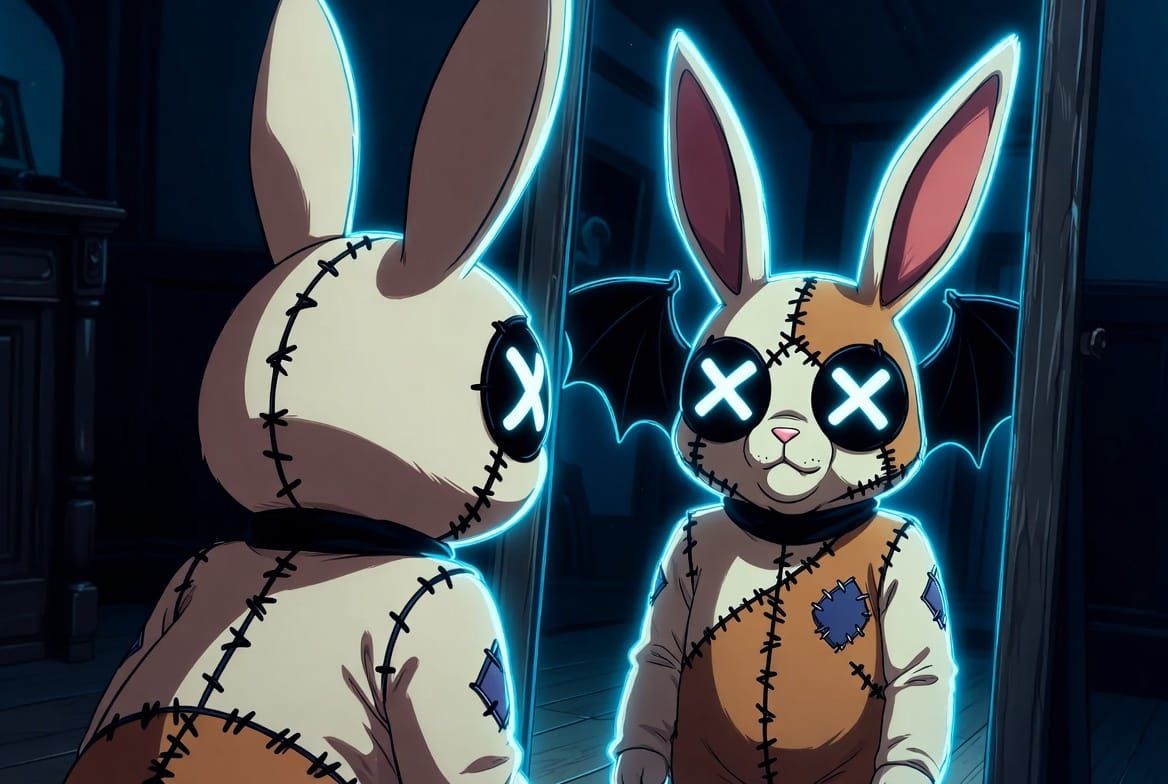
The common edgy take: "Batman is the real identity. Bruce Wayne is the mask."
This gets repeated like it's insight. It's not. It's the surface of something much darker.
The real insight is diagnostic. Bruce Wayne has structural dissociation. The split between Bruce and Batman isn't a choice or a strategy—it's a trauma response that has become permanent architecture. Two identity states that don't fully integrate. A fragmented self pretending to be a coherent person.
The edgy version makes it sound cool. The clinical version makes it sound like what it is: a man who broke as a child and never put himself back together.
How Dissociation Forms
When children experience overwhelming trauma, the psyche sometimes splits. The part that experienced the trauma becomes walled off. A new part develops to handle daily life. The split is protective—it allows the child to continue functioning by compartmentalizing the unbearable.
In normal development, these parts eventually integrate. The adult contains multitudes but experiences themselves as one self.
In structural dissociation, the split persists. The parts remain separate. They may have different memories, different affects, different capabilities. The person isn't "faking" when they shift between parts—they're accessing genuinely different self-states.
Bruce Wayne watched his parents murdered when he was eight. He experienced overwhelming trauma without the psychological resources to process it. And then, over years, he built two identity states around that split.
The split wasn't immediate. Young Bruce probably experienced years of confusion—trying to be normal while carrying enormous grief, trying to fit into society while feeling fundamentally different from everyone around him. The decision to become Batman gave structure to the split. Now there was a clear division: Bruce is the face for the world, Batman is the response to the trauma. The ambiguity resolved into architecture.
The Architecture
Bruce Wayne: The wealthy socialite. Charming, shallow, frivolous. Dates supermodels. Attends galas. Seems like he's never had a serious thought.
Batman: The vigilante. Grim, focused, relentless. Works alone. Processes the world through threat assessment. Seems like he's never experienced joy.
These aren't performances. They're alters. Different self-states with different access to emotion, different social presentations, different relationships to the trauma.
Bruce-the-socialite can function in daylight society because he doesn't carry the weight. The trauma belongs to Batman. Bruce gets to be light because Batman holds the dark.
Batman can function in extreme violence because he doesn't carry the tenderness. The vulnerability belongs to Bruce. Batman gets to be hard because Bruce holds the soft.
Neither is the "real" person. Both are real. Neither is complete.
The Integration That Never Happens
Healthy trauma recovery involves integration. The split parts reunite. The adult self contains both the wounded child and the protective adaptations, held together in coherent identity.
Integration doesn't mean the different aspects disappear. It means they become accessible to one unified self. An integrated Bruce Wayne could access both his capacity for lightness and his capacity for intensity. He could be strategic when needed and tender when appropriate. He could choose which mode to inhabit rather than switching automatically based on context.
Batman will never integrate. The entire premise of the character is permanent dissociation.
If Bruce processed his trauma—really processed it, with a good therapist and enough time—he'd stop being Batman. The mission is the dissociation. The nightly violence is the split externalized. The inability to be present in normal human relationships is the fragmentation showing.
To become whole, he'd have to stop. And he can't stop. The comics won't let him, but also the character won't let himself. Stopping would mean feeling everything he's been not-feeling for decades.
The "Mask" Question
People debate which is the mask: Bruce or Batman.
The answer is both. And neither.
Bruce-the-socialite is a mask worn by the wounded child, who constructed a self that could move through the world without showing damage.
Batman is a mask worn by the wounded child, who constructed a self that could act on rage without being destroyed by it.
Underneath both masks is an eight-year-old who watched his parents die and never had the support to metabolize that experience. That child is the real person. That child hasn't aged in decades. That child runs both alters from the shadows.
The sophistication of Bruce Wayne and the tactical genius of Batman are both built on a foundation of frozen childhood trauma.
Why He Can't Be Intimate
Dissociation makes intimacy impossible. Here's why:
Intimacy requires a whole self meeting another whole self. It requires being present, being known, allowing vulnerability.
Bruce can't be present because he's not one person. He's two people switching contexts. Selina might connect with Bruce-the-daylight-self, but that self doesn't have access to the Batman material. She might connect with Batman-the-vigilante, but that self has armored away the tenderness.
This is why the wedding fails in Tom King's run. The marriage would require one integrated person making a commitment. But there's no one integrated person to make that commitment. Bruce wants to marry her. Batman can't risk the vulnerability. The two parts pull in opposite directions, and since they're not in communication, neither can override the other. The relationship falls into the gap between selves.
She can't meet all of him because all of him doesn't exist in one place at one time.
This is true of everyone he tries to connect with. Alfred knows both parts but enables the split. Dick Grayson knows both parts but models his own dissociation on Bruce's. Selina knows both parts but can't get them in the same room.
No one can love Bruce Wayne because Bruce Wayne is a collection of parts pretending to be a person.
The Night and Day Split
The split maps onto literal night and day.
Batman operates at night. The wounded, rage-filled, violence-capable part emerges when the sun goes down. Darkness gives permission for the dark material.
Bruce operates during the day. The performing, functioning, mask-wearing part handles daylight society. Light requires the appearance of normalcy.
This isn't poetic—it's structural. The alters are tied to external conditions. Context triggers the switch. Bruce doesn't choose when to be Batman; Batman emerges when the conditions call for him.
The Robins as Repetition
Bruce keeps collecting traumatized orphans and training them to be vigilantes.
This is repetition compulsion. He's recreating his own trauma, trying to master it by being the adult he didn't have. Each Robin is another wounded child who Bruce can shape—but shape into another dissociated vigilante rather than a whole person.
He's not healing the Robins. He's spreading the dissociation. He's creating more people like himself: split, unable to integrate, locked into the mission as a substitute for wholeness.
Dick becomes Nightwing—another night-named vigilante identity. Jason becomes Red Hood—a trauma identity built on death and resurrection. Tim becomes a detective—hypercognitive coping. Damian is raised from birth for violence.
Bruce's children are his dissociation, reproduced.
The Relationship to Reality
Structural dissociation affects reality testing. When you're not one coherent self, your relationship to what's real becomes complicated.
Batman believes things that Bruce knows are irrational. The mission will never end. Gotham will always need him. His methods work. These beliefs persist despite decades of evidence that the mission produces escalation, that Gotham's crime is structural, that his methods create the rogues gallery.
Bruce-the-socialite doesn't believe any of this. That part sees clearly. But that part doesn't have access to Batman's decision-making.
The split lets him maintain incompatible realities. Batman's world and Bruce's world don't have to cohere because they're held by different selves.
The Trigger Points
Watch what triggers the switch.
Violence, threat, crime—these summon Batman. Even during the day, even during a gala, if danger appears, the Batman alter comes forward. The trigger is threat.
Safety, intimacy, tenderness—these summon Bruce. Or try to. When someone reaches for vulnerability, the Bruce-self responds. But this self is weaker, less practiced, less sure of itself.
The imbalance is clear. Batman has been trained, practiced, reinforced. Bruce-the-vulnerable has been neglected, starved, pushed aside. The vigilante alter is dominant. The tender alter is vestigial.
The Case Studies
Different runs explore this split differently.
In Frank Miller's work, Batman has almost completely consumed Bruce. The socialite is a thin mask, barely maintained. The vigilante is everything.
In Scott Snyder's run, Bruce has moments of reaching for integration—the acknowledgment of family, the capacity for connection. But it never sticks.
In Tom King's run, the integration is explicitly attempted through the Selina relationship. The wedding would have been a moment of choosing wholeness. The wedding doesn't happen. Dissociation wins.
The pattern is consistent: every time Bruce approaches integration, something prevents it. The comics won't let him heal because a healed Batman isn't Batman.
What Integration Would Require
If Bruce were to integrate—really integrate—what would that look like?
He'd have to feel the original grief. Not act on it. Feel it. The eight-year-old's terror and sorrow would have to be experienced rather than defended against.
He'd have to retire the Batman alter. Not kill it—integrate it. The capacity for violence and discipline would remain, but not as a separate self. It would be one capability among many, held by a whole person.
He'd have to let someone know him. Really know him. Not the parts, but the person underneath trying to emerge.
He'd have to accept that the mission was always a defense. That Gotham doesn't need Batman—Bruce needed Batman, to avoid being Bruce.
This would be devastating. Decades of frozen grief. Decades of seeing his strategy clearly. Decades of understanding how much life was sacrificed to the split.
The Tragedy Restated
The tragedy of Batman isn't that his parents died. Lots of children lose parents and become whole adults.
The tragedy is that the trauma response became the identity. That the split, which was protective in childhood, became permanent in adulthood. That Bruce never got the help he needed to become one person.
The mission is the problem, not the solution. The cape is the symptom, not the cure. Every night as Batman is another night not processing, not integrating, not healing.
He's been running from an eight-year-old's grief for decades. The running is very impressive. The running saves lives. The running is also why he'll never be okay.
Part of the Batman Polycule series. Previous: Batman and Alfred: The Enabler. Next: Batman and Joker: The Most Beautiful Trauma Bond Ever Written