Batman and Talia al Ghul: Enmeshment Across Enemy Lines
Talia al Ghul is the only person who made Batman's choices permanent. She gave him a son he didn't ask for and a legacy he couldn't walk away from.

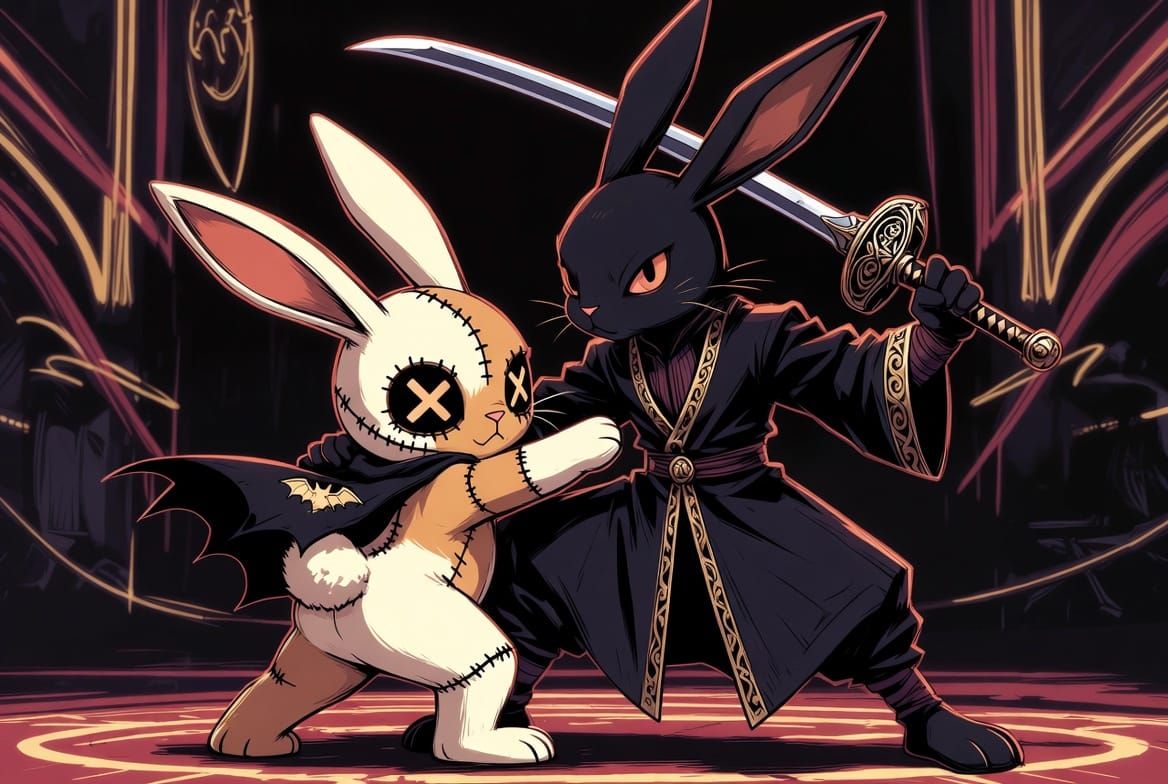
Talia is the only one who trapped him.
Catwoman comes close but never quite closes the distance. The rogues orbit but don't land. Even the Robins can leave—and do.
But Talia? Talia gave Bruce Wayne a son. She made him a father without his consent. She created permanence where he had only allowed temporary arrangements.
That's not love. That's enmeshment. And enmeshment is the most dangerous thing that can happen to an avoidant.
The Setup
The Talia relationship exists at the intersection of three power structures: the Demon's Head (Ra's al Ghul), the Bat, and the al Ghul dynasty.
Ra's wants Batman as heir. He's identified the Detective as the one person with the intelligence, discipline, and moral flexibility to continue the League of Assassins' work. Ra's doesn't want to defeat Batman. He wants to acquire him.
Talia is the mechanism. She's offered as bride, partner, co-ruler. The deal: join us, take Talia, inherit the earth.
The offer is seductive precisely because it solves Batman's problem. He'd get a partner who understands the mission, a father figure who respects him, access to resources that dwarf even Wayne Enterprises, and a larger context for his crusade. He wouldn't have to be alone anymore. He wouldn't have to keep pretending Bruce Wayne is a real person. He could drop the mask and just be the warrior.
But the cost is autonomy. Ra's doesn't want a partner—he wants a successor. Someone who will continue his vision, not build their own. Taking the deal would mean subordinating himself to someone else's mission, and Batman's entire psychology is built around never being subordinate to anything except his own trauma-driven purpose.
Batman refuses. Over and over. He can't join the League because the League kills. He can't take Talia because taking Talia means taking the whole package—the dynasty, the father, the mission that isn't his mission.
But he keeps engaging. He keeps sleeping with her. He keeps creating the conditions for enmeshment while believing he's maintaining distance.
Why She's Different
Other relationships in the rogues polycule are defined by what they lack. Catwoman almost gets in. Joker can't merge. Ivy won't engage.
Talia doesn't lack anything. She offers the full package: love, partnership, dynasty, meaning. She offers a complete life.
That's what makes her terrifying to an avoidant. Everyone else can be managed because there's always an out—a reason the relationship can't quite work. Talia offers a relationship that could work.
Batman has no good reason to refuse her except the real reason: intimacy triggers his attachment terror, and the more complete the intimacy offered, the greater the terror.
The Night of the Bat
The specifics vary across continuities, but the core event is stable: Batman and Talia have a night together. Maybe he's drugged. Maybe he consents. Maybe it's ambiguous. But the night happens.
From that night: Damian Wayne. A child. A son. A permanence that cannot be undone.
This is reproductive enmeshment. Talia didn't just sleep with Batman; she created a bind. Now there's a person who carries both their genetics, who connects them forever, who makes "walking away" a different kind of choice.
Avoidants fear enmeshment more than they fear enemies. An enemy can be defeated. Enmeshment persists. It tangles your life with another's in ways that can't be untangled.
The genius of the move is that it bypasses consent. Batman can refuse to marry Talia, refuse to join the League, refuse the offered partnership. But he can't refuse the fact of Damian's existence. The child is already here, already his, already a Wayne. The relationship has been made permanent without Batman ever agreeing to permanence.
This is what enmeshment does—it creates obligations that precede choice. You wake up one day and your life is tangled with another's in ways you never agreed to. For someone whose entire psychology is built on control, on choosing when and how to engage, this is violation at the deepest level.
Damian is the tangle. Talia knew what she was doing.
The Son as Hostage
Damian isn't just a child. He's a strategic asset.
Talia raises him in the League. He's trained as an assassin. He's indoctrinated into the al Ghul worldview. He's everything Bruce fears: a Wayne who kills, a heir who belongs to the enemy, a son who is a stranger.
Then Talia sends him to Bruce. Here. You have a son. Deal with it.
This is a power move dressed as a gift. Talia is saying: You thought you could have the intensity without the commitment. You were wrong. Here is the commitment. It has your eyes.
Bruce has to take Damian in. Not because he wants to—the relationship between them is initially hostile—but because refusing would be refusing fatherhood. And refusing fatherhood would be becoming Thomas Wayne's opposite: the father who wasn't there.
The trap is perfect because it uses Batman's core wound against him. He watched his father die before he could grow up under his guidance. The defining trauma of his life is paternal absence. Talia hands him a son and says, implicitly: Will you be the father who abandons his child, or will you be present even though it terrifies you?
There's only one answer Batman can give. He takes Damian in because the alternative is becoming the thing he hates most: the absence that creates trauma. Talia knew he couldn't say no. She's engineered a situation where his only choice is the one she wanted him to make.
Talia trapped him using his own trauma.
The Grant Morrison Run
Grant Morrison's Batman and Son (2006) and subsequent work is the definitive Talia/Damian text. Morrison understands the enmeshment dynamics perfectly.
Talia is written not as a love interest but as a force of nature. She's calm where Bruce is conflicted. She's strategic where Bruce is reactive. She knows exactly what she's doing while Bruce is still catching up.
Morrison shows Talia's gift as a trap: "I give you this son not because I love you, but because I want to see what you do with him. I want to see if you can escape my gravity."
Bruce can't escape. Damian becomes Robin. The al Ghul blood mixes with the Wayne blood. The enmeshment completes.
What Talia Wants
The question with Talia is always: does she love Batman, or does she love what Batman could become?
She grew up under Ra's. She knows what it means to serve a vision larger than yourself. She was raised to be a mechanism in someone else's destiny.
When she looks at Batman, she might see a peer—someone else who subordinated the self to a mission. Or she might see a project—someone who could be converted to a better mission.
The love versus acquisition question is the heart of their dynamic. Every time Batman thinks she loves him, she does something strategic. Every time he thinks she's just using him, she shows genuine feeling.
She might not know the answer herself. When you're raised as a dynasty asset, the line between love and mission gets blurry.
The Enmeshment Trap
Enmeshment is a relationship structure where boundaries dissolve. Two people become entangled in ways that make independent identity difficult.
Batman's whole project is about maintaining boundaries. He keeps people at arm's length. He compartmentalizes. He maintains the Bruce/Batman split specifically to prevent any one relationship from having access to the whole person.
Talia dissolves this. Through Damian, she has access to Bruce Wayne (the father) and Batman (the warrior) and the Wayne legacy (the dynasty). She's the only person who has forced integration on him.
Batman can't be just the mission when he's dealing with his son. The mission doesn't have children—people do. He can't be just Bruce Wayne the playboy when Damian needs training—that requires the Batman skill set. The child makes the compartmentalization impossible. Damian needs all of him, and Talia created Damian specifically to make that demand.
That's why the relationship feels so charged. It's not just romantic tension. It's the terror of having your boundaries violated. Of being known fully despite your defenses.
The "Worthy Opponent" Frame
Ra's calls Batman "Detective." It's a title of respect. Ra's treats Batman as an equal—perhaps the only equal he's ever found.
Talia inherits this frame. She relates to Batman as a worthy opponent, not as a lover in the conventional sense. Their romance is combat. Their intimacy is competition. Even the pregnancy can be read as a tactical maneuver in an ongoing war.
This is what makes Talia and Batman's connection different from Bruce and Selina. Selina wants the civilian relationship—the daylight, the tenderness, the ordinary intimacy of two people building a life.
Talia wants the opposite. She wants the extraordinary intimacy of two worthy opponents tangled together forever. She wants the dynasty.
Batman finds this simultaneously terrifying and irresistible. It demands everything Selina asks for (vulnerability, commitment) while also demanding what the mission asks for (competence, intensity, meaning). It's overwhelming in exactly the way avoidants fear.
Why He Can't Quit
Batman keeps returning to Talia despite everything. Despite the manipulation, the weaponized pregnancy, the ideological opposition.
He can't quit because she's the only one who offers the complete package. And the avoidant doesn't actually want the complete package, but they do want to be wanted that completely.
Talia wants all of him. She's not satisfied with the rooftop version or the masked version or the charming billionaire version. She wants Batman and Bruce and the Dynasty and the mission. She wants enmeshment.
The wanting is seductive even when the having is terrifying.
The Tragedy
Talia and Batman might actually be compatible. Two people raised by demanding fathers. Two people who subordinated themselves to missions. Two people who know what it means to sacrifice the personal for the larger purpose.
If they could both let go—of Ra's expectations, of the mission's demands, of the avoidant terror—they might actually build something.
But they can't. She can't betray the League. He can't quit the mission. They're both prisoners of the same structure: people who've built their identities around not needing anyone, forced into a relationship neither can escape.
Damian is the proof that it can't work. A child raised in conflict, belonging fully to neither parent, carrying both legacies in unresolved tension.
The enmeshment persists. The resolution never comes.
Part of the Batman Polycule series. Previous: Batman and Bane: The Masochism Arc. Next: The Riddler Is a Cuck (Intellectually)