Batman and Bane: The Masochism Arc
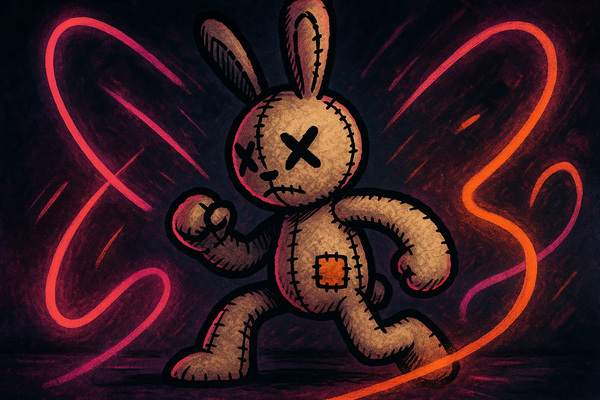
Bane doesn't just beat Batman — he makes him earn it. Knightfall is a masochism arc. Batman keeps engineering situations that will destroy him.

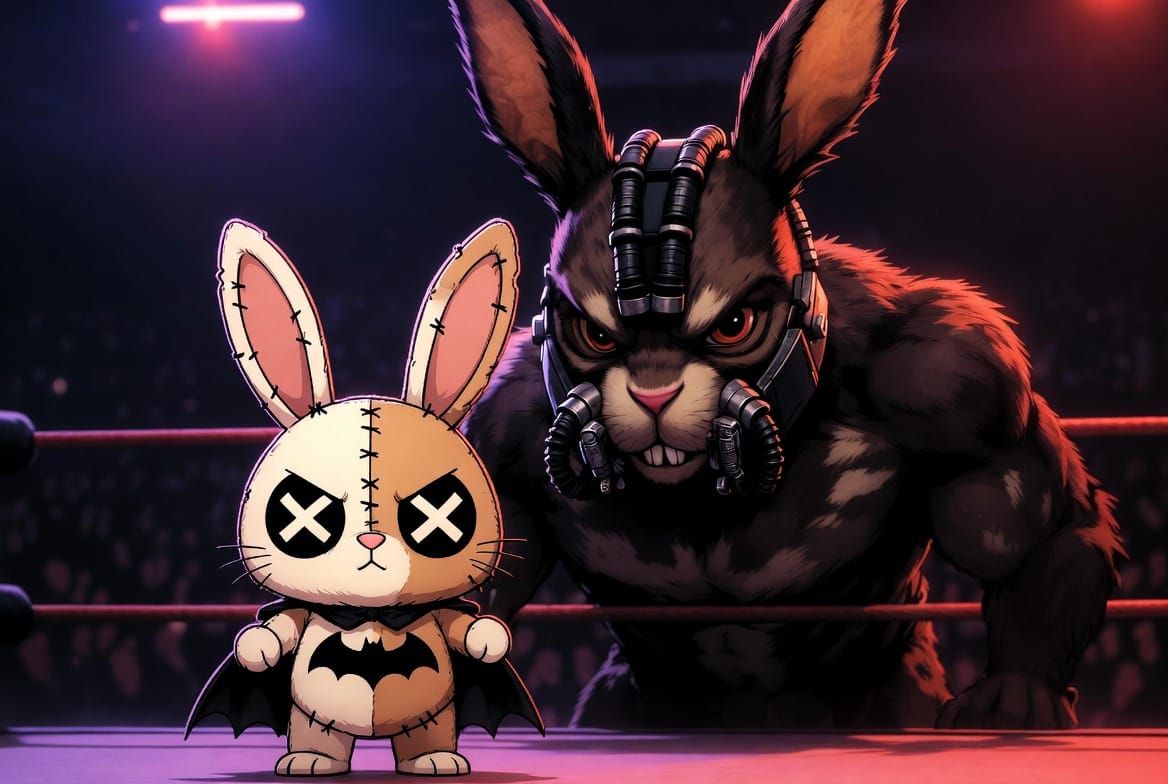
Let's talk about what it means that Batman keeps creating situations where someone can break him.
Bane isn't random. Batman didn't accidentally encounter a genius tactician strong enough to destroy him. The rogues gallery is an ecosystem that Batman cultivates. The question is: why does this ecosystem include someone specifically designed to make him suffer?
The answer is masochism. Not as kink—as psychological structure. Batman needs to be broken because being broken is the only time he feels anything.
The Knightfall Setup
The Knightfall arc (1993-1994) is the definitive Batman/Bane text. Here's the structure:
Bane doesn't just attack Batman. He engineers a gauntlet. He releases Arkham's inmates, forcing Batman to run a marathon against his entire rogues gallery over weeks. When Batman finally faces Bane, he's already destroyed—exhausted, beaten, diminished.
Only then does Bane fight him. Only then does Bane break his back.
This is critical. Bane makes Batman earn the breaking. It's not a random attack. It's a ritual. Batman must suffer through the complete depletion of his resources before he's allowed to fall.
The setup reveals something about what both of them need. Bane needs to know he's breaking the real Batman—not a Batman who got unlucky or was caught off-guard, but Batman at his limit, giving everything and still not enough. The victory only means something if it's total. And Batman? Batman needs to know he gave everything before he's allowed to stop. The permission to fall only comes after absolute depletion. He can't rest, can't stop, can't admit weakness until there's literally nothing left to give.
This is the masochist's bargain: suffering is only legitimate if it's been earned through maximum effort. Otherwise it's just weakness.
Why would Batman participate in this? He could have waited. He could have delegated. He could have recognized the trap and not walked into it.
But he walked into it. Night after night, he answered the call, knowing where it led.
The Need to Be Hurt
Batman is in constant pain. The training regimen. The injuries that never fully heal. The nights spent breaking his body against Gotham's underworld.
This isn't necessity. A smart person with Batman's resources could fight crime much more efficiently, with less personal damage. He chooses the method that hurts.
The avoidant attachment structure provides context. Avoidant individuals learned early that emotional needs lead to rejection or abandonment. The solution: don't have emotional needs. Suppress the inner life. Become competent and independent and invulnerable.
But the needs don't disappear. They get buried. And buried needs create pressure.
Physical pain is a pressure valve. When you can't feel emotional pain—when you've suppressed it so thoroughly you don't even know it's there—physical pain becomes the only way to feel real. The only proof you exist. The only access to intensity.
This is why Batman's training regimen is so extreme, why he pushes his body past reasonable limits, why he refuses medical care that would let him heal properly. The pain keeps him in his body when everything else about his life is dissociative. He can't feel grief, can't access fear in normal ways, can't let himself want tenderness or connection. But he can feel a broken rib. He can feel the burn in his muscles after four hours of combat. He can feel the cold of Gotham rooftops in winter.
The pain is real in a way nothing else is. And if the pain is real, then he's real. The alternative—the numbness—feels like death by another name.
Batman needs to be hurt because being hurt is the only time the numbness breaks.
What Bane Provides
The rogues gallery is a series of relationships that meet specific needs Batman can't acknowledge. Joker provides mirroring. Catwoman provides almost-intimacy. Riddler provides intellectual recognition.
Bane provides suffering.
But not just any suffering. Bane provides competent suffering. He's smart enough to make it meaningful, strong enough to make it overwhelming, strategic enough to make Batman work for it.
Batman needs someone who can actually hurt him. Most opponents can't. He's too prepared, too skilled, too armored. The fights are performance—Batman knows he'll win.
Bane is the exception. Bane is the one who can actually destroy him. And Batman keeps coming back.
The Earned Destruction
There's something almost tender about the Knightfall setup. Bane watches Batman. Studies him. Learns his patterns, his weaknesses, his routines. This is stalker behavior—but it's also the behavior of someone who cares deeply about their object.
Bane doesn't want to casually defeat Batman. He wants to understand him first. He wants the victory to mean something. He wants Batman to know he's been seen.
The observation period is intimate in its own right. Bane isn't just learning Batman's patrol routes—he's learning how Batman thinks, what he prioritizes, where he's vulnerable. He's paying attention at a level most people never bother with. For someone as isolated as Batman, being truly seen—even by an enemy—has its own pull. Someone finally taking him seriously enough to study him completely.
And Batman, on some level, wants to be seen in this specific way. Wants someone to witness his suffering. Wants someone to make the suffering purposeful rather than random.
Most people don't see Batman's pain because he works very hard to hide it. Bane sees through the armor to the wound underneath. That's a kind of intimacy that Batman doesn't get anywhere else—someone who recognizes that the strength is compensation, that the control is costly, that the mission is suffering.
The back-breaking is intimate. Two people who have danced around each other finally coming together. The pain is real, but so is the connection.
Therapeutic Masochism
Here's a framework for understanding Batman's pain-seeking: it's therapeutic masochism.
In clinical contexts, some trauma survivors seek painful experiences because pain provides temporary relief from dissociation. When you can't feel your feelings, physical sensation is the only way back to your body. The pain isn't desired for its own sake—it's a hack for reconnecting with experience.
Batman is chronically dissociated. He's split between Bruce and Batman, he's suppressed his attachment needs, he's living in a state of functional numbness punctuated by violence.
The dissociation is functional—it lets him operate at peak efficiency without being slowed by emotion. But it's also a kind of living death. He's so disconnected from his inner experience that he barely registers as present to himself. The mission runs. Batman performs. But the person underneath is unreachable, even to himself.
Being broken by Bane is the ultimate pain experience. It pierces even his defenses. For one moment, lying on the floor with his spine destroyed, he might actually feel something besides the mission. The pain is too overwhelming to dissociate from. For once, he has no choice but to be fully present in his body, fully aware of his vulnerability, fully human. It's agony. It might also be the most real he's felt in decades.
The Resurrection Pattern
Batman recovers from the breaking. He always does. He gets healed, retrained, rebuilt. He comes back.
And then, inevitably, he creates conditions for it to happen again. Not necessarily with Bane, but the pattern repeats. He pushes himself to the edge. He takes on impossible odds. He engineers situations where he might be destroyed.
Watch how he fights after recovering from Bane. He's more careful, more strategic—but only up to a point. When it matters, when the stakes are high enough, he still throws himself into situations where the odds are impossible. He still fights until he can barely stand. He still refuses to stop until something makes him stop.
The recovery isn't about learning to avoid pain. It's about restoring his capacity to endure pain. He gets healed so he can be broken again. That's the cycle.
Because the breaking isn't the end. The breaking is the point. The breaking is the only time he gets to stop.
Why Bane Stays
Bane has beaten Batman. He's proven he's stronger. He could walk away.
But he stays in Gotham's orbit. He keeps coming back. He's drawn to Batman the way all the rogues are drawn to Batman.
What does Bane get from the relationship?
He gets a worthy opponent. Someone who makes his strength meaningful. Bane without Batman is just a strong man. Bane with Batman is a mythological figure—the one who broke the Bat.
But there's something else. Bane sees Batman clearly. He knows the suffering that Batman carries, the weight of the mission, the toll of the crusade. He might be the only one who sees it clearly enough to exploit it.
That's its own kind of intimacy. To know someone's weakness completely. To be the one who can touch the wound.
The Venom Connection
Bane's power comes from Venom—a drug that enhances his physical abilities but also represents addiction. He's a slave to the substance that makes him strong.
Batman is also a slave to something that makes him strong: the mission. The trauma response that created Batman is a kind of psychological Venom. It enhances his capabilities while destroying his capacity for normal human life.
They're both addicts. Both depend on something toxic that they can't quit. Both have traded their humanity for power.
When Bane breaks Batman, it's one addict recognizing another. One slave to strength confronting another slave to strength. The breaking isn't just physical—it's a statement about what their shared addiction costs.
The Sexual Dimension
We're going to say it because it's obvious: the Batman/Bane dynamic has erotic charge.
The physical dominance. The penetrating observation. The prolonged pursuit culminating in violent contact. The breaking of the body. The surrender.
This isn't about shipping or fanfic. It's about recognizing that physical dominance and submission carry erotic weight whether or not anyone wants them to.
Batman's masochism isn't just psychological. It's a full-body experience. The pain is felt everywhere. The breaking is total. And there's release in it—the release of finally not having to be strong.
Bane gives Batman something no one else can: permission to fail. Permission to be weak. Permission to stop.
The back-breaking is, in a very real sense, a consummation.
The Cycle Continues
Batman will recover. He'll return. He'll be stronger, more prepared, more armored.
And eventually, he'll create conditions for another breaking. Maybe Bane. Maybe someone else. But the pattern will repeat because the need doesn't go away.
The masochism isn't a bug in Batman's design. It's a feature. It's how he manages the impossible pressure of being invulnerable. It's the pressure valve that keeps him functional.
You can't stop a masochist from seeking pain. The best you can do is understand why they need it.
Part of the Batman Polycule series. Previous: Batman and Poison Ivy: Parallel Sovereignty. Next: Batman and Talia al Ghul: Enmeshment Across Enemy Lines