Wooden Boats and Strange People: A Brief History of Human Ambition
People sailed oceans, killed strangers, and handed the treasure to kings. Rockefeller, Carnegie, cigarettes, Facebook. The mechanisms change. The ambition doesn't.

Part 1 of 25 in the The Philosophy of Future Inevitability series.
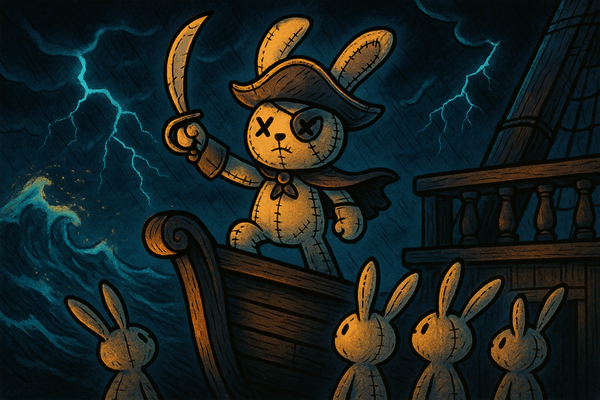
People got in wooden boats.
Tiny wooden boats. Boats that leaked. Boats that broke apart in storms. Boats that were, by any reasonable standard, coffins with sails.
They sailed across oceans they didn't understand, to places they'd never seen, to find people they'd never met. When they found those people, they killed them. Took their stuff. Sailed home. Handed the stuff to kings.
The kings said: do it again.
So they did.
This is the history of human ambition. This is what we do.
The Pattern
Columbus didn't know where he was going. Didn't know what he'd find. Didn't know if he'd survive. He went anyway—because the potential upside was enormous and the downside was merely death.
The calculation was asymmetric. If he succeeded: wealth, status, royal favor, historical immortality. If he failed: he'd be dead and wouldn't care. From his perspective, the expected value was positive even with low probability of success.
This is the psychology of every high-risk venture. The founder raising money. The researcher trying an unlikely experiment. The artist making uncommercial work. The asymmetry makes it rational to try.
But Columbus wasn't an artist. He was an extractive expedition. The goal was gold. The method was violence.
The conquistadors who followed killed millions. Not because they were uniquely evil—though some were—but because killing was the efficient strategy for extraction. The gold was there. The people were in the way. The math was simple.
Hernán Cortés conquered the Aztec Empire with 500 men. Francisco Pizarro took the Inca Empire with 168 soldiers. They didn't win through superior virtue or divine favor. They won through:
- Technological advantage. Steel versus obsidian. Horses versus foot soldiers. Guns versus arrows.
- Disease. Smallpox killed 90% of indigenous populations before the fighting started.
- Strategic ruthlessness. Capture the king. Destroy the symbols. Break the legitimacy of the existing order.
- Local alliances. Subject peoples hated the Aztecs. The Spanish weaponized that resentment.
These are competitive advantages in extraction. They're replicable. They're how empires have always worked.
The kings who funded these expeditions weren't confused about what they were financing. They knew. They calculated. They decided the returns justified the methods.
Isabella of Castile funded Columbus. Charles V funded Cortés. These were investments. Risky, but with enormous upside. The crown took a percentage of all extracted wealth. The math worked.
The moral cost—indigenous civilizations destroyed, millions dead, cultures erased—wasn't in the accounting. Externalities never are.
This is how it's always worked.
The Upgrade
The wooden boats became steel ships. The conquistadors became corporations. The kings became shareholders.
Rockefeller didn't conquer territory. He conquered an industry. Standard Oil controlled 90% of American refining by 1880. The methods were different—predatory pricing, railroad rebates, strategic acquisition—but the pattern was the same. See a resource. Control the resource. Extract value. Crush competition.
Carnegie did the same with steel. Morgan with finance. The robber barons weren't aberrations. They were the conquistadors of capital.
The Soft Version
Then it got subtle.
Cigarette companies knew their product killed people. They knew it for decades before anyone else knew. They funded fake research. They manipulated media. They marketed to children. They did this while their executives watched their own customers die.
The 1950s: internal tobacco company research confirms smoking causes cancer. The companies bury it. They fund alternative researchers to create doubt. "More research needed." "Results inconclusive." "Personal choice."
The 1960s: They market to youth. Joe Camel. The Marlboro Man. Make it cool. Make it identity. Hook them young, keep them for life.
The 1990s: Internal documents leak. They knew the whole time. "Doubt is our product," one executive wrote. The product wasn't cigarettes. The product was uncertainty about cigarettes.
The calculation was simple: addiction creates reliable revenue. The deaths happen slowly. The legal exposure is manageable. The profits are enormous.
Manage the liability. Settle when necessary. Keep selling. The math works as long as profits exceed settlements. And they did, for decades.
This is still how it works.
Facebook knows Instagram harms teenage girls. They have the internal research. They did the studies. "We make body image issues worse for one in three teen girls." This is from their own researchers.
They know. They optimize for engagement anyway. Because engagement is revenue. Because revenue is the game. Because the harm is diffuse and slow and the profits are concentrated and immediate.
The pattern is identical to tobacco. Internal research showing harm. Public statements denying harm. Optimization for addiction. Management of liability. The methods update. The pattern persists.
The wooden boats became algorithms. The gold became attention. The killing became slower, softer, distributed across millions of small harms that don't look like violence until you zoom out.
A conquistador killed with a sword. You see the blood. You see the body. The violence is legible.
An algorithm kills with engagement loops. You see depression, anxiety, eating disorders, suicide. But the causation is statistical, not direct. The violence is illegible.
Illegible violence is better for business. Harder to regulate. Easier to deny. The deaths are real. The attribution is deniable.
The Reveal
Here's what the history reveals:
Humans optimize for extraction. Not all humans. Not always. But enough, and often enough, that extraction is the default. If there's value somewhere, someone will figure out how to extract it. The methods evolve. The pattern doesn't.
Scale obscures morality. One death is a tragedy; a million is a statistic. The conquistador who killed a man knew he was killing a man. The executive whose decisions kill thousands doesn't experience it as killing. The abstraction provides cover.
Institutions don't have consciences. People have consciences—sometimes. Institutions have incentives. When institutions make decisions, they optimize for institutional survival and growth. Morality is a constraint to be managed, not a value to be pursued.
The game doesn't change. The pieces change. The board changes. The vocabulary changes. But the game—find value, extract value, concentrate value—remains constant across centuries.
The Current Board
Today's wooden boats are startups. Today's conquistadors are founders. Today's kings are venture capitalists and sovereign wealth funds.
The territory being conquered is attention. Data. Behavior. The resources being extracted are your preferences, your habits, your time, your children's development.
The methods are sophisticated. A/B tested. Optimized by machine learning. Designed by people who understand cognitive vulnerabilities better than you understand yourself.
But it's the same game. See a resource. Figure out how to extract it. Scale the extraction. Manage the externalities just enough to avoid regulation.
The Objection
"But we're more ethical now. We have regulations. We have oversight. We're not killing people."
Are we sure?
The opioid epidemic killed more Americans than Vietnam. It was manufactured by pharmaceutical companies who knew what they were doing. Purdue Pharma understood OxyContin was addictive. They marketed it as non-addictive. They funded fake patient advocacy groups. They bribed doctors. They did this until hundreds of thousands of people were dead.
The specific mechanisms:
- Reformulation. Make the pill crushable. This enables injection and snorting. Faster high. More addictive. They knew this. They did it anyway.
- Dosage escalation. Push doctors to prescribe higher doses for longer periods. More medication means more addiction means more revenue.
- Marketing to vulnerable populations. Target areas with aging populations, manual labor, existing pain management challenges. Maximize the addressable market.
- Regulatory capture. Fund the advocacy groups. Influence the medical boards. Get the FDA approval. Make it legitimate.
Then they declared bankruptcy to shield the family wealth.
The Sackler family extracted billions. The company goes bankrupt. The victims get pennies on the dollar in settlement. The family keeps the money. The system worked—for them.
Social media is measurably harming mental health, particularly among young people. The companies know. They have the data. They optimize anyway.
Depression rates among teen girls have doubled since Instagram launched. Suicide rates are up. Eating disorders are up. The correlations are strong. The companies have the causation data—they run the experiments.
They know which features cause harm. They deploy them anyway because they increase engagement. The harm is a second-order effect. The engagement is first-order. Optimize for first-order.
The gig economy has created a precariat—millions of workers with no benefits, no security, no path forward. This is presented as "flexibility" and "entrepreneurship." It's extraction with better marketing.
The actual structure:
- Misclassification. Call workers "independent contractors." This avoids minimum wage, benefits, overtime, liability.
- Algorithmic management. The app decides who gets work, who gets deactivated, who gets paid. No human oversight. No appeals.
- Information asymmetry. The company knows the full economics. The worker sees only their individual transaction. The company extracts the surplus.
- Network effects. Once the platform dominates, workers have no alternative. The power asymmetry is total.
This is extraction. It's just automated. It's just mediated through an app. The core dynamic—concentrated power extracting value from dispersed individuals—is unchanged.
We're not more ethical. We're more sophisticated about appearing ethical while extracting.
The ESG statements. The diversity initiatives. The sustainability reports. These are legitimizing performances. They make the extraction palatable. They don't change the extraction.
What This Means
If you understand this, you understand something important about how the world works:
Don't expect institutions to protect you. They might. But their incentive is self-preservation, not your welfare. When those conflict, you lose.
Externalities are features, not bugs. The harms companies cause are often not accidents. They're costs pushed onto others while profits are kept private. This is the system working as designed.
Regulation follows extraction, it doesn't prevent it. We regulate tobacco after millions die. We regulate opioids after an epidemic. We'll regulate social media after a generation is harmed. The extraction happens first; the correction happens later, if at all.
The game rewards players who understand the game. You can be ethical and still understand power. You can refuse to exploit and still recognize exploitation. Naivety isn't virtue—it's vulnerability.
The Continuity
The Spanish empire fell. Standard Oil was broken up. The robber barons died. The cigarette companies were regulated.
And new wooden boats are sailing right now. New conquistadors are extracting new resources. New kings are funding new expeditions.
The names change. The game continues.
AI is the current frontier. The companies racing to build it are the wooden boats. The venture capitalists funding them are the kings. The resource being extracted is... everything. Your data. Your attention. Your cognitive labor. Your creative output. Eventually, maybe, your decision-making.
The pattern repeats:
- New territory. A space where existing rules don't apply. The legal system hasn't caught up. The ethical frameworks haven't formed. It's open season.
- Asymmetric capability. The first movers have technology others don't. This creates winner-take-all dynamics. The gap widens.
- Extraction at scale. Maximize revenue before regulation arrives. Move fast and break things. The things being broken are people.
- Legitimizing narrative. We're making the world better. We're democratizing access. We're empowering people. The narrative makes the extraction acceptable.
- Regulatory lag. By the time rules arrive, the extraction is complete. The market is concentrated. The damage is done. The regulations codify the status quo.
This is how it works. This is how it's always worked.
This isn't cynicism. It's pattern recognition. The same patterns have operated for five hundred years of recorded capitalism and thousands of years before that. Expecting them to stop is not optimism—it's denial.
The conquistador believed he was bringing civilization. The robber baron believed he was building America. The tech founder believes he's changing the world. The belief is sincere. The extraction is real. Both are true.
Understanding the game doesn't mean you have to play it the worst way. But not understanding it means you're the resource being extracted.
You can build companies without maximizing extraction. You can create technology without maximizing harm. You can participate in the economy without optimizing for sociopathy.
But you need to understand the pressures. The incentives push toward extraction. The competition rewards it. The system selects for it. Swimming against that current requires conscious, sustained effort.
Most people don't. Not because they're evil. Because the current is strong and they're tired and everyone else is extracting and unilateral disarmament means losing.
People got in wooden boats. They killed strangers. They took their stuff.
This is what we do. This is how money works. This is the world.
Now you know.
The question is: what do you do with the knowledge?
Previous: The Philosophy of Future Inevitability Next: Hitler Stalin Mao: The Competence of Evil