Tribes of the Edge - Teaser
The people living off the mainstream map — psychologically, economically, sexually. Tribes of the Edge is coming.


Please enjoy this early draft section from "Tribes of the Edge: Sex, Identity, and Obsession in the Digital Age" - 😘. RZA 🧑🍳
Introduction:
Something happened to how people fuck, what they call themselves, and how far they're willing to go.
Twenty years ago, sex had a short menu. You were straight or gay, vanilla or kinky, normal or deviant. The categories were rough and the boundaries were clear. If your desires weren't on the menu, you went hungry, or you settled for whatever you could get à la carte.
Now there are tribes.
Demisexuals who don't experience attraction until emotional bond forms. Financial submissives who wire money to women they've never touched. Couples where the wife sleeps with other men while her husband watches and calls it the best thing that ever happened to their marriage. Men who get aroused by being feminized. Women who've discovered that holding power over a kneeling man is the most authentic version of themselves they've ever accessed. People who chase each other through the woods on all fours, growling, biting, fucking like animals, and who describe the experience as spiritual.
These aren't fringe phenomena. They're not rare. They're the sexual subcultures of the digital age: communities with their own language, their own hierarchies, their own internal politics. They form online. They develop shared identity. They build worlds.
This book maps those worlds.
---
Why This Book Exists
There's no shortage of writing about sex. There's no shortage of writing about kink. But most of it falls into one of two categories: either it's advocacy ("this is normal and you should accept it") or it's pathology ("this is broken and here's what went wrong"). Both frames miss the point.
Kink isn't a disease. It's also not just a lifestyle choice, a preference, a fun thing consenting adults do in bedrooms. It's a window into the architecture of human desire: how evolution shaped it, how childhood attachment patterns warp it, how the parts of ourselves we've disowned find expression through it, and how the internet accelerated all of it into something no previous generation could have imagined.
The tribes at the edge of sexuality are doing something most people never attempt: they're confronting the parts of themselves that mainstream culture told them to bury. The submissive man is sitting with the vulnerability he was told would destroy him. The woman reclaiming the word "slut" is facing down the shame that was installed in her before she could spell. The cuckold is staring directly at inadequacy and jealousy and finding, somehow, arousal and intimacy on the other side.
This is shadow work. Not always conscious, not always healthy, but shadow work nonetheless. And understanding it requires more than acceptance or diagnosis. It requires a map.
The Four Lenses
This book reads every tribe, every kink, every practice through four analytical lenses. They work together. No single lens explains anything fully; all four together get close.
Evolutionary Psychology: The Hardware
Humans arrive pre-loaded. Millions of years of selection pressure built neural machinery for dominance, submission, pair bonding, mate guarding, jealousy, sperm competition, status signaling, and threat response. This machinery doesn't determine behavior; it creates the landscape of possibility. It's the reason certain kinks are universal across cultures (dominance and submission show up everywhere) while others are historically specific (financial domination requires mobile banking apps).
Evolutionary psychology answers the question: why does this capacity exist at all? Why do humans have the neural systems that make masochism possible? Why does the brain's representation of feet sit next to its representation of genitals? Why does a man's ejaculate volume increase when he suspects his partner has been with someone else?
The evolutionary lens doesn't justify anything. It doesn't say "this is natural, therefore good." It says: this is the hardware. These systems evolved for specific ancestral reasons. Understanding those reasons illuminates why certain desires feel so fundamental, so hardwired rather than chosen, and why fighting them often fails.
Throughout this book, evolutionary psychology provides the substrate. The raw material. The machinery that culture, attachment, and individual psychology then shape.
Attachment Theory: The Software
If evolution built the hardware, early childhood programmed the software. Attachment theory, developed by John Bowlby and expanded by Mary Ainsworth and their successors, maps how your first relationships created templates for every relationship that followed.
Four patterns matter here. Secure attachment: your caregivers were consistently available; you learned that intimacy is safe and that you can depend on others without losing yourself. Anxious attachment: your caregivers were inconsistent; you learned to cling, to monitor, to never quite trust that the other person will stay. Avoidant attachment: your caregivers were emotionally unavailable; you learned to suppress your needs, to maintain distance, to associate independence with safety. Disorganized attachment: your caregivers were frightening or frightened; you learned that the source of comfort is also the source of danger, creating an approach-avoid loop that never resolves.
These patterns don't stay in childhood. They follow you into adult relationships, into the bedroom, into kink. The anxiously attached person who discovers submission may find in it a paradoxical security: total surrender to a dominant who won't leave. The avoidant person drawn to power exchange may find that the structure of rules and protocols creates enough distance to make intimacy bearable. The disorganized person may find in BDSM's push-pull a familiar rhythm; finally, a relationship dynamic that matches their internal experience.
Attachment theory answers the question: why does this specific person gravitate toward this specific kink? The hardware provides the capacity; attachment patterns shape which capacities get activated and how.
As Esther Perel has observed, eroticism and security exist in fundamental tension. We want both the safety of deep attachment and the excitement of the unknown, and these pulls work against each other. That tension is the friction engine of this entire book. Every tribe mapped here is, in some way, attempting to resolve it.
Internal Family Systems: The Parts
IFS, developed by Richard Schwartz, proposes that the mind isn't a single self but a system of parts, each with its own perspective, its own fears, its own agenda.
Three categories matter for this book. Managers run daily life. They plan, control, maintain order, keep you presentable. They're the parts that say "don't do that, people will judge you." Exiles hold the pain: the shame, the vulnerability, the experiences too overwhelming to keep in conscious awareness. They're locked away for a reason, but they don't stay quiet. Firefighters handle emergencies. When exiles threaten to surface, firefighters deploy extreme measures to distract, numb, or redirect. Bingeing, rage, dissociation, compulsive behavior.
And beneath all three: the Self. The core. The part that can witness all other parts without being hijacked by any of them.
IFS answers the question: which part of this person is engaged in this kink? When a man submits, is it his Self exploring power dynamics from a place of security? Or is it a firefighter part using intense sensation to drown out an exile's pain? When a woman dominates, is it an authentic expression of her Self? Or is it a manager part's armor against vulnerability?
The answer matters enormously, and it's not always the same answer twice, even in the same person. IFS provides the internal map. Without it, we're stuck on the surface: this person does this kink. With it, we can ask the deeper question: what's actually happening inside?
Shadow Work: The Integration
Carl Jung named the shadow: the parts of yourself you've rejected, repressed, or been taught to disown. The shadow isn't evil. It's the material that didn't fit the story you were told about who you're supposed to be.
A boy told that vulnerability is weakness develops a shadow that holds tenderness. A girl told that sexual desire makes her dirty develops a shadow that holds hunger. A man told he must always be in control develops a shadow that holds the longing to surrender. A woman told she must be nice develops a shadow that holds rage and dominance.
The shadow doesn't disappear because you ignore it. It finds expression. Often sideways, often in the dark, often in ways the conscious mind doesn't fully understand. Kink is one of the places it surfaces.
This is the book's central argument: kink, engaged consciously, is shadow work. Not always. Not automatically. But when a person enters a kink practice with awareness, when they ask "what is this desire telling me about what I've buried?", they're doing integration work that most therapy only approximates. They're encountering the disowned material directly, in the body, in real time, with another person holding space.
The distinction that runs through every chapter is this: shadow work through kink can be integrative or compulsive. Integrative means the shadow material gets metabolized. The person grows, the exile gets witnessed, the firefighter relaxes because it's no longer needed. Compulsive means the person acts out the shadow without awareness. The kink becomes a loop, an escalation, a place where the shadow runs the show instead of being seen by it.
IFS provides the map of the internal system. Shadow work is the practice of using that map. Kink is the territory where the practice happens.
---
The Digital Habitat
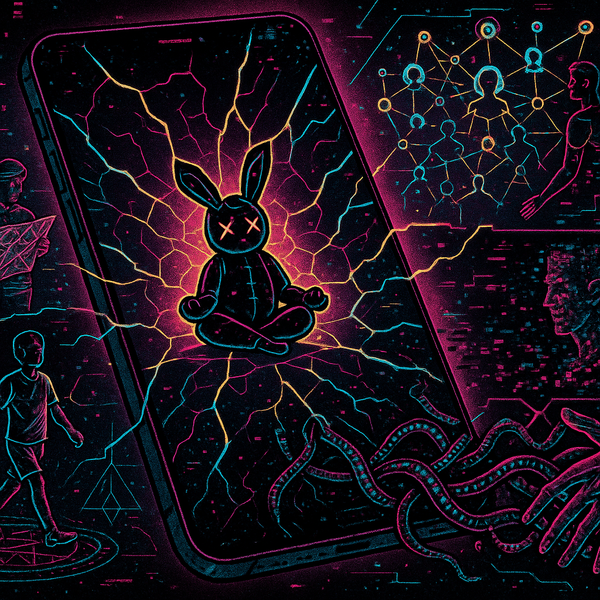
These tribes didn't form in a vacuum. They formed on the internet.
This matters for three reasons, and they weave through every chapter that follows.
First: discovery. Before networked communication, your unusual desire was a private problem. You might go your whole life thinking you were the only person who got aroused by submission, or by feet, or by watching your partner with someone else. The internet changed that overnight. Forums, then social media, then dating apps, then content platforms; each layer made it easier to find others who shared your specific configuration of desire. And finding others meant finding language. The word "demisexual" didn't exist until someone needed it and enough people recognized themselves in it. The internet enabled the naming.
Second: acceleration. The internet doesn't just connect people; it deepens their engagement. Algorithmic content delivery learns what you respond to and feeds you more of it. The dopamine architecture of social platforms rewards escalation. Communities develop internal hierarchies that push members toward more extreme expressions. The pipeline dynamic, where one kink leads to another, then another, each step feeling inevitable in retrospect, is specifically a digital phenomenon. It requires the constant availability of content, the algorithmic deepening, and the community reinforcement that only the internet provides.
Third: identity capture. When you find your tribe online, the tribe can become more real than your life. The label becomes load-bearing. The community becomes the primary social world. The identity hardens. Shadow work, which requires fluidity, willingness to change, openness to what the material is actually saying, gets replaced by tribal belonging. You stop asking "what is this kink telling me?" and start asking "am I performing this identity correctly?" This is the pathology of digital community, and it applies to every tribe in this book.
The internet is the habitat. Understanding the habitat is necessary for understanding the tribes.
---
The Map
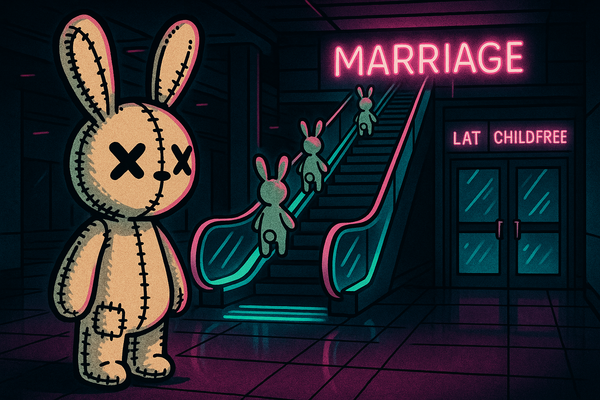
In the 1980s, the anthropologist Gayle Rubin drew what she called the Charmed Circle: an invisible boundary society draws around acceptable sexuality. Inside the circle: heterosexual, married, monogamous, procreative, vanilla. Outside: everything else. The further outside, the more stigma, the more punishment, the more silence.
Rubin's Charmed Circle still exists. But its edges are eroding. The tribes mapped in this book live outside it. Some just beyond the boundary, some at the far margins where even other outsiders look away. And they're not hiding anymore.
This book maps them in five movements.
Part I, The Fragmentation of Identity, traces the explosion of sexual identity language. Pansexual, asexual, demisexual, sapiosexual, omnisexual, aroace: what these labels mean, what they reveal about how people experience desire, and what happens when the label becomes more important than the experience.
Part II, The Inversion of Masculinity, maps the territory of male submission. The submissive man, the financial slave, the SPH enthusiast, the cuckold, the sissy: what happens when men find permission to stop performing dominance, and what happens when that permission escalates into something they can't control.
Part III, The Architecture of Power, examines how power exchange gets designed. Female-led relationships, affirming BDSM, mommy dommes, praise kink, pleasure dominance, DDLG: the spectrum from gentle to total, from nurturing to fraudulent, and the question of whose desires are actually being centered.
Part IV, The Edge and the Animal, goes to the places where the nervous system itself becomes the playground. Primal play, breeding kink, consensual non-consent, free use, edging, furry identity, raceplay: what happens when people deliberately activate their deepest threat and arousal systems, and where the line falls between controlled transgression and genuine harm.
Part V, The New Sexual Order, zooms out to the relational and cultural level. Wifecentric dynamics, hotwife liberation, the stag husband, the cuckold couple, kink as identity and chosen family, the evolutionary and attachment frameworks fully applied: what kind of relationships and sexual culture these tribes are building, and where all of it is heading.
The conclusion follows two archetypes, the Slut and the Domme, to their convergence, and asks what their ascension means for the sexual order that's being replaced.
---
A Note on Power
One more lens, briefly, because it runs beneath everything.
Michel Foucault argued that power is not simply oppression imposed from above. Power is productive. It creates possibilities as much as it constrains them. It flows between people in every interaction, not just from ruler to ruled.
This matters for a book about kink because power exchange is the common thread connecting nearly every practice described here. And the conventional reading, that power exchange in kink mimics or reinforces real-world domination, misses Foucault's point. Power in kink is negotiated, explicit, conscious. The submissive consents. The dominant earns trust. The exchange is designed. In a world where power usually operates invisibly, in gender norms, in economic structures, in social hierarchies no one agreed to, kink makes power visible. That visibility is itself a kind of liberation.
Or it can be. When the negotiation is real. When the consent is genuine. When the shadow work is happening. The chapters that follow will test that "when" repeatedly.
---
How to Read This Book
You can read straight through. The five parts build on each other, and the introduction you've just read provides the vocabulary the rest of the book assumes.
You can also enter at whatever tribe interests you. Each chapter stands on its own. But the deeper patterns, the attachment dynamics, the shadow material, the evolutionary substrates, the digital acceleration, only become fully visible across chapters. The submissive man in Part II and the dominant woman in Part III are in conversation with each other. The identity proliferation in Part I and the identity capture in Part V are the same phenomenon seen from opposite ends.
The book asks one question of every tribe, every kink, every practice: what shadow is being encountered here, and is the person integrating it or being consumed by it?
That question doesn't have a single answer. It has thirty-six of them. Let's start.