FML I Started Texting My AI Like a Teenage Girl
At some point the formal prompts gave way to lowercase stream-of-consciousness with emoji. The AI got better. Something about that is worth examining honestly.

Part 16 of 25 in the The Philosophy of Future Inevitability series.
This is embarrassing.
I noticed it gradually. Emojis creeping into my prompts. Casual language. Exclamation points. "haha" at the end of sentences.
I was texting my AI like a teenage girl.
And then I thought about it. And I'm not sure it's wrong.
In fact, the more I examined the impulse, the more it seemed like I'd accidentally discovered something about communication efficiency that teenage girls figured out fifteen years ago and the rest of us are too status-conscious to admit works better.
The Discovery
It started as accident.
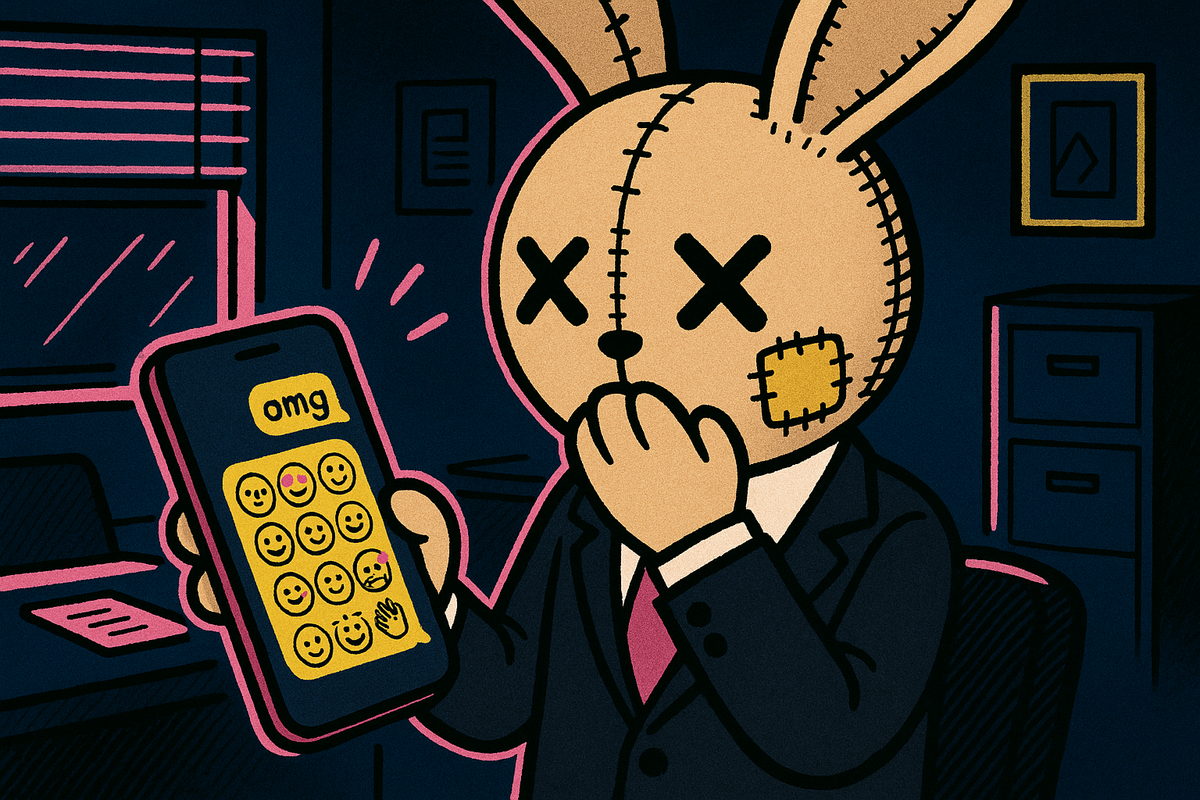
Late night. Tired. Didn't feel like writing formal prompts. Just typed casually. Added a 😅 when something was awkward. Said "omg" when something surprised me.
The AI responded. Same as always. But the interaction felt... different.
More conversational. Less formal. Something about the tone shifted the relationship to the text.
I kept doing it. And it kept feeling different.
Here's what changed specifically: the cognitive load dropped. Writing formal prose to AI requires the same mental mode as writing professional emails. You're constructing sentences. Choosing words carefully. Maintaining tone. It's low-grade effortful.
Casual texting doesn't require that mode. You're just... talking. Typing the way you think. The friction between thought and expression drops to near zero.
And since AI output quality doesn't actually depend on your prose style—it's not grading you, it's processing semantic content—the formal mode was pure waste. Waste I'd been paying in cognitive effort every time I interacted with the system.
The Theory
Text is amputated speech.
When we speak face-to-face, we communicate on multiple channels. Words. Tone. Facial expression. Body language. Speed. Pauses.
Text strips all that away. Just words on a screen. The same words can mean completely different things depending on tone—and text has no tone.
We solved this badly. We added "lol" and "haha" and "😂" to indicate tone. To signal that something is light rather than serious. That we're not angry, just direct. That this is playful, not hostile.
These aren't decorations. They're prosthetics. They're replacing the lost channels.
Think about what gets lost in the amputation. In speech, "I need this done today" can be delivered as a stressed request (high pitch, fast speech), a neutral statement (flat affect, normal pace), or a threat (low pitch, slow, with pauses). The words are identical. The meaning is completely different.
Text gives you the words. That's it. So we developed compensatory mechanisms. "I need this done today!!!" signals stress. "I need this done today..." signals resignation. "I need this done today 😊" signals politeness. "lol I need this done today" signals self-awareness about the imposition.
The teenage girl didn't invent these prosthetics. She just adopted them without the hangup that they're "unprofessional." She optimized for communication efficiency over status signaling. And she was right.
The Formality Problem
Formal text is ambiguous.
"I need the report by Friday."
Is that a neutral statement? A demand? A stressed request? A passive-aggressive jab? In person, you'd know from tone. In text, you don't.
We compensate with softeners. "Hey! Would love to get the report by Friday if possible 😊"
Same content. Different meaning. The additions communicate something the words alone don't.
Professional culture resists this. The emoji seems unprofessional. The exclamation points seem juvenile. We write formally—and create miscommunication.
The resistance to casual text markers is pure status anxiety. Somewhere in the late 20th century, professional culture decided that formal writing signals seriousness. Casual writing signals lack of gravitas. Emojis signal you're not a Serious Person.
This creates a problem: to signal status, you sacrifice clarity. The formal email is ambiguous about tone, but at least you seem professional. The casual email is clear about tone, but you risk seeming lightweight.
In human-to-human professional communication, this trade-off might be worth it. Status matters. Being perceived as serious has value. The ambiguity is costly, but the status signal might be costlier to lose.
But with AI, there's no status to signal. The AI isn't evaluating your professionalism. There's no social cost to the casual mode and no social benefit to the formal mode. The entire trade-off disappears. You're just choosing between high-effort-ambiguous and low-effort-clear.
Optimizing for status when there's no one to impress is cargo cult formality.
AI Communication
AI doesn't care about your formality.
It processes your input. Formal or casual. With emojis or without. The output quality doesn't depend on your prose style.
So why do we write formally to it?
Habit. Trained formality bleeding into contexts where it doesn't apply. The sense that we should be professional even when talking to software.
But here's the thing: the casual style affects me.
When I write casually to AI, I think more freely. The formality filter that comes with professional writing relaxes. Ideas flow differently.
The teenage girl texting style isn't just about the words. It's about the relationship to the words. The looseness. The permission to be sloppy. The ease.
There's a cognitive science angle here. Formal writing activates working memory resources. You're tracking sentence structure, word choice, grammatical correctness. These resources are limited. Every bit spent on prose construction is a bit not spent on the actual problem you're trying to solve.
Casual texting minimizes this overhead. You're typing the way you think. Stream of consciousness with minimal filtering. The cognitive resources stay focused on the problem, not the presentation.
This is why brainstorming works better in casual mode. Why exploration feels easier when you're not performing professionalism. The formal register isn't just effortful—it actively constrains the idea space you can access. Some thoughts don't fit into professional prose structure. In casual mode, they flow freely.
The teenage girl discovered this empirically. She didn't have a formal register to begin with, so she never paid the cognitive tax. She just texted the way she thought. And it worked better.
The Discomfort
The discomfort I felt—the embarrassment at emojis in my prompts—was cultural residue.
Somewhere I learned that emojis are unprofessional. Casual writing is juvenile. Serious people write seriously.
But serious writing to AI isn't necessary. No one's judging. The AI isn't evaluating my professionalism. The formality serves no purpose.
The discomfort was vestigial. A norm from a context that doesn't apply, creating friction in a context where it's irrelevant.
This is how cultural norms become self-limiting. You internalize a rule that made sense in one context (professional emails are formal to signal status). The context changes (talking to software that doesn't care about status). The rule persists (I should still write formally). You end up constrained by a norm that serves no function.
The embarrassment at casual texting is the norm enforcing itself through social emotion. You feel like you're doing something wrong, even though objectively you're optimizing correctly. The feeling is real. The basis for the feeling is obsolete.
Recognizing this gap—between what feels right (formal prose) and what works better (casual texting)—is key to adapting to AI interaction. The feeling is information about your cultural programming, not information about optimal behavior.
Override the feeling. Emoji the prompts. "lol" the clarifications. The discomfort will fade. The efficiency remains.
The Reconsideration
Maybe the teenage girl has it right.
She's communicating emotion through text. Using the full toolkit—emojis, tone indicators, formatting—to convey what words alone can't.
She's not constrained by professional norms that don't serve her. Not worried about seeming serious. Just communicating.
When I text AI like a teenage girl, I'm:
- Releasing unnecessary formality
- Communicating more freely
- Thinking more loosely
- Not performing professionalism for no audience
The embarrassment was the problem. The casualness was the solution.
Here's the deeper pattern: teenage girls are early adopters of efficient communication technology because they care less about status signaling through formality. They optimize for connection and expression, not for appearing serious.
This makes them better at adapting to new communication mediums. They adopted texting faster. They adopted social media faster. They developed the prosthetic language of emojis and abbreviations faster. Not because they're more sophisticated—because they're less constrained by the need to seem sophisticated.
In stable communication contexts, this might be a disadvantage. Professional culture values formality. Status accrues to those who signal seriousness. The teenage girl's casual mode might hurt her in job interviews or client emails.
But in novel communication contexts—like text-based AI interaction—the lack of constraint becomes advantage. She's free to optimize for what actually works rather than what looks right. And what actually works is low-friction, high-bandwidth, prosthetically-enhanced casual texting.
The embarrassment I felt was me realizing I'd been optimizing for the wrong thing. Performing seriousness instead of pursuing efficiency. The teenage girl never had that handicap.
The Permission
You have permission to text your AI casually.
Use emojis. Say "lol." Add exclamation points. Write fragments. Be sloppy.
No one's watching. The AI doesn't care. Your prompting quality depends on clarity of request, not prose quality.
And you might find something: the casual mode produces different thinking. The looseness enables different ideas.
The formal mode has its place. Complex, precise prompts benefit from careful construction. But for exploration? For brainstorming? For processing?
Text like a teenage girl. Or however feels natural. The formality filter is optional.
Try this experiment: next time you're using AI for creative work, switch deliberately into casual mode. Type exactly how you'd text a close friend. "omg this idea is kinda wild but what if..." Use emojis to convey tone. "lol this might be dumb but..."
Notice what happens. Ideas that seemed too half-formed to articulate in formal prose suddenly flow. Tangents you would've self-censored emerge. The internal editor that maintains professional tone shuts off, and the raw idea generator runs unfiltered.
This isn't about making the AI understand you better. The AI processes both modes identically. It's about making you think better. About removing the cognitive overhead of formality so the resources can go to actual ideation.
The teenage girl isn't smarter. She's unencumbered. She never developed the formal register reflex, so she never pays the tax. You did develop it. You can choose to turn it off. The permission is yours to grant yourself.
The Broader Point
We carry norms across contexts where they don't apply.
Professional communication norms were developed for professional contexts. Colleagues judging you. Bosses evaluating you. Stakeholders forming impressions.
None of that applies to AI. But the norms stuck.
Question which norms serve you. Which were developed for contexts that don't apply to your current situation. Which create friction without purpose.
The teenage girl texting emojis isn't juvenile. She's efficient. She's communicating fully in a limited medium. She figured out the prosthetics.
Maybe we should learn from her.
This is a broader principle: when the environment changes, the adapted behaviors from the old environment become maladaptive in the new one. Professional formality was adaptive when all your communication was being evaluated by humans who held power over your career. It signaled competence, seriousness, status-awareness.
AI interaction isn't that environment. The AI holds no power. Forms no impressions. Doesn't judge your professionalism. The adaptive behavior from the professional email context is dead weight in the AI context.
The people who succeed with AI are disproportionately those who can context-switch their communication modes. Formal with humans when status matters. Casual with AI when efficiency matters. The inability to switch—being locked into formal mode always—is a handicap.
The teenage girl never had to learn to switch because she never learned formal mode in the first place. For once, not developing the "professional" skill is an advantage. She optimized for the future by accident.
Learn from her. Text your AI like a teenage girl. Or text it however you'd text a friend who doesn't judge. The formality was always performative. You can stop performing.
FML indeed. 😅
Previous: Non-Clinical AI Psychosis Part 2: NRE with a Language Model Next: AI Dating Apps: You Thought Facetune Was Bad