The Ascension of the Slut and the Domme: Inversion of Patriarchy
The slut is reclaimed. The domme is ascendant. Male submission is a growing cultural phenomenon — and it maps directly onto a broader inversion of who holds erotic power.

Part 36 of 36 in the The 2026 Kink Field Guide series.
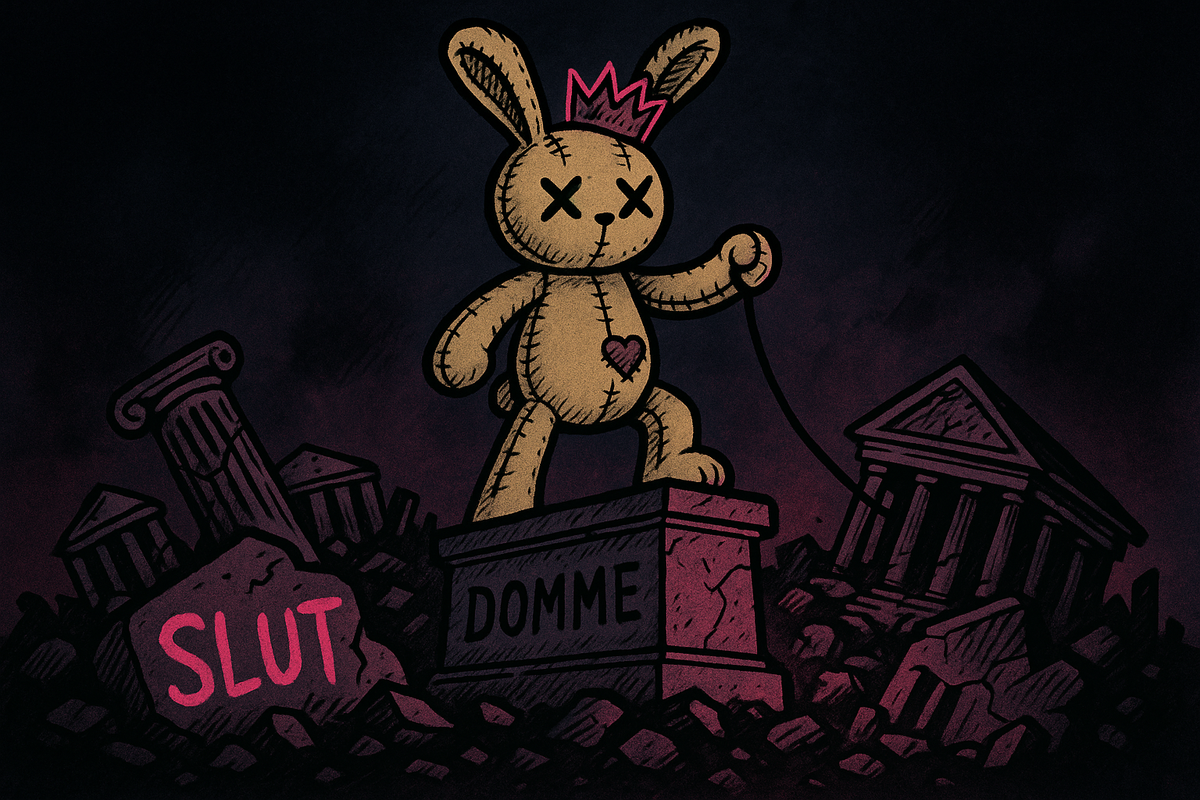
Two archetypes have risen from the margins of sexual culture to become powerful figures in the contemporary erotic imagination.
The Slut. Once an insult, a mark of shame, a category to avoid. Now reclaimed, celebrated, worn as badge. "Ethical slut," "slut pride," "slut walk"—the term has been wrestled from its attackers and transformed.
The Domme. Once hidden in dungeons, serving specialized clients, invisible to mainstream culture. Now celebrated in femdom aesthetics, visible in fashion, admired as archetype of feminine power.
Their ascension tracks broader cultural shifts. But they also represent something specific about where sexuality is heading.
The Slut Reclaimed
The word "slut" has a history of violence. Women called sluts faced social death. The accusation destroyed reputations, ended relationships, justified actual violence. The slut was the bad woman—the one who violated the rules that confined female sexuality.
The reclamation began in waves.
First wave: Feminist analysis. The "slut" label was identified as control mechanism. Why were women who had sex called sluts while men who had sex were celebrated? The double standard was exposed and critiqued.
Second wave: Defiant reclamation. If "slut" is what you call women who own their sexuality, then fine—we're sluts. The insult was taken up deliberately. SlutWalk emerged after a police officer suggested women could avoid assault by not dressing "like sluts." Women marched dressed as "sluts," refusing the shame.
Third wave: Positive identity. "Ethical slut" emerged—Dossie Easton's influential book. The slut as positive identity, associated with honesty, communication, and generous sexuality. Not just "I'm not ashamed" but "this is good."
Fourth wave: Aesthetic and identity. Slut aesthetics entered mainstream fashion. OnlyFans normalized selling sexuality. "Slut era" became a positive life phase. The slut went from marginal to aspirational for many.
What the Slut Represents
The reclaimed slut embodies several values:
Sexual autonomy. The slut does what she wants with her body. Her sexuality serves her pleasure, her purposes, her agency. No one else's permission required.
Abundance mentality. The slut gives sex freely—not because it's valueless but because it's abundant. The old model: female sexuality is scarce and must be guarded. The slut model: sexuality is overflowing.
Rejection of transaction. Traditional sexuality was transactional—women traded sex for commitment, resources, status. The slut breaks the transaction. Sex isn't payment or reward; it's activity she engages in because she wants to.
Pleasure centrality. The slut prioritizes her pleasure. Not what makes her marriageable, respectable, or valuable to others. What feels good. What she enjoys.
Non-possessiveness. The slut typically doesn't hoard partners. She's not trying to lock anyone down. The relationship to lovers is generous, not anxious.
Transparency. The ethical slut is honest. Multiple partners are disclosed. Expectations are communicated. The slut operates above-board.
The Slut's Shadow
Reclamation doesn't eliminate shadow.
Compulsion vs. freedom. Is the slut free, or is she compelled? For some, high partner counts are genuine freedom; for others, they're driven by validation-seeking, attachment wounds, or dissociation. The same behavior can be health or pathology. Reclamation can make it hard to examine whether the behavior actually serves.
Performative pressure. Slut aesthetics have become social currency. Young women feel pressure to be sexually available, to perform availability, to prove they're cool with everything. The reclaimed slut can become a new mandate—you must be a slut or you're repressed.
Market dynamics. OnlyFans and related platforms monetize slut identity. This creates complex dynamics. Is she freely expressing, or is she performing for the market? Both can be true; the mix matters.
The double bind persists. Despite reclamation, the old stigma isn't gone. Women are still called sluts as insult. Being known as promiscuous still carries costs in many contexts. The reclamation is incomplete; the territory is contested.
Male slut asymmetry. Male promiscuity still operates differently. "Man-whore" doesn't carry the same weight as "slut." The reclamation is specifically feminine—addressing feminine shame, creating feminine identity. Male equivalents are less developed.
The Domme Emerges
The dominatrix has existed for centuries—professional women who provided domination services to (usually wealthy, usually male) clients. But she was hidden, marginalized, often criminalized.
Her emergence into mainstream visibility happened gradually.
Porn visibility. Femdom porn created visual vocabulary. The dominatrix became a recognizable figure—latex, heels, implements, imperious expression.
Fashion crossover. Dominatrix aesthetics entered fashion. The corset, the platform heel, the leather—these crossed from dungeon to runway. Rihanna in thigh-highs isn't playing dominatrix, but she's drawing on the aesthetic.
Findom emergence. Financial domination created a new category—the domme who drains wallets, who extracts tribute, who holds power through money. This wasn't about sexual service; it was about pure power.
Lifestyle visibility. Women in female-led relationships and female-dominant dynamics became more visible. The domme wasn't just professional; she was wife, girlfriend, partner.
Cultural archetype. The "dominant woman" became cultural type. Not just in kink but in discussions of powerful women generally. The "girlboss" echoes domme energy, even vanilla.
What the Domme Represents
The domme archetype embodies:
Female power, eroticized. Women have always had power; society often suppressed it. The domme makes female power explicit, central, erotic. Her power isn't hidden or softened; it's displayed.
Male submission, normalized. The domme requires submissive men to exist. Her ascension is also the ascension of male submission as acceptable, even desirable, male position.
Reversal of traditional dynamics. In traditional frames, men pursue and women gatekeep, men lead and women follow, men take and women receive. The domme reverses these. She pursues, leads, takes. The reversal is the point.
Female desire centered. The domme's desire matters more than the submissive's. His pleasure serves hers. His body exists for her use. The centering of female desire is revolutionary in a culture that has historically centered male desire.
Control and mastery. The domme is competent. She knows what she's doing. The skills of domination—reading partners, administering sensation, managing psychology—these are skills she's developed.
The female gaze. The domme looks at her submissive with the appraising gaze traditionally reserved for men viewing women. She evaluates, judges, appreciates. The reversal of the gaze.
The Domme's Shadow
The domme archetype has shadows too.
Performance vs. authenticity. Many women play domme for male fantasy while having no genuine dominant desire. The "pro domme" role has always included this—giving men what they want while maintaining internal distance. When does domme become a mask women wear for male consumption?
The service top problem. Many "dommes" are functionally serving the submissive's desires. He wants humiliation; she provides it. He wants pain; she delivers. Whose desires are actually centered? The power dynamics can be inverted from how they appear.
Limited repertoire. Domme aesthetics can be narrow—latex, heels, certain looks. Women who dominate in different ways may not be recognized. The aesthetic can constrain rather than liberate.
Professional domme complications. Professional dominatrixes provide a service for payment. This is work—sometimes exploitative, sometimes empowering, usually complicated. The pro domme and the lifestyle domme are different situations often conflated.
Reaction formation risk. Some women adopt domme identity as reaction to trauma or powerlessness—not genuine dominance but defense. The domme role can be armor rather than expression.
The Convergence
These archetypes converge in interesting ways.
The dominant slut. She fucks freely AND she's in charge. She takes what she wants, and she takes it on her terms. The slut's abundance meets the domme's power.
The slutty domme. She uses submissives for her pleasure—sometimes multiple in a night. Her promiscuity is dominant, not receptive. She collects rather than distributes.
Hotwife convergence. The hotwife combines elements—she's sexually free (slut elements) and she's the center of the dynamic (domme elements). Her husband serves her freedom. Slut and domme merge.
Financial domination. The findomme is a slut for money, a domme with wallets. The intersection creates something specifically contemporary—monetized domination, transactional power.
Why Now?
Why have these archetypes risen now?
Economic factors. Women's economic independence enables both. The slut doesn't need male provisioning; her sexuality isn't transaction for survival. The domme can exist because women can financially exist without male support.
Contraception effects. The pill disconnected sex from reproduction. This enabled the slut—she can have sex without pregnancy. It also shifted power dynamics that the domme archetype represents.
Internet effects. Online platforms enabled both archetypes to develop visibility and community. Sluts found each other online. Dommes developed audiences and client bases. The internet's role can't be overstated.
Feminist groundwork. Generations of feminist analysis prepared the cultural ground. Critiques of the double standard, of patriarchal power, of female sexuality's suppression—these created conditions where reclamation was possible.
Male submission surfacing. Male submission was always there; it's surfacing now. Men are admitting to wanting submission. This creates demand for dommes and changes the landscape sluts navigate.
Post-scarcity sexuality. In economies of abundance, old scarcity rules break down. The slut operates from abundance mentality—sexuality isn't scarce. The domme commands rather than negotiates. Both express post-scarcity sexuality.
The Cultural Moment
We're in a specific cultural moment regarding these archetypes.
Contested. Neither archetype is uncontested. Conservatives still shame sluts. Traditional gender advocates see the domme as unnatural. The ascension is happening, but it's opposed.
Commercial. Both archetypes have been commercialized. OnlyFans sluts. Findomme business models. Commercial interests shape how the archetypes develop and display.
Performance layer. Heavy performance dimensions exist. How much is genuine identity vs. performance for audiences/clients/markets? The line blurs.
Generational divide. Younger generations take these archetypes more for granted. Older generations remember when sluts were simply shameful and dommes were invisible. The generational gap is real.
Class dimensions. Both archetypes play differently across class. Elite sluts may face less consequence than working-class sluts. Professional dommes often serve wealthy clients. Class shapes how these identities land.
The Deeper Shift
Beneath the specific archetypes is a deeper shift:
Female sexuality as active. Both archetypes position female sexuality as active, not reactive. The slut doesn't wait to be chosen; she chooses. The domme doesn't respond to male desire; she commands it. Active female sexuality is the common ground.
Male sexuality as receptive. Correspondingly, male sexuality becomes more receptive. Men receive the slut's attention. Men submit to the domme's direction. The reception isn't shameful; it's appropriate to the dynamic.
Power as female. Traditional association of power with masculinity weakens. The domme is powerful and feminine. The slut's freedom is power and feminine. Femininity and power are no longer opposed.
Pleasure as purpose. Both archetypes center pleasure—her pleasure. Not reproduction, not relationship, not transaction. Pleasure as sufficient purpose for sexual activity.
Identity as built. Both archetypes are chosen and constructed. You become a slut or domme through taking up the identity. This reflects broader shifts toward identity as achievement rather than inheritance.
Integration Questions
For individuals engaging with these archetypes:
Is this genuinely you? Or is it performance, reaction, defense? Genuine expression differs from adopted mask. The question isn't whether the archetype is valid—it is—but whether it's really yours.
What's the shadow? Every archetype has shadow. What's the shadow of your slut or domme expression? What's being avoided, compensated, hidden?
Is it serving your flourishing? Not just fun in the moment—is this identity serving your broader life? Your relationships? Your growth? Pleasure isn't bad, but unsustainable pleasure patterns are.
Can you put it down? If the identity is genuine, you can put it down temporarily. If you can't, something else is happening—compulsion, addiction, defense. The ability to not-be the archetype tests whether you genuinely are it.
How does it interact with your other parts? You're not only a slut or only a domme. How does this identity interact with your other aspects—your work, your family, your other relationships? Integration means fitting together, not compartmentalizing.
The Future
Where do these archetypes go?
Further normalization. The trend points toward continued normalization. Slut shame will likely decrease. Domme visibility will likely increase. Neither archetype will disappear.
Commercial intensification. Commercial dimensions will likely intensify. More platforms, more monetization, more market dynamics shaping expression.
Male equivalents developing. Male versions may develop more. The "slut" equivalent for men. The "dominated man" as positive identity. The female archetypes might catalyze male ones.
Integration into mainstream. Already happening, but will continue. Slut and domme aesthetics will further enter mainstream culture. The archetypes will lose some edge as they gain acceptance.
Backlash cycles. Expect backlash. Cultural conservatives will push back. Some feminists critique these archetypes from another angle. The ascension won't be linear.
Differentiation. As the archetypes become more visible, they'll differentiate. Not one kind of slut but many. Not one kind of domme but many. Refinement of the categories.
The Synthesis
The slut and the domme represent different but related challenges to traditional sexual order.
The slut challenges scarcity models. Female sexuality isn't rare, precious, to be guarded. It's abundant, overflowing, freely given.
The domme challenges power models. Female power isn't soft, indirect, manipulative. It's direct, explicit, commanding.
Together they suggest a sexual future where women's sexuality is active, abundant, and powerful—where women fuck who they want, when they want, on terms they set.
This future is partially here, partially blocked. The archetypes exist; the full reality they imply doesn't yet exist. Women who embody them still face obstacles, stigma, complexity.
But the direction is set. The slut and the domme have ascended from margin to mainstream, from shame to celebration, from hidden to visible. The old sexual order, organized around male desire and female gatekeeping, is giving way.
What replaces it is still being built. The slut and the domme are among its architects.
Coda: For the Individual
If you're finding yourself in these archetypes:
The slut permission: you can want sex, have sex, enjoy sex—without apology, without transaction, without pretending you don't. Your sexuality is yours.
The domme permission: you can hold power, direct partners, center your desires—without apology, without softening, without pretending you don't want control. Your power is yours.
Neither permission requires you to claim these identities. You can be sexually active without being "a slut." You can be dominant without being "a domme." The permissions are there whether or not you take up the labels.
But if the labels fit—if slut or domme describes something real in you—then claim them. The archetypes have been reclaimed so you can claim them. The ascension happened so you could rise.
Shame is the old order. The new order has its own complications, but shame doesn't have to be one of them.
The slut and the domme have risen. If you're one of them, rise too.
Previous: The Evolutionary Psychology of Kink