Sigma Male Is Just Batman Without the Bat
Self-identifying as a sigma male is telling on yourself. The alpha/beta/sigma taxonomy is astrology for men who think they're too rational for astrology.

Part 4 of 9 in the Toxic Masculinity in 2026: A Field Guide series.
Let's talk about the sigma male.
He's the lone wolf who doesn't need the pack. The grindset warrior who operates outside the social hierarchy. The man who rejects the alpha-beta paradigm because he's above it—not chasing status, not seeking approval, just building his empire in solitude.
Or—and hear me out—he's a guy who can't make friends and decided that was philosophy.
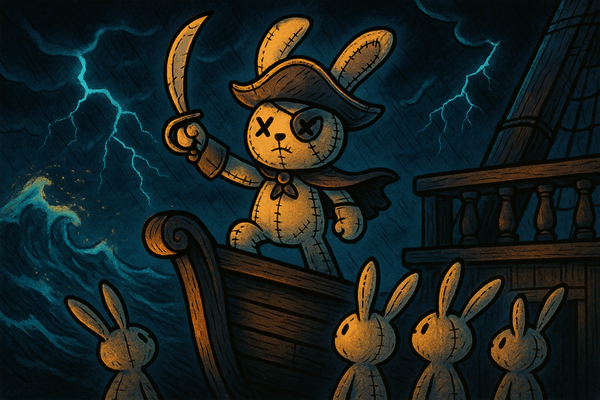
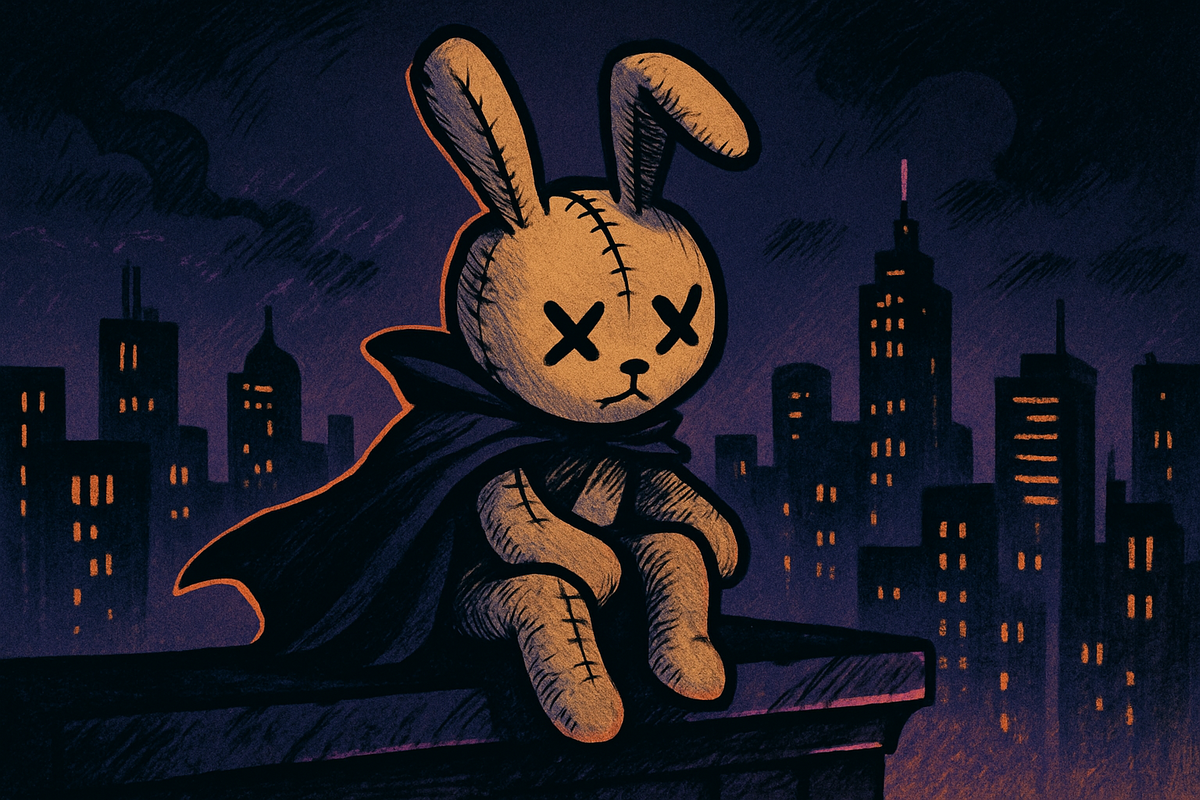
The sigma male is Batman without the bat. The costume without the competence. The loneliness without the cave full of gadgets that makes loneliness cool.
Self-identifying as sigma is telling on yourself. Let me explain why.
The Taxonomy
The alpha-beta-sigma framework imagines male social dynamics as a hierarchy:
Alpha: The dominant leader. Gets respect, gets women, runs the room. The position everyone supposedly wants.
Beta: The follower. Orbits the alpha. Gets scraps. The position men are terrified of being.
Sigma: The outside option. Doesn't compete in the hierarchy because he's playing a different game. Equal to alpha in value but without needing the social proof.
This framework is, of course, astrology for men who think they're too rational for astrology.
It takes complex social dynamics and flattens them into a taxonomy. Human social behavior is fluid, context-dependent, role-flexible. The same person can be dominant in one context, follower in another, neither in a third. Leadership isn't a fixed trait—it's situational competence plus group dynamics plus a dozen other factors.
The framework ignores all this. Ignores context, fluidity, situation-dependence. Treats personality as fixed category rather than adaptable response. You're alpha or beta or sigma—that's your type, your essence, your position in the dominance hierarchy that supposedly governs all male interaction.
The wolf pack study that originally popularized "alpha" terminology has been thoroughly debunked, including by the original researcher. Wolf packs in the wild aren't hierarchies of alphas and betas—they're families. The "alpha" is just the parent. Dominance hierarchies occur in captive wolves forced into artificial groups, not natural packs.
But the terminology stuck. Because it gave men a framework for understanding status anxiety. And because it created categories that people could identify with or aspire to.
The sigma is the most revealing part. Because the sigma is an escape hatch for men who can't compete in social hierarchies and want that failure to be a choice.
The alpha is aspirational. The beta is terrifying. The sigma is cope dressed as philosophy. It's the category for men who look at the hierarchy, realize they're not winning, and need a story about why not-winning is actually a different kind of winning.
The sigma framework says: you're not failing at the social game, you're too advanced for the social game. You're not struggling to make friends, you're choosing solitude. You're not being passed over, you're opting out. The loss becomes choice. The exclusion becomes independence. The failure becomes philosophy.
The Cope
Here's what sigma actually means in practice:
"I don't have a lot of friends" becomes "I prefer solitude."
"I'm not successful with women" becomes "I'm not interested in their games."
"I'm not high-status in my social group" becomes "I operate outside status hierarchies."
"People don't seem to like me" becomes "I'm too real for them."
Every failure to connect is reframed as intentional withdrawal. The guy who couldn't get invited to the party decides parties are beneath him. The man who keeps getting passed over for promotion decides he's too sigma for corporate politics.
This is cope. Sophisticated cope, but cope.
Batman Is the Template
The sigma archetype draws from Batman. The billionaire who operates alone. Who doesn't need the Justice League. Who sits in his cave, perfecting his craft, answering to no one.
But here's what the sigma grindset misses about Batman:
Batman is broken. He watched his parents die and built an elaborate coping mechanism around that trauma. The solitude isn't philosophy—it's pathology. Every Batman story worth reading is about how damaged Bruce Wayne actually is.
Batman has a butler. He's not actually alone. He has Alfred, who enables everything. The lone wolf has a support system. Most "sigmas" don't.
Batman has the bat. He's not just alone—he's alone while being extraordinary. Genius intellect, peak physical condition, unlimited resources. The solitude is compensated by capability.
The sigma male wants Batman's aesthetic without Batman's competence. He wants the lone wolf identity without the extraordinary abilities that make lone-wolfing viable.
You're not Batman. You're just a guy who stays home.
The Grindset Problem
Sigma content focuses heavily on "the grind." Work in silence. Build your empire. Let success make the noise.
This sounds good. Self-improvement framed as solitary pursuit. Focus on what you can control. Ignore the noise. Build something real while others are distracted by status games.
There's truth in this. Some of the most accomplished people do work in relative solitude. They build things. They develop skills. They focus on craft rather than presentation. The monk mode approach to productivity can be genuinely effective.
But watch what happens in practice:
The sigma grindset becomes justification for avoiding social development. Why work on connecting with people when you're too busy grinding? Why build relationships when relationships are for betas seeking validation? Why learn to read social cues when you're focused on your mission?
The grind becomes an excuse. A way to avoid the harder work of learning to relate to people. Of developing social skills. Of building the capacity for intimacy.
Social skills are skills. They can be learned. The man who's awkward at 20 can be socially fluent at 30 if he does the work. But the work is uncomfortable. It requires going into social situations where you don't excel. Tolerating the awkwardness. Learning from failures. Building the competence through practice.
The sigma framework says: skip that work. That's beta shit. You're above it. Just grind on your projects and let the results speak.
But you can't grind your way to human connection. And human connection isn't optional for wellbeing. Decades of research are clear: social connection is one of the strongest predictors of health, happiness, and longevity. Isolated people die younger, die more from suicide, suffer more from depression and anxiety.
The "sigma" who avoids connection isn't winning—he's coping with losing in a way that feels like philosophy. He's taking his social difficulty and rebranding it as strategic independence. The loneliness becomes choice. The isolation becomes focus. The inability to connect becomes transcendence of social needs.
But humans are social animals. The nervous system regulates through connection. Loneliness is as much a health risk as smoking. The sigma who grinds alone for years, builds his empire, achieves his goals, and still feels empty—he didn't transcend social needs. He deferred them. And the bill comes due.
The Gender-Flipped Test
Imagine a woman posted this:
"I don't need friends, I have my craft. I operate outside social hierarchies. I let my success speak for itself. Men can't handle how independent I am."
We'd recognize this as defensive. As someone explaining away loneliness. As a post hoc rationalization for failed connection.
We'd be right. And the same logic applies to sigma men.
The sigma male is just a guy who couldn't figure out social connection and decided the problem was everyone else.
What Healthy Independence Actually Looks Like
There's nothing wrong with independence. With introversion. With preferring small groups to large parties. With building something alone.
But healthy independence doesn't need a taxonomy. Doesn't need to announce itself as sigma. Doesn't need to contrast itself with betas and alphas.
A genuinely independent person just... lives their life. They have friends they actually connect with. They can function in social situations when needed. They choose solitude sometimes because it suits them, not because they can't do otherwise.
The sigma male framework is for men who can't connect well and need a story about why that's actually winning.
If you need to call yourself sigma, you're probably not.
The Audience
Who consumes sigma content?
Young men who feel alienated. Who struggle socially. Who look at the apparent ease others have with connection and feel excluded. Who watch their peers navigate social situations that feel incomprehensible. Who feel like they're on the outside watching a game they don't understand and weren't invited to play.
The pain is real. Social exclusion hurts. Loneliness hurts. Watching others succeed where you're failing hurts. The young man who can't figure out how to make friends, how to talk to women, how to be comfortable in group settings—he's genuinely suffering.
The sigma framework offers them a story: you're not failing, you're different. You're not struggling, you're operating on a higher level. The problem isn't you—it's that everyone else is playing a game beneath your notice.
This story is seductive. It reframes failure as success. Transforms inability into choice. Makes the pain of exclusion feel like the pride of independence. You're not lonely—you're self-sufficient. You're not awkward—you're too real for their fake social games. You're not struggling—you're transcending.
The story feels good immediately. The shame transforms into superiority. The exclusion becomes elite. You go from bottom of the hierarchy to outside the hierarchy entirely, and outside-the-hierarchy gets coded as higher than top-of-hierarchy.
But it's also a trap. Because the story prevents the work. Why develop social skills if your lack of social success is actually sigma independence? Why learn to connect if connection is beta neediness? Why work on the awkwardness if the awkwardness is actually authenticity that others can't handle?
The framework that makes you feel better prevents you from getting better.
The young man who adopts sigma can stay sigma indefinitely. Every social failure confirms the framework. They didn't appreciate your independence. They couldn't handle your authenticity. They're trapped in status games you've transcended. The framework is unfalsifiable—it explains all outcomes in its own favor.
Meanwhile, the skills that could actually improve his life don't develop. Social fluency requires practice. Connection requires vulnerability. Community requires showing up. All of this requires dropping the sigma frame and admitting: I want connection, I struggle with it, I need to develop capacity here.
That's a harder path than calling yourself sigma and grinding alone. But it's the path that actually leads somewhere.
The Exit
Some men grow out of sigma.
They develop skills. Build connections. Find their people. The identity becomes embarrassing—something they held when they were struggling, discarded when they weren't.
Others don't. They age into the identity. Become the 40-year-old who's still explaining why his aloneness is philosophy. Still measuring himself against alphas and betas he claims not to care about.
The sigma who actually develops usually stops needing the label. The one who stays sigma usually needed the label more than development.
Sigma male is Batman without the bat.
It's the aesthetic of exceptional independence claimed by people with ordinary skills and ordinary resources. It's loneliness rebranded as philosophy. It's social difficulty renamed as social transcendence.
The alpha-beta-sigma taxonomy is astrology for men who think they're above astrology. A way to sort the world into types that make your type sound chosen rather than stuck.
If you've ever described yourself as sigma, ask: am I actually operating outside social hierarchies, or am I just not doing well in them?
The answer is usually the second. And knowing that is the beginning of doing something about it.
Previous: Every Guy on Feeld Is a Pleasure Dom Next: Incels and MGTOW in 2026: A Welfare Check