Relationship Anarchy: When Structure Is Optional
Relationship anarchy doesn't mean chaos — it means no relationship automatically outranks another. That's liberating if you're secure, destabilizing if you're not.

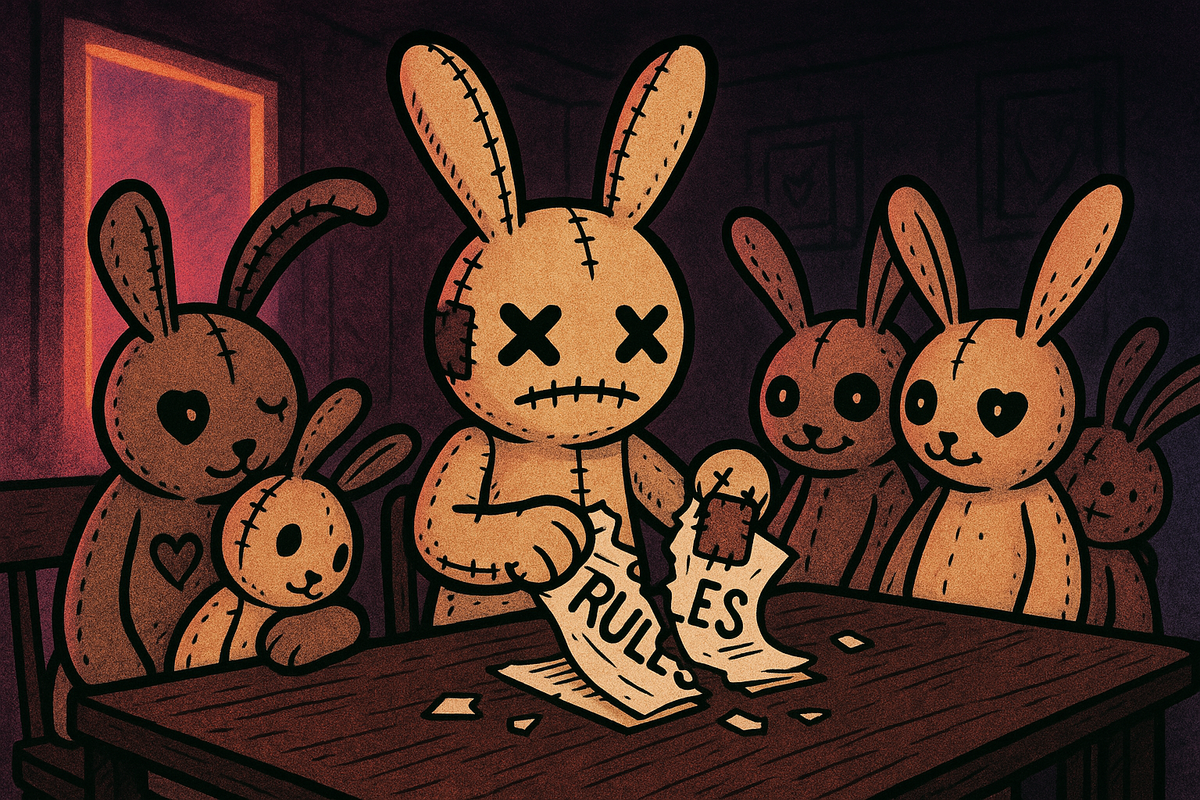
Relationship anarchy is not polyamory with extra steps. It's not an excuse to avoid commitment. It's not "I do whatever I want and call it a philosophy."
It's the radical premise that no relationship is inherently more important than any other—and that every relationship should be defined by the people in it, not by social scripts or default hierarchies.
This is either liberating or terrifying depending on your attachment style. Probably both.
The Core Principles
Relationship anarchist Andie Nordgren's original manifesto (2006) laid out the framework:
1. Love is abundant. Loving one person doesn't reduce your capacity to love others. This isn't unique to RA—polyamory shares this premise—but RA takes it further.
2. Each relationship is defined on its own terms. No templates. No escalator. No assumption that romantic relationships outrank friendships. Every connection is negotiated from scratch.
3. No hierarchies. This is where RA diverges from hierarchical polyamory. There's no "primary partner" who gets veto power. No relationship automatically supersedes another.
4. Autonomy is paramount. You don't owe anyone access to your time, body, or emotional energy by default. Everything is given freely or not at all.
5. Commitment is ongoing choice. You stay in a relationship because you continue choosing it, not because you're locked in by promises, social pressure, or sunk costs.
What It Looks Like in Practice
RA practitioner's relationship map might include:
- A sexual partner they see monthly
- A deep emotional intimacy with someone they've never slept with
- A nesting partner they live with and co-parent with
- A long-distance connection maintained through calls and visits
- Friendships that are just as prioritized as any of the above
The key difference from polyamory: no relationship automatically gets "primary" status. The nesting partner isn't inherently more important than the monthly sexual connection—they're different relationships meeting different needs, each valued on its own terms.
The Appeal
For people burned by traditional structures: If the relationship escalator failed you—if you got married because you were "supposed to," if you stayed too long because leaving felt like failure—RA offers an exit from the whole framework.
For people who resist categorization: If you've never fit neatly into "friend" vs "partner" vs "lover" boxes, RA lets you stop trying. The relationship is whatever you and the other person say it is.
For philosophical consistency: If you believe in autonomy and consent as first principles, RA extends those principles to relationship structure itself. You're not consenting to a package deal; you're consenting to each element individually.
The Difficulties
Coordination costs. When nothing is default, everything must be negotiated. This takes time, energy, and communication skills that most people don't have.
In a traditional relationship, thousands of decisions are handled by default scripts: who you spend holidays with, who gets priority when calendars conflict, who you introduce to family, who gets a key to your place. RA throws out all defaults. Every decision becomes a negotiation.
"Can I come over tonight?" isn't answered by "we're partners, of course." It's answered by checking current capacity, emotional bandwidth, and competing commitments. This isn't cold—it's honest. But the honesty is labor-intensive.
The people who thrive in RA often genuinely enjoy negotiation. They find explicit communication satisfying rather than exhausting. If processing conversations drain you, RA will feel like death by a thousand meetings.
Ambiguity tolerance required. There's no "what are we?" because the question doesn't have a one-word answer. If you need clear categories, RA will be painful.
Social situations become minefields. "Is this your girlfriend?" has no simple answer. "We're sexually intimate but don't prioritize each other above other connections and don't use hierarchical language" doesn't fit on the intake form.
The ambiguity extends inward too. You can't rely on relationship categories to tell you what you're feeling. "I miss my partner" has to be unpacked: which person, which specific need, is this attachment or preference, is it mutual? The self-knowledge required is substantial.
For people whose anxiety increases in ambiguity, RA is a constant low-grade stressor. The nervous system wants to know where it stands. RA by design refuses to provide that certainty.
Jealousy doesn't disappear. Removing hierarchy doesn't remove human emotion. When your partner prioritizes another relationship over yours in a given moment, it still hurts—and you can't fall back on "but I'm the primary."
The pain is actually worse in some ways. In hierarchical poly, you can tell yourself: "She's seeing someone else tonight, but I'm the primary, I matter more." In RA, there's no built-in reassurance. She's seeing someone else because in this moment, that's what she chose. You don't get to invoke rank.
The compensation is that you're also free to prioritize other relationships. But if you're the person experiencing jealousy in the moment, that future freedom doesn't help. You're sitting alone with the feeling, no hierarchy to soothe you.
RA demands that you develop internal security strong enough to handle this without external scaffolding. Most people can't.
Society doesn't cooperate. Hospital visitation rights. Tax benefits. Immigration status. Custody decisions. The legal and social infrastructure assumes hierarchical relationships. RA runs against the grain of every institution.
When you're unconscious in the ICU, the hospital asks for your "next of kin." RA doesn't have an answer they'll accept. Your three most important people aren't recognized because they're not family and none is a spouse.
Immigration won't accept "we're in a deeply committed non-hierarchical relationship" as grounds for a visa. Tax law doesn't recognize your nesting partner if you're not married. Custody courts want to know about stability; "multiple non-primary relationships" reads as chaos.
RA practitioners spend enormous energy working around systems designed for different relationship models. Legal workarounds exist—medical power of attorney, co-ownership agreements, carefully structured custody arrangements—but they're expensive, time-consuming, and often still inferior to what married couples get automatically.
The people who make RA work long-term usually have: secure legal status, enough money for lawyers, no dependents whose custody could be challenged, or unusual privilege that lets them avoid systems that don't accommodate them.
Attachment Styles in RA
Secure attachment is almost a prerequisite. RA requires:
- Trusting that love for others doesn't diminish love for you
- Tolerating ambiguity without anxiety
- Self-regulating when jealousy arises
- Direct communication without games
Securely attached people can potentially thrive in RA because they don't need external structure to feel safe. Their security is internal.
Anxious attachment typically struggles severely with RA. The lack of hierarchy means no guaranteed reassurance. The autonomy principle means no one owes you constant access. The abundance model means your partner's attention is always potentially going elsewhere.
Every anxiety trigger is built into the structure. For anxious types, RA often looks like freedom but feels like abandonment.
Avoidant attachment might be attracted to RA for the wrong reasons. The autonomy emphasis can become a shield against intimacy. "I'm a relationship anarchist" can mean "I refuse to let anyone have real claims on me."
The irony: RA practiced well involves more communication and more negotiation than traditional relationships—exactly what avoidants want to minimize.
Disorganized attachment faces the worst of both worlds. The freedom triggers abandonment fears. The closeness triggers engulfment fears. The ambiguity prevents the nervous system from ever settling. RA without significant attachment work first is usually chaos.
RA vs. Avoidant Cosplay
Here's how you tell the difference:
Genuine relationship anarchy:
- Deep connections exist, just without hierarchy
- Commitments are made and kept, just not assumed
- Communication is extensive—more than monogamy, not less
- Other people's needs are genuinely considered, not just tolerated
The genuine practitioner has a rich web of relationships. They're deeply connected to multiple people in different ways. They show up consistently. They negotiate needs explicitly. They do the emotional labor of maintaining multiple intimate connections without hierarchy. It's intense, not casual.
They're typically in more processing conversations than monogamous people, not fewer. They're checking in more frequently, negotiating more explicitly, maintaining more connections. The autonomy isn't about avoiding intimacy—it's about designing intimacy intentionally across multiple contexts.
Avoidance wearing RA costume:
- All connections remain shallow
- Commitments are avoided entirely, not redefined
- "Autonomy" means never having difficult conversations
- Other people's needs are treated as impositions
The avoidant version: "I practice relationship anarchy" means "I refuse to commit to anyone in any way that feels binding." They have multiple casual connections, none deep. When someone asks for more time, more commitment, more clarity, they invoke autonomy as a shield.
They're in fewer processing conversations than monogamous people because they exit before conversations get hard. They interpret "no hierarchy" as "no one gets to ask me for anything." They use RA language to legitimize their avoidance of real intimacy.
The diagnostic question: do they maintain any long-term connections that survived conflict? Genuine RA includes conflict navigation. Avoidant RA exits before conflict escalates. If someone's relationship history is a series of three-month connections that ended "naturally" when things got complicated, they're not doing RA. They're avoiding attachment.
RA is maximalist—more relationships, more communication, more intentionality. If someone's "RA" looks minimalist—few connections, little communication, maximum independence—they're probably just avoidant.
The irony: actual relationship anarchy requires more emotional labor than hierarchical poly or even monogamy. You're building everything from scratch, maintaining everything through explicit choice, coordinating everyone without defaults. It's the highest-effort relationship structure that exists.
If someone's describing their RA as low-effort, they're not doing it. They're avoiding.
Who It Actually Works For
RA works when:
- All parties are genuinely secure or doing serious attachment work
- Everyone has strong communication skills
- The relationship network is stable enough to handle coordination costs
- External circumstances allow the flexibility (no demanding job, cooperative custody arrangements, etc.)
- Everyone actually wants this, not just one person dragging others along
RA fails when:
- Anyone is doing it to avoid commitment rather than redefine it
- The "no hierarchy" principle masks one person getting their needs met at others' expense
- Communication skills can't keep up with coordination requirements
- Jealousy is denied rather than addressed
- It's chosen reactively (against the escalator) rather than proactively (toward something)
The Honest Pitch
Relationship anarchy is the most demanding relationship structure that exists. It offers maximum freedom at the cost of maximum responsibility. There are no scripts to fall back on, no social infrastructure supporting you, and no excuses when things go wrong.
If you have secure attachment, strong communication skills, philosophical alignment with the principles, and a support network of people who actually want this—it can be extraordinary.
If you're using it to avoid doing the hard work of intimacy, it's just loneliness with a manifesto.
Your attachment style isn't destiny. But it is your starting point. Know where you're starting from before you decide where you're trying to go.