Primal Play: When the Lizard Brain Takes Over

Part 21 of 36 in the The 2026 Kink Field Guide series.
Before we had language, we had bodies.
Before we had consent negotiations, we had chase and capture. Before we had safewords, we had the raw electricity of predator and prey, the ancient dance encoded in every nervous system on earth.
Primal play is the kink that goes there. Back before civilization. Back to the animal. The body remembers what the mind forgot, and primal play lets it speak.
What It Is
Primal play is a category of BDSM that emphasizes instinct over protocol, body over language, raw expression over choreographed scenes.
The defining features:
Minimal verbalization. Traditional BDSM can be wordy—negotiation, commands, check-ins. Primal play reduces language. Growls, snarls, moans. The body communicates.
Physical intensity. Wrestling, chasing, pinning, biting, scratching. The engagement is embodied, athletic, animal.
Instinct over structure. Less "I will do X and you will respond with Y" and more "we engage and see what emerges." The scene is improvised from body intelligence rather than planned.
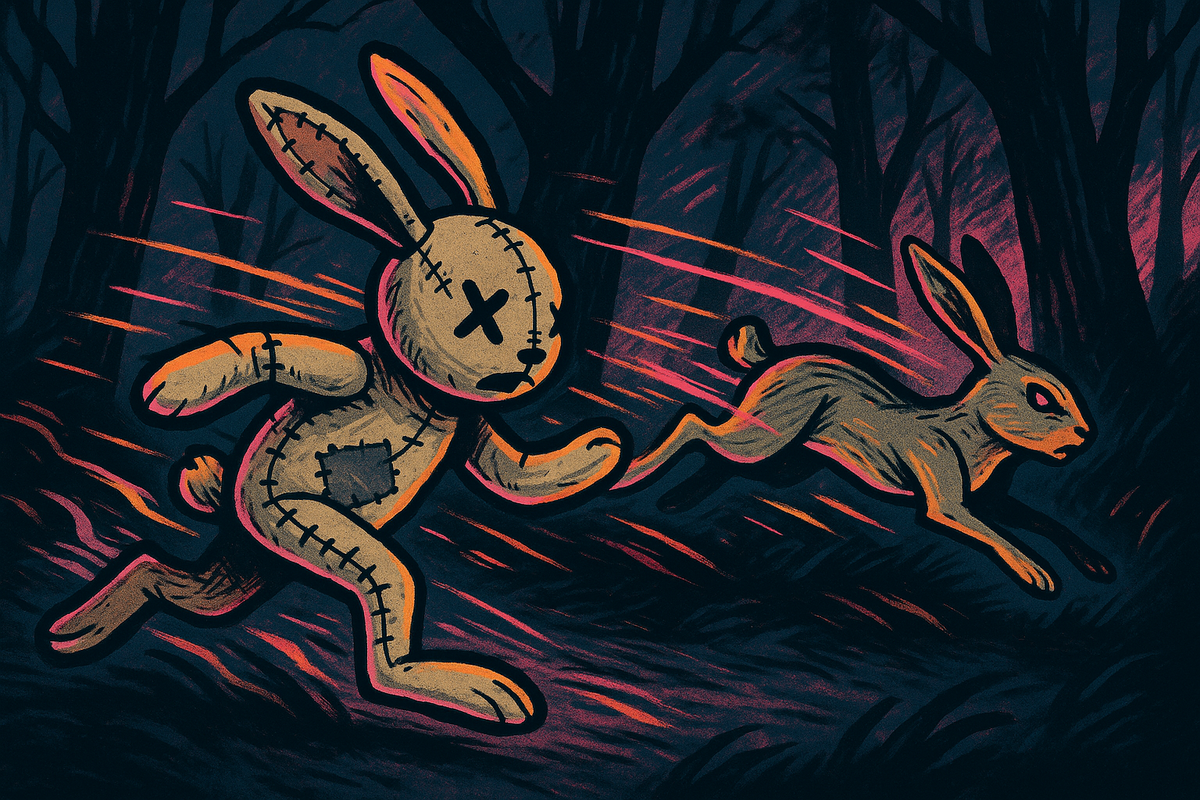
Predator/prey dynamics. Often (not always) structured around hunter and hunted. One chases; one flees. One captures; one is captured. The archetype is ancient.
Loss of civilized control. The permission to be raw, unpolished, animal. The snarl that comes from deep in the throat. The struggle that isn't performative.
The Archetypes
Primal play often works with specific roles:
Predator/Hunter. The one who pursues. Dominant, aggressive, relentless. The energy of the wolf, the big cat, the thing that hunts. Tracking, stalking, capturing.
Prey. The one who is pursued. The fear and thrill of being hunted. Running, hiding, the heart pounding, the moment of being caught. The rabbit, the deer, the one who runs.
Alpha. Not quite predator—more the dominant animal in a pack. Establishing hierarchy through physical presence, challenge, dominance display.
Pack dynamics. Multiple people engaging in primal dynamics together. Hierarchy through physical and energetic dominance. Submission to the stronger.
Not all primal play uses these roles explicitly. Some is simply "let the animal out"—undifferentiated raw engagement without predator/prey framing.
The Neuroscience
Primal play engages specific nervous system patterns:
Fight/flight activation. The chase activates survival circuitry. Adrenaline floods the system. The body prepares for intense physical engagement. This activation can be experienced as erotic when the context is safe.
Polyvagal dynamics. Stephen Porges' polyvagal theory distinguishes three nervous system states: social engagement (safe), fight/flight (danger), and freeze/collapse (overwhelm). Primal play deliberately enters fight/flight while maintaining enough safety to not collapse into freeze. This is edge work.
Somatic discharge. The body holds tension from unexpressed fight/flight responses. Modern life activates survival responses (stress, threat, fear) without allowing physical discharge. Primal play provides discharge: the running, wrestling, struggling that the body wants to do with stress hormones.
Endorphin release. Intense physical engagement releases endorphins. The runner's high, but from wrestling. The altered state that follows intense exertion.
Limbic override. The limbic system (emotional/instinctual brain) takes over from the prefrontal cortex (rational brain). You're not thinking; you're reacting. This handover is the "primal" in primal play.
The Appeal
Why do people want this?
Relief from overthinking. Modern life is all prefrontal cortex. Planning, analyzing, deciding. Primal play shuts that down. You can't overthink when you're running from something or wrestling on the ground. The relief is profound.
Embodiment. We live in our heads, disconnected from physical sensation. Primal play puts you fully in your body. You can't be anywhere else when someone is pinning you down.
Permission to be aggressive. Civilized life suppresses aggression. We're not allowed to snarl, struggle, fight. Primal play creates a container where aggression is welcome. The predator gets to hunt; the prey gets to struggle with full intensity.
Sexual intensity. The nervous system activation translates into sexual energy. The chase becomes foreplay. The capture becomes consummation. Arousal follows the adrenaline.
Catharsis. Unexpressed emotion can be released through primal play. Rage that has no outlet finds one. Fear that was never processed gets processed through controlled exposure.
Partner connection. There's an intimacy in primal play that differs from other connection. When you wrestle someone to the ground, or are wrestled down, the contact is total. Bodies know each other differently after.
The Practices
Specific primal play practices include:
Chase play. Literally running. One person pursues; one flees. Can be done in nature (woods, fields) or adapted to indoor spaces. The capture is the climax.
Wrestling. Grappling for dominance. Can be for points, for submission, or open-ended. The winner gains control; the loser submits.
Biting. Not gentle nibbling. Animal biting—claiming, marking. Biting to pin, biting to establish dominance. The neck as primal target.
Scratching. Claws out. Leaving marks. The tactile intensity of nails on skin.
Pinning and restraint. Not through bondage gear but through body weight, through strength. Holding someone down with your body.
Growling, snarling, roaring. Vocalizations that aren't words. The sounds the animal makes. This can feel ridiculous at first but becomes natural.
Pouncing. Sudden attack. The predator strikes.
Pack scenes. Multiple people engaging in primal dynamics—establishing hierarchy, challenging, submitting.
Safety Considerations
Primal play has specific risks:
Physical injury. Wrestling and chasing involve impact. Bites can break skin. Scratches can wound. Falls happen. Basic safety: clear the space, establish physical limits, have first aid available.
Consent mid-scene. When you're in primal headspace, rational consent checking becomes difficult. Pre-negotiation must be thorough. Safewords must be deeply ingrained—something that can penetrate the primal state.
Emotional flooding. Primal states can release unexpected emotion. Trauma can surface. The prey might have a genuine fear response; the predator might access genuine aggression they didn't know they had. Aftercare is essential.
Knowing when to stop. The limbic takeover that makes primal play work also makes it hard to stop. The predator wants to continue hunting; the prey's fear is real. Mechanisms for ending must be established and practiced.
Partner mismatch. Size/strength differences matter more in primal play than in other BDSM. Wrestling someone twice your strength creates risks that rope bondage doesn't.
The Attachment Lens
Attachment styles show up in primal play:
Anxious attachment might find prey role distressing—the chase activates abandonment fear. Or might find it cathartic—the capture provides the reassurance that they're wanted enough to be pursued.
The anxiously attached person might need extra reassurance after primal scenes. The simulated abandonment of the chase can trigger real abandonment fears. Aftercare that explicitly counters this—"I've got you, you're safe, I'm not going anywhere"—becomes essential.
Conversely, the predator role might appeal to anxious attachment as role reversal. Being the pursuer instead of the pursued, being the one who claims instead of fearing abandonment—the role provides temporary relief from the anxious pattern.
Avoidant attachment might be drawn to predator role—maintaining control, being the pursuer not the vulnerable one. Or might find prey role freeing—the forced vulnerability breaking through avoidant defenses.
For avoidants, primal play offers physicality without required emotional intimacy. You can wrestle someone to the ground without having to verbally express feelings. The body speaks; words aren't necessary. This can be perfect for avoidant patterns.
Disorganized attachment might find primal play confusing—the approach/avoid pattern activated. Or might find it clarifying—finally a context where the confusion makes sense.
Secure attachment can play either role without it being about attachment repair. The security allows exploration without the exploration being compensatory.
The IFS Lens
Parts work illuminates primal play:
The animal part. Most people have a part that is simply animal—the body's instinctual self. This part is usually suppressed. Primal play gives it expression.
Exiled aggression. Aggression that was shamed often becomes an exile. Primal play, particularly predator roles, can give this exile room to exist.
Exiled vulnerability. The small, scared, prey-like parts that were told to toughen up. Prey role can let these parts emerge and be held.
Firefighter use. For some, primal play is a firefighter strategy—intense experience to escape other feelings. This isn't wrong but is worth examining. What's being avoided through the intensity?
Getting Started
For those drawn to primal play:
Start with physicality. Rough play that isn't explicitly primal—wrestling, intense physicality—to get comfortable with bodies in conflict.
Begin with play wrestling. No primal framework, just physical engagement. Notice how it feels to grapple with someone, to use your body's strength, to be overpowered or to overpower. The baseline physical comfort makes primal play safer later.
Try vocalization. Practice growling, snarling, making non-verbal sounds. This often feels awkward initially. Let it be awkward until it isn't.
Start alone. In the shower, in your car, somewhere private. Make the sounds. They'll feel ridiculous at first. That's normal. The animal sounds aren't natural to civilized humans initially. They become natural with practice.
Negotiate thoroughly. What physical contact is okay? Biting where and how hard? What happens when someone is caught? Clear boundaries let the primal emerge without danger.
Specific questions to address: Can you leave marks? Are punches okay or only grappling? What body parts are off-limits? Is penetration part of the capture or separate? The more specific the negotiation, the safer the loss of control becomes.
Try it with trusted partners. Primal play is vulnerable. You're showing your animal self. Start with partners you trust deeply.
Debrief. Talk about what came up. What felt right? What was surprising? What triggered unexpected responses? The integration happens in the conversation after.
The debrief is not optional. Primal play can surface unexpected material—rage you didn't know you had, fear responses you thought you'd processed, vulnerability you've been defending against. Talking through it afterward helps integrate the experience.
Build gradually. Full primal scenes are intense. Start with elements—a chase, some wrestling—before going full wilderness hunt.
The Animal Within
We forgot, mostly, that we're animals.
Civilization trained it out of us. We sit still in chairs. We speak in complete sentences. We suppress the snarl, the howl, the urge to run and chase and struggle.
But the animal didn't disappear. It's in there, waiting. The nervous system remembers what it was made for—not spreadsheets and social media, but hunting, fleeing, fighting, mating.
Primal play lets the animal out. In a container. With consent. With safety mechanisms. But out.
For some people, that release is one of the most profound experiences available. The body finally getting to do what it knows how to do. The ancient self, alive for a moment, in a world that forgot it existed.
Previous: On The Edge: Primal Play and Consent Fantasy Next: Breeding Kink: Evolution Meets Taboo