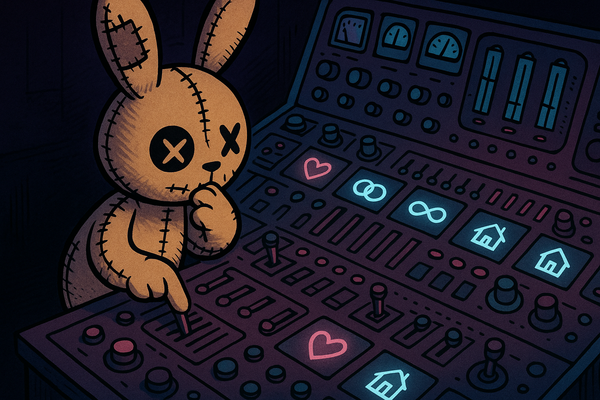
Hierarchical vs Non-Hierarchical: Who Comes First?
Every poly structure has a hierarchy, whether you name it or not. The debate isn't whether rank exists — it's whether you're honest about it.

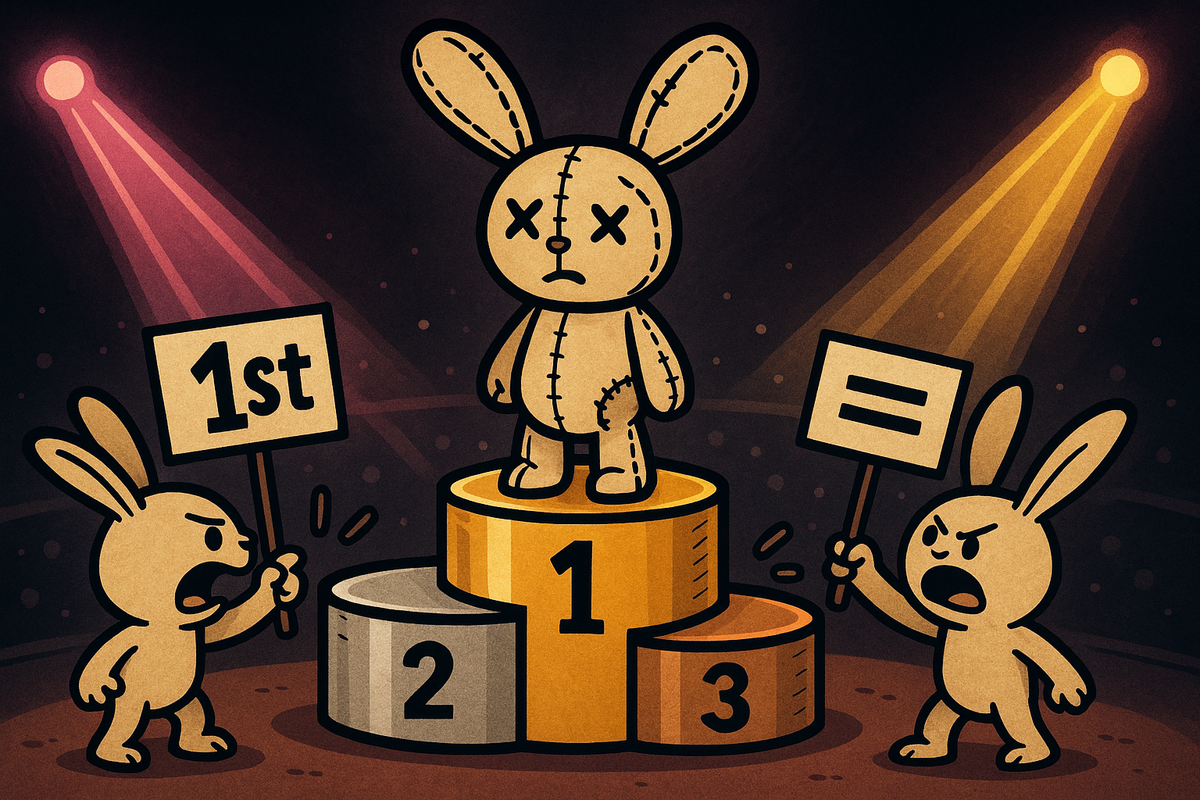
Both sides are right. Both sides are also lying to themselves.
The hierarchical poly people are right that relationships aren't equal. Someone you've built a life with has more entanglement than someone you started dating last month. Pretending otherwise is ideology over reality.
The non-hierarchical poly people are right that structural power over other people's relationships is ethically fraught. Having veto power over your partner's connections is wielding significant control over someone else's emotional life.
The debate gets toxic when either side pretends the other has no point—and when people use structure to avoid examining their actual behavior.
The Hierarchical Position
Hierarchical poly says: some relationships ARE more important. That's not unethical—it's realistic.
You've been with someone ten years. You share a mortgage, kids, intertwined lives. You know their family. You've weathered crises together. You've built infrastructure that takes years to create. You've been with someone else six months. You're still figuring out if you like how they load the dishwasher.
These relationships are not equal. Pretending they are is delusional. You can't give equal time to a partner of ten years and a partner of two months—that's not hierarchy being unfair, that's physics. The ten-year partner has earned priority through years of showing up.
Veto power protects existing relationships. If a new partner threatens a marriage, the marriage takes precedence. The primary relationship was there first, has more investment, bears more responsibility. This isn't cruelty to new partners—it's responsibility to existing commitments. You don't abandon a decade of partnership because someone new is shiny.
The hierarchical argument: we're just being honest about what's already true. Relationships naturally have different levels of commitment, entanglement, and priority. Hierarchy names this reality instead of pretending everyone's equal when they're obviously not.
The Non-Hierarchical Position
Non-hierarchical poly says: structural power over other people's relationships is unethical.
"Primary/secondary" isn't just describing reality—it's prescribing limits. Secondaries are capped. Their relationships can't deepen past a certain point. They can't move in, can't become life partners, can't be prioritized when it matters. They're subject to rules they didn't make by people who have veto power over their love lives.
Secondary status means your relationship is fundamentally limited before it even begins. You'll never be as important, no matter what develops between you and your partner. You could be perfect for each other—doesn't matter. The primary gets priority by structural fiat. That's not loving someone—that's keeping them small. That's loving them only as much as someone else permits.
Veto power is control dressed as protection. One person unilaterally ending another person's relationship? That's ownership thinking applied to humans. Your partner's other partner gets to destroy your relationship because they're threatened by it. You have no say. That's not ethical non-monogamy. That's couple privilege weaponized.
The non-hierarchical argument: love shouldn't come with built-in second-class citizenship. Every relationship should be free to become whatever it actually is, limited only by the people in it, not by structural caps imposed from outside.
Where Each Side Fails
Hierarchical failure mode: Using structure to avoid work. "She's secondary so she can't complain about limited time" becomes a way to never examine whether the allocation is actually fair. Hierarchy calcifies into control. New partners become permanently disposable regardless of what the relationship actually becomes.
The primary couple gets comfortable. They have all the power. They make all the rules. Secondary partners have to accept whatever crumbs are offered or leave. There's no mechanism for the relationship to evolve because evolution threatens the hierarchy. The structure fossilizes into "we're primary, you're not, that's final."
This creates a class system where secondaries are permanently subordinate. They can't complain without being labeled "difficult." They can't ask for more without threatening the primary. The hierarchy that was supposed to protect existing relationships becomes a tool to prevent new relationships from ever becoming meaningful.
Non-hierarchical failure mode: Ignoring natural difference. Pretending a new relationship deserves equal resources to an established partnership isn't fair—it's inequitable to the established partner. You've been together ten years. They've been together three months. Insisting on equal time allocation isn't equity—it's absurd.
Non-hierarchy becomes ideology that erases legitimate difference. Sometimes a partner of ten years does deserve priority over a partner of two months. That's not oppression—that's reality. That's recognizing that years of building together create obligations that new relationships simply don't have yet.
The person who helped you through cancer deserves different consideration than the person you met last quarter. Pretending otherwise isn't fairness. It's ignoring the actual weight of history and commitment.
Both sides: Moralizing structure instead of examining behavior. Hierarchical poly can be ethical or abusive depending on how it's practiced. Treating secondaries with respect and allowing relationships to evolve while acknowledging practical constraints—that's ethical hierarchy. Using hierarchy to keep people subordinate—that's abuse.
Non-hierarchical poly can be ethical or delusional depending on whether it acknowledges reality. Allowing relationships to find their natural level while being honest about constraints—that's ethical non-hierarchy. Pretending all relationships are equal when they're obviously not—that's delusion.
The Hidden Distinction
Here's what usually gets lost:
Descriptive hierarchy: "My partner of ten years and I have more entanglement than my partner of six months. We share a home, finances, children. We have history, infrastructure, intertwined lives. That's just true. Right now, today, this relationship has more practical weight."
This is observation. You're naming what exists. The ten-year relationship is more entangled as a matter of fact. Denying this would be absurd.
Prescriptive hierarchy: "My partner of six months can never become as important as my partner of ten years. The new relationship is structurally capped regardless of what develops. Even if we fall deeply in love, even if we're perfect for each other, they'll always be secondary. That's the rule."
This is limitation. You're not describing what is. You're preventing what might be. You're capping the relationship's potential before you know what it actually is.
Descriptive hierarchy is just describing reality. Saying "right now, Partner A gets more time because we have kids together" is honest. Prescriptive hierarchy is making rules that limit relationships regardless of how they actually evolve. Saying "Partner B can never become as important as Partner A even if our connection deepens" is control.
Most non-hierarchical poly people object to prescriptive hierarchy—the idea that new relationships should be permanently limited. Most acknowledge descriptive hierarchy as unavoidable. Of course the person you've been with longer has more practical entanglement. The question is whether that entanglement is allowed to shift as circumstances change.
The question isn't whether some relationships have more entanglement. The question is whether you're describing what exists or preventing what might develop. Descriptive hierarchy adapts as relationships evolve. Prescriptive hierarchy locks them in place.
The Attachment Layer
Anxious attachment often craves hierarchy—but from the top. Being the primary partner feels safe. You have explicit priority. You're protected by structure. Your partner can have others, but you're the most important. This soothes the abandonment terror.
Being secondary feels like confirmation of unworthiness. You're literally labeled as less important. Your relationship is explicitly capped. You can be discarded at any time if the primary feels threatened. For anxious attachment, this activates every wound. You're not enough. You never were. The structure proves it.
Anxious folks in secondary positions often suffer intensely. Every time their partner prioritizes the primary, it confirms the fear: I'm replaceable. Every rule the primary couple makes about their relationship feels like rejection. The structure itself is abandonment.
Avoidant attachment sometimes uses non-hierarchy to avoid deep commitment anywhere. "I don't do primaries" can mean genuine philosophy, or it can mean "I don't let anyone matter enough to threaten my independence."
Non-hierarchy lets avoidants distribute connection so no one person gets too close. You have multiple partners, none of them primary, all of them kept at arm's length. You're not avoiding intimacy—you're practicing relationship anarchy. The defense mechanism gets rebranded as politics.
Secure attachment can navigate either structure because they're not using structure to manage attachment wounds. They evaluate "what serves these relationships?" not "what soothes my nervous system?"
Secure people can be in hierarchical poly without using hierarchy as control. They can be in non-hierarchical poly without using it as avoidance. The structure is chosen based on what actually works, not what defends against feared outcomes.
Disorganized attachment may flip between demanding hierarchy (when abandonment fear spikes) and rejecting it (when engulfment fear spikes). Structure becomes another arena for push-pull. One week they need to be primary—the security feels essential. Next week they reject all hierarchy—the commitment feels suffocating. The partners are whipsawed by the cycling.
Know why you're arguing what you're arguing. The position that soothes your nervous system isn't necessarily the one that's ethical. If you're demanding hierarchy because you're anxious, that's using structure to manage wounds. If you're rejecting hierarchy because you're avoidant, that's also using structure to manage wounds. Neither is automatically ethical. Both might be honest, but honesty about motivation is different from ethical practice.
The Practical Questions
Instead of debating abstract principles:
For established partnerships: What happens if a new relationship naturally deepens? Are there limits on what it can become? If your partner falls deeply in love with someone new, are they allowed to renegotiate the hierarchy? Who decides those limits? Is it the couple together, or does one person have unilateral power?
What if the new relationship becomes genuinely important—do the agreements adapt, or is the new partner permanently capped? Be honest about whether you're describing current reality or prescribing permanent limits.
For newer partners: What are the actual constraints? Can this relationship deepen, or is there a ceiling? Will you always be secondary no matter what develops between us? What would it take to become more central—or is that possibility structurally foreclosed?
Ask explicitly. Don't assume the relationship can evolve. If there's a hard cap, you need to know that before you invest. Some people can happily be secondary forever. Others will be destroyed by it. Know which you are before you agree to the structure.
For everyone: Are you using structure to avoid difficult conversations? Is "they're just secondary" preventing you from examining whether you're actually treating them fairly? Is "I don't do hierarchy" letting you avoid committing deeply to anyone?
Is the hierarchy serving the relationships or controlling them? Does it describe what naturally exists or does it prevent evolution? Who benefits from the current structure and who bears costs? If the costs are consistently borne by the same people, the structure might be extractive rather than functional.
Are you willing to renegotiate as circumstances change, or is the structure sacred? Structures that can't adapt eventually break or become cages.
The Honest Position
Pure hierarchy often protects existing partners at the expense of everyone else's full humanity. When hierarchy becomes rigid—when secondaries can never become primaries no matter what develops—you're not protecting relationships. You're protecting power. The existing partners are safe. Everyone else is subordinate by design.
Pure non-hierarchy often denies real differences in ways unfair to established relationships. When you pretend the person you've been with for ten years has the same practical weight as the person you started dating last month, you're being dishonest. The ten-year partner has obligations, history, infrastructure that the new partner simply doesn't. Ignoring this isn't fairness. It's erasure.
What actually works: relationships that evolve based on what they actually become. Start with descriptive hierarchy—name what's actually true right now. "You and I have more entanglement currently." But leave room for that to change. If the new relationship deepens, be willing to renegotiate. If it doesn't, be honest about why.
Honest conversation about real constraints. "I can't move in with you because I have kids with my other partner" is a real constraint. "I can't love you as much as I love them because they're my primary" is prescriptive limitation. Know the difference.
Without weaponizing structure to avoid growth or accountability. Hierarchy should describe reality, not prevent evolution. Non-hierarchy should acknowledge real difference, not pretend everything's equal when it's not.
The structure that fits depends on the people inside it. Some people need hierarchy to feel safe. Others need non-hierarchy to feel free. Neither is wrong. The question is whether everyone in the structure chose it, understands it, and can thrive in it.
The structure that's ethical depends on how it's practiced, not what it's called. You can practice hierarchical poly ethically—treating secondaries with full respect while acknowledging practical constraints. You can practice non-hierarchical poly unethically—pretending there's no hierarchy while your behavior clearly prioritizes one partner.
The label matters less than the reality. Is everyone getting what they signed up for? Is anyone being harmed by structure they didn't choose? Are relationships allowed to evolve or are they frozen in place? Those are the questions that matter.