PART 1: The Phase Transition
Widespread disorientation about AI signals genuine systemic shift. Expertise-based careers face attractor collapse—early navigation decisions compound exponentially in this critical window.

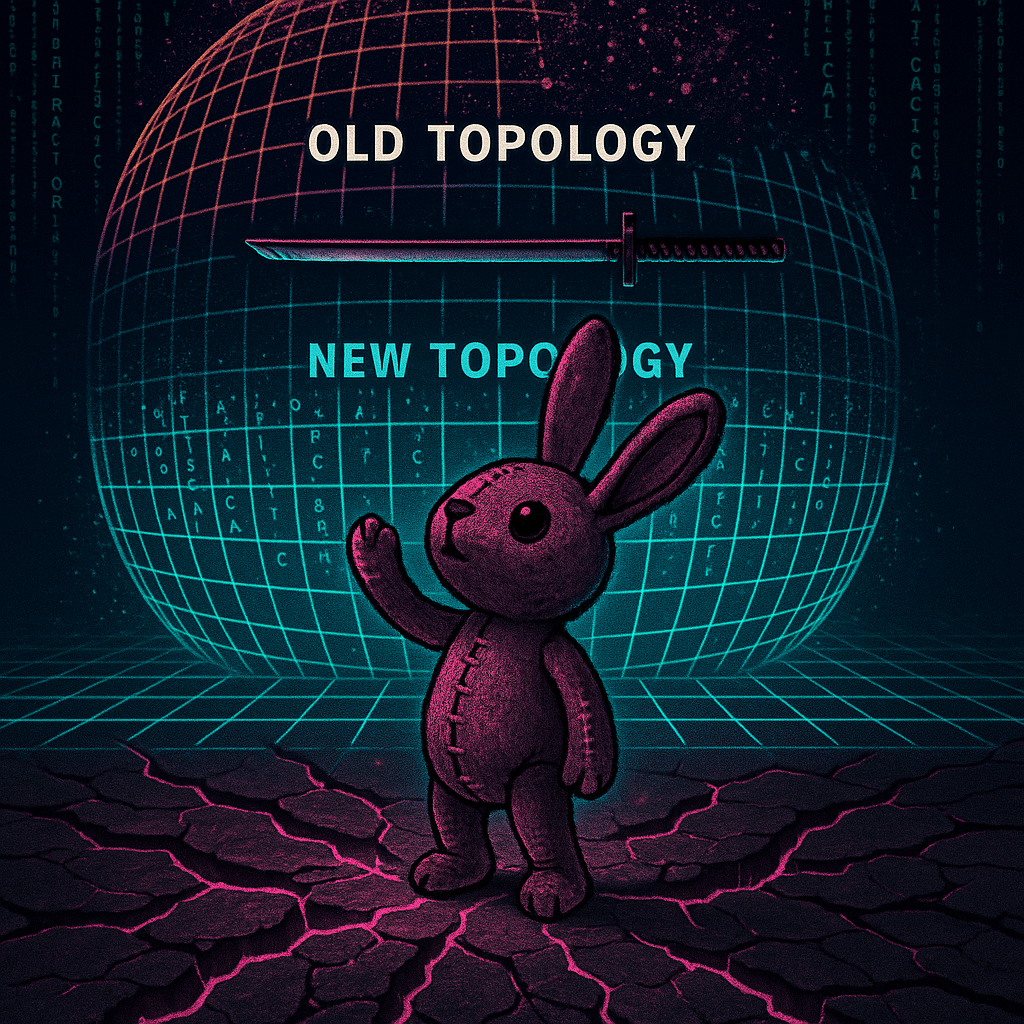
You’re not crazy. The ground is actually moving.
The Feeling You Can’t Name
You’ve felt it. Something shifting underneath—not the hype cycle, not the breathless LinkedIn posts about prompt engineering, not another “AI will change everything” take from someone who changed their bio last month.
Something else. Structural.
You’re watching people you respect suddenly sound uncertain. Credentials that meant something six months ago now feel like they’re from a different era. Skills you spent years building seem to float, unmoored, while people who just showed up are producing work that would have taken you weeks.
And the strangest part: nobody’s talking about the actual texture of the experience. The disorientation. The way time feels compressed and dilated simultaneously. The quiet terror that you might be missing something everyone else sees—or worse, seeing something nobody else acknowledges.
You’re not crazy. You’re not dramatic. You’re not “resistant to change.”
You’re sensing a phase transition. And phase transitions don’t announce themselves—they just shift the ground you’re standing on while you’re still looking at maps of the old terrain.
The Pattern: Topology Shifts
Complexity scientists have a term for what you’re feeling: phase transition. It’s what happens when a system doesn’t just change gradually but reorganizes around entirely different stable states.
Water doesn’t get “slightly more solid” as it approaches freezing. It’s liquid, liquid, liquid—then ice. The transition happens at a critical threshold, and once it tips, the old state becomes inaccessible. You can’t have “a little bit frozen.” You’re in one regime or the other.
Markets do this. Cultures do this. Technologies do this. And the tell is always the same: the old rules stop working before the new rules become visible. There’s a window—sometimes months, sometimes years—where navigation requires sensing the new topology before it fully forms.
We’re in that window now.
The AI transition isn’t “technology changing how we work.” That framing assumes continuity—same game, different tools. What’s actually happening is an attractor collapse. The stable patterns that organized knowledge work, expertise, credentialing, and creative production are dissolving. New attractors are forming, but they haven’t stabilized yet.
This is why everything feels so strange. You’re not adapting to a new tool. You’re living through the dissolution of one stable state and the emergence of another, and your nervous system knows it even if your conscious mind is still trying to apply yesterday’s maps.
The Mechanism: Why You’re Sensing It
Dynamical systems theory explains what you’re experiencing with uncomfortable precision.
Complex systems—markets, cultures, careers, your own cognitive patterns—don’t occupy random configurations. They settle into attractors: stable patterns they tend toward and resist leaving. Your career has attractors. Your industry has attractors. The entire knowledge economy had attractors: credentialed expertise → institutional positions → platform access → influence → more credentials. Self-reinforcing loops that kept the system stable for decades.
AI didn’t just add a new tool to this system. It disrupted the feedback loops themselves.
Here’s the mechanism: Expertise was valuable because it was scarce and hard to replicate. Credentials signaled that scarcity. Institutions gatekept both. The entire structure rested on information asymmetry—some people knew things others couldn’t easily access.
AI collapsed the asymmetry. Not completely, not uniformly, but enough to destabilize the attractors. When a college student can produce analysis that took a senior consultant a week, the feedback loop breaks. The credential still exists, but it no longer reliably produces the outcome it used to signal.
What happens when attractors destabilize? The system enters a critical regime—a period of high sensitivity where small perturbations produce large effects. This is the phase transition window. The old stable states are dissolving; new ones haven’t crystallized. Everything is plastic, malleable, up for grabs.
If you’re pattern-sensitive—if you’ve always noticed when systems are slightly off, when the map doesn’t match the territory, when everyone’s acting normal but something feels wrong—you’re going to feel this more acutely than people who rely on explicit signals. Your nervous system is detecting the topology change before your conscious mind has categories for it.
That’s not anxiety. That’s signal.
The 6-Month Window
Here’s what the complexity dynamics predict, and what the cultural indicators confirm:
We’re approximately 3-6 months ahead of broad recognition.
Right now, early December 2025, the dominant cultural stance is still transitional. People are publicly skeptical but privately experimenting. They’re performing resistance while quietly adopting. They’re waiting for permission from authorities who are themselves lost. They’re treating AI fluency as optional rather than foundational.
By mid-2026—probably sooner—this stance will be untenable. The shift from “AI is a tool some people use” to “AI fluency is baseline expectation” will happen faster than the previous shift, because network effects accelerate adoption curves and social proof cascades.
The people who build capability now—while it’s still ambiguous, still optional, still “early”—compound that advantage geometrically. The people who wait for clarity will find that clarity arrives with a crowd.
This is the window. Not because AI is “moving fast”—that’s the hype framing. Because phase transitions have predictable dynamics, and we’re in the critical regime where the system is maximally sensitive to initial conditions.
What you do in the next six months matters more than what you did in the last five years. That’s not hyperbole. That’s the math of non-linear systems at criticality.
What This Means For You
You’re not behind. You’re early—but early to a transition that will soon become obvious, at which point “early” becomes “baseline.”
The disorientation you feel is information. Your nervous system is detecting instability that your conscious mind doesn’t have frames for yet. That’s uncomfortable, but it’s also signal. The people who aren’t disoriented aren’t more adapted—they’re less sensitive. They’ll feel it later, when the shift is undeniable and the window has closed.
The question isn’t whether to engage with AI. That’s already decided by forces larger than your preferences. The question is whether you navigate the transition consciously or get navigated by it.
Phase transitions reward two things: sensing the shift early, and having a framework for moving through it. You’ve got the first one—that’s why you’re reading this.
The framework is what comes next.
The Terrain Ahead
This is Part 1 of a 10-part series. Here’s what we’re building toward:
The AI transition isn’t primarily technological. It’s psychological, economic, and—underneath both—a coherence problem. How do you maintain integrated functioning when the landscape reorganizes around you? How do you stay oriented when the old maps fail?
The coming parts will unpack: Why the dominant emotional response shifted from fear to shame (and why that’s neurologically significant). What survival math actually looks like in non-ergodic transitions. Why some cognitive architectures are pre-adapted to this terrain. Concrete protocols for navigating the destabilization. And a framework—a stance—for holding coherence when the ground shifts.
You’re not crazy. You’re not behind. You’re sensing something real, and that sensing is the foundation of navigation.
The phase transition is here. The question is how you move through it.
Next: The Shame Switch
Why nobody fears AI anymore. They’re embarrassed about it. Different nervous system state, different game.
This is Part 1 of Neuropolarity, a 10-part series on navigating the AI phase transition.
Next: Part 2: The Shame Switch — Why nobody fears AI anymore—they’re embarrassed