Parallel Poly: What I Dont Know Wont Hurt Me
Minimal contact, compartmentalized lives, information on a diet. Parallel poly works for avoidant attachment styles — and fails hard for anxious ones.

Parallel poly is easier for the arms and harder for the hinge.
The people on the sides of the V have simple structures—one relationship to maintain. The person at the vertex is running multiple relationships worth of logistics alone, managing separate calendars, processing with each partner individually, deciding what information crosses which firewall.
This is the hidden cost of parallel polyamory: someone's doing extra work so everyone else gets privacy.
What Parallel Actually Means
Your partners don't know each other—by design, not accident.
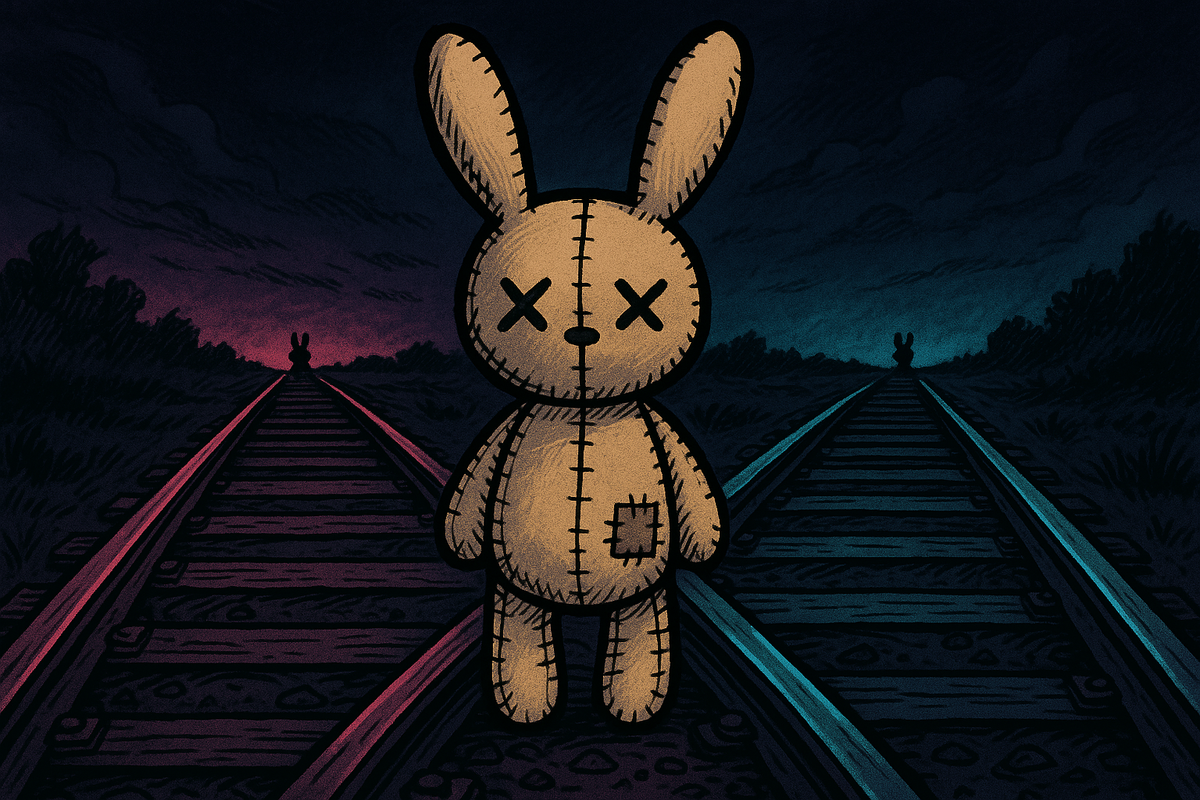
Your metamour exists. You know they exist. You might know their name, their general situation. But you've never met them, don't text them, wouldn't recognize them on the street. Your partner's relationship with them is information you receive secondhand, never witness directly. Your relationships run on separate tracks, parallel lines that never intersect.
Some parallel poly is strict—you know nothing beyond "my partner has other partners." Some is moderate—you know details but don't interact. The spectrum runs from total information blackout to "I know everything but we never meet." What makes it parallel is the lack of direct connection.
This is the opposite of kitchen table poly, where everyone sits around and has brunch together. In parallel, there is no table. There are multiple separate tables, and one person moves between them. Your partner has dinner with you Tuesday, dinner with them Thursday. The meals never overlap. The relationships exist in separate universes that happen to share one person.
Why People Need This
Jealousy isn't about knowledge—it's about proximity. Many people can handle knowing their partner has other partners. The abstract concept is fine. Seeing it, watching it, being in the room with it? That's different. Watching your partner touch someone else activates the nervous system in ways that hearing about it later doesn't.
Parallel provides distance between the knowing and the witnessing. You can process the information in private, at your own pace, without the immediate activation of seeing it happen. For some people, this distance makes poly sustainable where kitchen table would destroy them.
Metamour incompatibility is real. Sometimes you just don't like your metamour. Not for good reasons—just personality clash, different values, bad chemistry. In kitchen table poly, that's a crisis. You're supposed to be friends, or at least friendly. The incompatibility creates constant friction.
In parallel, it's irrelevant. You don't have to get along with someone you never see. Your partner's taste in other partners doesn't have to match your taste in friends. The relationship between you and your metamour doesn't need to exist at all.
Privacy has value. Some people don't want their love life to be a team sport. They don't want their partners knowing each other, comparing notes, forming opinions about how their relationship is going. Each relationship deserves its own privacy, its own space, its own development without outside interference.
Parallel lets you have multiple relationships without losing the intimacy of a dyad—each relationship gets to be its own thing, not absorbed into a polycule identity. Your relationship with Partner A stays separate from your relationship with Partner B. They're not infected by each other's dynamics.
Introverts survive. Kitchen table poly is socially exhausting. Polycule dinners where you're managing multiple relationships simultaneously. Shared vacations where you never get alone time. Group chats where every decision involves six people's opinions. For introverts, this is hell.
Parallel lets you have multiple partners without multiplying your social obligations. You see Partner A alone. You see Partner B alone. You recharge between them. Your social battery doesn't get drained by constant group dynamics.
The Hinge Reality
In parallel poly, the hinge carries the weight.
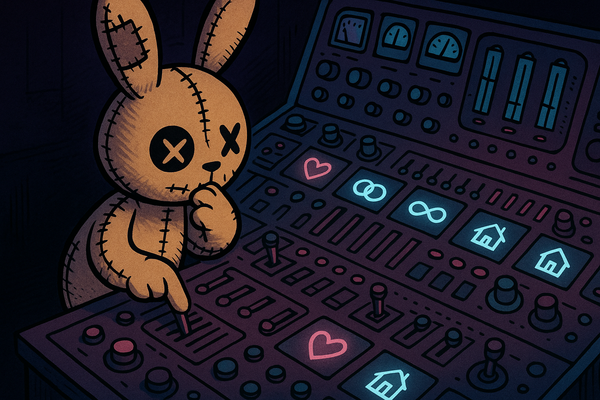
All logistics flow through them. Scheduling conflicts? The hinge manages it. Partner A wants Tuesday but Partner B already has Tuesday, and the hinge is the only one who knows this. Calendar coordination? The hinge does it. Three separate calendars that have to sync without the participants ever talking to each other.
There's no "I'll text your other partner directly"—everything routes through one person, who has to track multiple schedules, multiple needs, multiple relationship states. The hinge becomes a human router, managing information flow, preventing conflicts, ensuring everyone gets time.
Emotional labor concentrates on them. They process each relationship separately. They can't share the load with metamours who might support each other. Partner A is having a crisis? The hinge supports them. Partner B is having a different crisis the same week? The hinge supports them too. There's no distributed support network. Everything funnels to one person.
Every emotional need comes to them alone, in separate conversations, on separate nights. The processing is serial, not parallel. You can't have both partners in the same room working through a polycule-wide issue because there is no polycule. There are separate dyads. Problems get solved one relationship at a time.
Information management becomes constant work. What to share? What's private? The hinge navigates what information crosses between relationships, and getting it wrong in either direction creates problems.
Too much sharing feels like violation. Partner A doesn't want Partner B knowing intimate details of their sex life. Too little feels like deception. Partner B feels like they're being lied to by omission when they eventually discover something the hinge didn't mention.
The hinge has to remember what each partner knows, what they don't know, what they want to know, what they've explicitly said they don't want to know. This cognitive load compounds with each additional partner.
Compartmentalization fatigue is real. The hinge is essentially living multiple relationship lives that don't touch. That's manageable with two partners. With three or four, the cognitive load is enormous. Each relationship wants full presence. Full presence times three is exhausting.
You can't share funny stories from one relationship with the other partner. You can't integrate your life across relationships. You're constantly context-switching between separate worlds, and context-switching has metabolic cost.
Many parallel poly collapses trace to hinge burnout. The center failed because the center was carrying everything. The arms were fine—they each had one relationship to maintain. The hinge had three relationships, plus the invisible work of keeping them separate. Eventually, the hinge cracks.
The Attachment Angle
Avoidant attachment gravitates toward parallel. Each relationship is compartmentalized. Nothing bleeds into anything else. The independence is preserved. You don't have to deal with the messy intimacy of metamour relationships. You don't have to show up for polycule events. You get to maintain your separate life, separate identity, without being absorbed into a group.
Parallel lets avoidants maintain intimacy without the enmeshment they fear. You can be close to your partner without losing yourself in their wider network. The relationship stays dyadic—you and them, clean boundaries, no sprawl.
The danger: avoidants can use parallel to avoid going deeper anywhere. "I have other partners" becomes the excuse for never being fully present with any of them. The structure enables emotional distance while looking like emotional abundance.
Anxious attachment has complicated relationships with parallel. On one hand, distance from metamours means fewer triggers—you don't see them touching your partner, laughing at their jokes, being obviously attracted to each other. The visual evidence of your partner desiring someone else isn't constantly in your face.
But less information can mean more imagination. What you don't know, you invent. And the anxious imagination invents worst-case scenarios. If you don't know what they're doing with their other partner, your brain supplies vivid details—all of them threatening. They're having better sex. They're developing deeper connection. They're planning to leave you.
Some anxious types do better with kitchen table transparency—seeing the reality is less scary than imagining it. Others need parallel's firewalls—seeing it would be unbearable, but knowing abstractly is manageable. It depends on whether your anxiety feeds more on witnessing or on uncertainty.
Secure attachment can do either style and picks based on practical fit rather than anxiety management. Secure people don't need parallel to avoid jealousy triggers, and they don't need kitchen table to feel reassured. They choose based on whether they actually like their metamours, whether they have bandwidth for group dynamics, whether privacy matters to them.
Disorganized attachment may find parallel's structure helpful—it reduces variables. Fewer people to track, fewer relationships to navigate, fewer opportunities for the push-pull pattern to activate across multiple relationships simultaneously.
But they may also use it to avoid the intimacy work that kitchen table would require. Building relationship with metamours, showing up for polycule events, being part of a community—all require sustained intimacy. Parallel lets you opt out while still calling yourself poly.
Where It Breaks
Enforced parallel masks avoidance. If you're doing parallel specifically to avoid jealousy work, you're treating symptoms. The jealousy doesn't disappear—it just loses its trigger. You're not less jealous. You're just not exposed to the stimuli that activate it.
The underlying insecurity remains. You still don't trust that your partner can love someone else without loving you less. You still feel threatened by their other relationships. You're just not seeing the threat, so you can pretend it doesn't exist. This is management, not healing.
Eventually something breaks the firewall. You run into your metamour accidentally. You see a text preview. Something slips. And the jealousy you've been avoiding erupts with compound interest.
Information vacuums fill with worst-case scenarios. Less information can mean more imagination. For anxious attachment, parallel can turn into torture of imagined scenarios about what's happening in those other relationships you can't see.
Your partner is on a date with their other partner. You know this. You don't know where, what they're doing, how it's going. Your brain supplies the details: they're having amazing sex. They're laughing more than they laugh with you. They're falling deeper in love. Your partner is realizing you're not enough.
None of this may be true. But in the absence of information, your anxiety writes the script. And the script is always a horror movie.
Hinge collapse. The center burns out from managing everything solo. The hinge is doing triple the emotional labor—maintaining multiple relationships, managing all logistics, holding all information, compartmentalizing constantly. If no one's watching for hinge exhaustion, the whole structure fails.
The hinge doesn't always know they're burning out until they hit the wall. It creeps up—more resentment, more exhaustion, more mistakes in information management. Eventually they can't maintain the separation anymore and something critical gets crossed or forgotten.
Emergency failures. When crisis hits—illness, death, major life events—parallel structures have no built-in support redundancy. In kitchen table polycules, everyone knows everyone. If the hinge is hospitalized, the other partners can coordinate. They can support each other. They can handle logistics together.
In parallel, the other partners don't know each other well enough to coordinate. They might not even know how to contact each other. If the hinge can't manage the relationships, the relationships just… stop. There's no infrastructure for crisis. The whole structure depends on the hinge being functional.
The Honest Assessment
Parallel poly works when people genuinely need relationship compartmentalization—not as jealousy avoidance, but as actual preference. When you genuinely value privacy more than integration. When seeing your metamour wouldn't bother you but also wouldn't add value, so why do the work?
It works when the hinge has high capacity for logistics and emotional labor. Not everyone does. If you're the hinge, you need to be honest about whether you can sustain this. Managing multiple separate relationships is harder than managing an integrated polycule. The compartmentalization itself is labor.
It works when everyone's secure enough to handle information gaps without spiraling. You know your partner has other relationships. You don't know the details. This doesn't trigger catastrophic anxiety. You can live with not knowing without inventing nightmares to fill the gap.
It struggles when "parallel" is code for "my partners can't know about each other" (that's cheating, not poly). True parallel means everyone knows everyone exists, they just don't interact. If your partners don't even know about each other, you're not doing parallel poly. You're doing multiple secret relationships.
It struggles when anxious partners fill information vacuums with worst-case scenarios. The structure that's supposed to reduce triggers becomes the trigger. The lack of information activates anxiety worse than seeing the reality would.
It struggles when the hinge resents carrying all coordination weight. If the hinge feels like they're doing unfair labor, the resentment will poison all the relationships. The structure only works if the hinge genuinely prefers it or is being compensated somehow—more autonomy, more control, something that makes the extra work worthwhile.
It struggles when crisis reveals there's no support infrastructure. Everything's fine until it's not. Then you discover your parallel structure has no redundancy. The hinge is the single point of failure. If they fail, everything fails.
Kitchen table creates polycule family. Parallel creates multiple dyads with a shared connection point. Neither is more valid. The question is which structure serves the people inside it—and whether the hinge is being compensated for carrying the weight.
If you're an arm in a parallel structure, remember: your simple setup (one relationship to manage) exists because someone else (the hinge) is doing invisible labor. Appreciate it. Check in on them. Make sure they're not drowning while you enjoy the simplicity they're creating for you.