
Casino as a Lifestyle Hack: Working Eating and Living Well Without Gambling a Dime

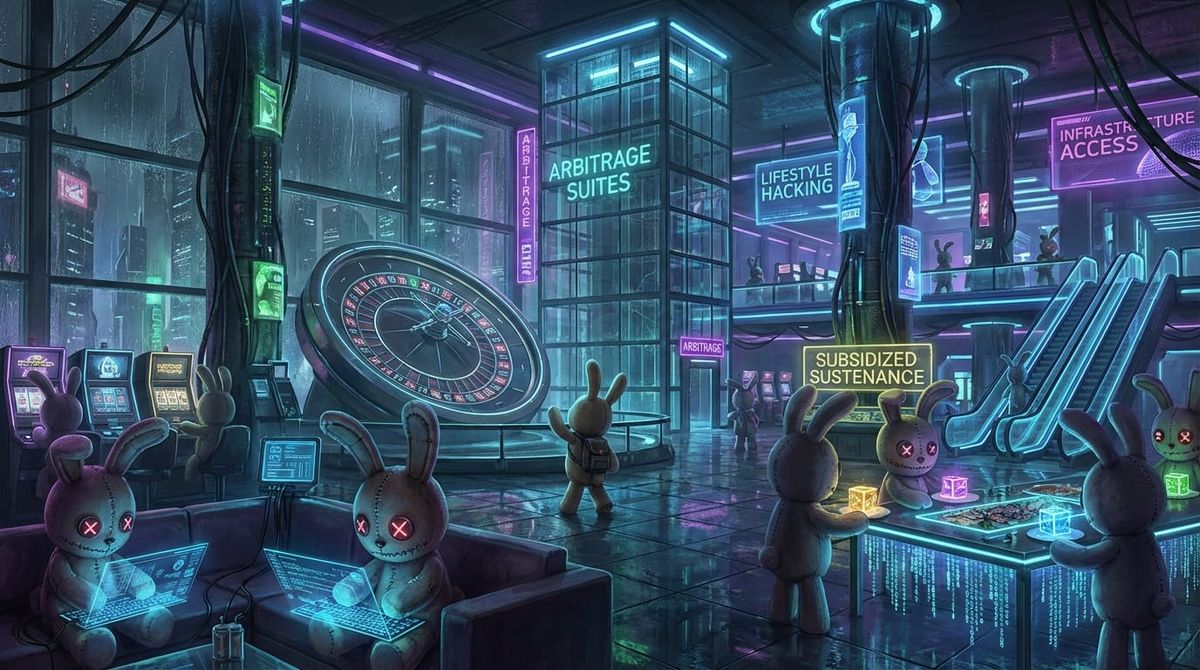
The Bellagio pumps 100% outside air through its HVAC system, filtered and climate-controlled to a precision that most office buildings can’t match. The temperature holds steady at 70 degrees year-round. The lighting is engineered to suppress fatigue cues. The ambient noise sits at a level that behavioral research associates with optimal cognitive performance; present enough to prevent the distraction of silence, consistent enough to fade into background. The air quality alone would cost a fortune to replicate in a home office.
This is the casino’s dirty secret, and it has nothing to do with gambling.
Casinos Are Accidentally the Best Public Infrastructure in America
The environmental design of a casino is optimized for one thing: keeping human beings comfortable, alert, and present for as many hours as possible. The house needs you on the floor, awake and spending. To achieve this, casinos have invested billions in creating physical environments that are genuinely, measurably pleasant to occupy.
The air quality is hospital-grade or better at most major properties. The temperature regulation is precise because even minor discomfort gives the brain a reason to leave. The carpeting absorbs sound at frequencies that would otherwise cause fatigue. The sightlines are designed to create a sense of spaciousness even in dense environments. There are no windows and no clocks, which sounds oppressive in theory but in practice means no glare, no weather intrusion, and no external time pressure interrupting whatever you’re doing.
All of this was built for gamblers. But the infrastructure doesn’t check your credentials at the door.
A person who walks into a casino with a laptop, sits down in one of the many quiet corners that every major property maintains, connects to the free wifi, and works for six hours has just accessed a climate-controlled, ergonomically designed workspace with free parking, multiple food options within a five-minute walk, and restrooms that are cleaned hourly. The cost of this workspace is zero. You don’t have to gamble. You don’t have to buy anything. You just have to be there.
The Food Economics Don’t Make Sense Until You Realize They’re Subsidized
Casino food operates on a fundamentally different economic model than restaurant food. A standalone restaurant in a major city needs to cover its rent, labor, food costs, and profit margin entirely through menu prices. A casino restaurant needs to keep people on the property. The food is a loss leader or a break-even operation; the profit center is the gaming floor, and the restaurant’s job is to prevent you from leaving the building to eat somewhere else.
This is why casino buffets have historically offered absurd value. The $30 buffet at a major Strip property features prime rib, crab legs, and sushi that would cost $80-100 at a comparable non-casino restaurant. The casino isn’t losing money on the buffet; it’s making money on the hours of gambling that the buffet enables by keeping the customer on premises. The buffet is a comp in disguise, even at full price.
The subsidized economics extend beyond buffets. Celebrity chef restaurants inside casino properties consistently price 15-25% below what the same chef charges at their standalone locations. The steakhouse at MGM Grand isn’t competing with Peter Luger on food cost; it’s competing with the customer’s impulse to leave the building. That impulse is worth suppressing, and the suppression is priced into the discount.
Players card holders often access additional food benefits without significant play. Many properties offer dining discounts at 10-20% for base-tier card holders. Some offer free or discounted buffet access during promotional periods. The card costs nothing to obtain and the benefits start immediately.
The Hotel Arbitrage Is Consistent and Significant
Casino hotel rooms are priced on a different curve than comparable non-casino properties, and the discount is remarkably consistent: 30-50% less for equivalent or superior accommodations.
A king suite at a major Strip casino resort; 500+ square feet, marble bathroom, strip view; regularly prices at $150-250 per night on weekdays. The equivalent room at a non-casino four-star hotel in the same market runs $300-500. The casino hotel is subsidizing the room rate for the same reason it subsidizes the food: the room keeps you on property, and on-property guests gamble at dramatically higher rates than day visitors.
The subsidy deepens for players card holders. Even minimal tracked play can unlock promotional room rates that cut another 30-50% off the already-discounted rack rate. A player who puts $20 through a video poker machine; representing roughly $1 in expected loss; has activated their card’s play history and becomes eligible for room offers that arrive by mail over the following weeks. The $1 in expected loss buys access to offers worth hundreds.
For anyone who travels to casino markets with any regularity; and casino markets now include most major American cities plus dozens of regional destinations; the hotel arbitrage alone justifies maintaining active players cards across multiple networks.
Working From a Casino Is Surprisingly Functional
The remote work revolution created a demand for third places; environments outside the home and outside the traditional office where knowledge work can happen. Coffee shops filled this role for a while, but coffee shops have two-hour implied time limits, inconsistent wifi, uncomfortable seating, and a social pressure to keep buying drinks.
Casinos have none of these problems.
The wifi at major casino properties is reliable and generally fast; they need it for their own operations, and guest access rides on the same infrastructure. The seating ranges from lounge chairs to restaurant booths to sports book recliners, all of which are more comfortable than anything at a Starbucks. The hours are 24/7. The food is steps away. The coffee is available. And nobody is going to tap you on the shoulder after 90 minutes and ask if you’d like to order something else.
The sports book at most major properties is particularly well-suited for remote work. Large screens provide ambient visual stimulation without requiring attention. The seating is designed for extended occupation. The noise level is manageable. During non-event hours; weekday mornings, for instance; the sports book is often nearly empty, creating a spacious, well-appointed workspace that costs nothing to use.
There are limitations. Not every casino has strong wifi in every area. Cell signal can be weak deep inside properties. And the ambient environment, while stimulating, can be distracting for work requiring deep focus. But for email, calls, writing, planning, and the kind of semi-focused work that constitutes most knowledge workers’ actual days, the casino floor is a surprisingly effective office.
The Casino as Basecamp Model Unlocks Destinations
Casino properties tend to be located in or near places worth visiting, and the subsidized infrastructure makes them ideal base camps for non-gambling trips.
Harrah’s Cherokee in North Carolina sits at the edge of the Great Smoky Mountains National Park. A casino hotel room runs $80-120 per night; comparable accommodations in Gatlinburg or Pigeon Forge cost $150-250 for inferior rooms. The casino provides the lodging, the meals, and the evening entertainment. The mountains provide the days.
Talking Stick Resort in Scottsdale puts you in the middle of the Sonoran Desert with access to hiking, golf, and the Scottsdale dining scene. The Beau Rivage in Biloxi sits on the Gulf Coast; beach access, seafood, deep-sea fishing charters, all subsidized by a hotel rate that undercuts every non-casino property on the same stretch of coastline.
The pattern repeats across the country. Mohegan Sun and Foxwoods in Connecticut serve as base camps for coastal New England. The Greenbrier in West Virginia offers resort-quality accommodations at casino-subsidized rates in Appalachian mountain country. San Manuel and Morongo in Southern California sit within striking distance of Joshua Tree, Palm Springs, and the San Bernardino mountains.
The traveler who thinks of casino properties as subsidized lodging infrastructure rather than gambling destinations unlocks a network of well-maintained, well-located, deeply discounted accommodations across most of the continental United States.
The $20 Activation Play Gets You Into the System
The players card without gambling question is straightforward. You can get a card at any property for free, with no play required. But comp offers; the room mailers, the free play credits, the dining discounts; flow from play history. A card with zero play generates zero offers.
The minimum viable play to activate the system is remarkably low. Twenty dollars through a video poker machine at a property you’re visiting for the first time establishes a play record. The expected loss on $20 of 9/6 Jacks or Better video poker, played with correct strategy, is roughly $0.90. Less than a dollar. That sub-dollar investment creates a data point in the casino’s marketing system; a point that triggers the algorithms which generate promotional offers over the following weeks and months.
The lapsed-player dynamic described in the comps article applies here with particular force. A player who activates their card with minimal play and then doesn’t return for 60-90 days will often receive reactivation offers that far exceed anything justified by their play history. The system is bidding against your absence, and it doesn’t know that you were never really a gambler in the first place.
The Social Design Is the Feature Nobody Talks About
Casinos are among the last remaining public spaces in America where strangers talk to each other with any regularity. The gaming floor creates a natural social lubricant; shared experience, shared stakes, shared reactions to outcomes. But the social design extends beyond the tables.
Casino bars attract a wider demographic cross-section than almost any other venue type. The retiree playing video poker at the bar, the business traveler killing time before a morning flight, the local couple on a Tuesday night date, the group of friends in town for a convention; these people would never encounter each other in their normal social orbits. The casino puts them in the same room, gives them something to do with their hands, and removes most of the social friction that prevents strangers from interacting in other contexts.
The 24-hour schedule contributes to this. At 2 AM in a casino, the social rules relax further. The people who are awake at that hour in a casino tend to be either interesting or at least entertaining. The environment permits conversation in a way that most public spaces actively discourage.
For the person using the casino as lifestyle infrastructure rather than a gambling venue, the social dimension is a genuine benefit. The casino provides what sociologists call a “third place”; neither home nor work, but a consistent, accessible environment where casual social interaction happens organically. These spaces are disappearing from American life. Casinos, accidentally, are preserving them.
The House Always Wins Unless You Never Play
The entire business model of the casino rests on an assumption: that the people inside the building are gambling. Every piece of subsidized infrastructure; the climate control, the food, the rooms, the entertainment; is funded by the edge the house takes on every bet placed on the gaming floor.
The person who accesses all of that infrastructure without placing bets is exploiting a gap in the business model. Not illegally, not unethically; just practically. The casino can’t charge admission. The casino can’t require gambling. The casino can’t even effectively discourage non-gamblers from using the facilities, because the facilities are designed to be open and accessible precisely because openness and accessibility are what keep gamblers on the floor.
The comp program, activated with minimal play, converts you from a non-entity in the system to a marketing target. And being a marketing target means receiving offers; room offers, food offers, entertainment offers; designed to lure you back to the property on the assumption that you’ll gamble when you arrive. You don’t have to gamble when you arrive. You have to show up. The offer is the offer.
The house always wins. Unless you never sit down at the table; and still eat the buffet, sleep in the suite, work from the sports book, use the pool, and run the comp program like a quiet, well-organized side project. The infrastructure is there. The subsidy is real. The only requirement is understanding that the casino built all of it for someone else, and you’re welcome to use it anyway.