The Relationship That Was Also a Research Project
Masters and Johnson studied human intimacy for twenty years then married each other. It lasted twenty-one years. The power asymmetry, Johnson's late interviews, and what their personal failure reveals about the limits of physiological knowledge applied to relational problems.

They spent twenty years studying human intimacy before they tried it with each other. William Masters and Virginia Johnson married in 1971, fourteen years after she walked into his laboratory as a research assistant with no degree and a talent for making strangers comfortable talking about sex. The marriage lasted twenty-one years. They divorced in 1992. The professional partnership lasted thirty-six years. The divorce was more revealing than the marriage, because the divorce is where the asymmetry that had organized their entire working life finally became impossible to manage.
The standard biographical treatment of Masters and Johnson’s marriage frames it as ironic: the world’s foremost experts on sexual function couldn’t make their own relationship work. The irony is real but shallow. The deeper story is about what happens when two people build a professional identity so intertwined that neither can exist independently, and then try to layer a marriage on top of it. The marriage did not fail because they didn’t understand relationships. It failed because they understood their professional relationship perfectly and their personal one not at all, and the two structures were incompatible in ways neither of them saw until it was too late.
The Professional Relationship Was the Actual Relationship
From 1957 to 1971, Masters and Johnson were colleagues who spent their days in a laboratory observing human sexual response, their evenings discussing findings and designing protocols, and their professional lives operating as a single unit that the outside world could not easily disaggregate. They co-authored everything. They presented together. They were interviewed together. The brand was the partnership, and the partnership was the brand.
Whether they were sexually involved during this period is a question that biographers have addressed with varying degrees of confidence and speculation. Thomas Maier’s biography, Masters of Sex, reported that they began a sexual relationship early in the professional partnership. Johnson, in later interviews, was more circumspect, sometimes acknowledging the relationship and sometimes deflecting. Masters never discussed it publicly. The ambiguity itself is revealing: two people who had built their careers on the principle that sexual behavior should be discussed openly and measured precisely could not, when it came to their own behavior, manage either openness or precision.
The professional container was what held them together during this period. The laboratory, the Institute, the publications, the public appearances; these structures gave the relationship a shape that did not depend on emotional intimacy or personal compatibility. They worked together. The work was consuming, important, and successful. The work provided purpose, structure, daily contact, and a shared identity that was larger than either of them individually. As long as the work was the primary relationship, the personal dynamics underneath could remain unexamined.
This is a pattern that anyone who has worked closely with a colleague for years will recognize. The professional relationship provides a framework for interaction that is clear, functional, and bounded. You know your roles. You know the rules. You know what is expected of you and what you can expect in return. The framework absorbs tension, redirects conflict into work product, and creates the illusion of intimacy through proximity and shared purpose. It is not intimacy. It is collaboration. But from the inside, especially when the collaboration is intense and the shared purpose is significant, the difference between collaboration and intimacy can be genuinely difficult to detect.
The Marriage Was a Category Error
They married in 1971. Johnson was fifty-two. Masters was fifty-six. Both had been married before; Masters to his first wife, Elisabeth, for over twenty years; Johnson twice, both ending in divorce. The timing of the marriage coincided with the peak of the Institute’s visibility and influence. Human Sexual Inadequacy had been published the year before. The therapy program was attracting international attention. The partnership was the most famous collaboration in the history of sex research.
Johnson said later, in interviews conducted in the final years of her life, that Masters proposed and she accepted because she felt she had no choice. Not coerced in any direct sense, but constrained by the structure of the partnership itself. The Institute was their mutual creation. Her career, her income, her professional identity, her daily life; all of it was organized around the partnership. Masters wanted to marry. Johnson did not want to lose the partnership. The marriage was the price of the partnership’s continuation, or at least that is how Johnson narrated it in retrospect.
Whether this narrative is accurate or retrospectively constructed to make sense of a decision she regretted is impossible to determine from the outside. What is clear is that the marriage changed the dynamic in ways that the professional container could not absorb. As colleagues, they had clear roles and clear boundaries. As spouses, they were supposed to have something else: emotional availability, mutual vulnerability, the willingness to be known as a person rather than as a professional partner. Masters, by all accounts, did not have this capacity. Or did not exercise it. Or did not see the need.
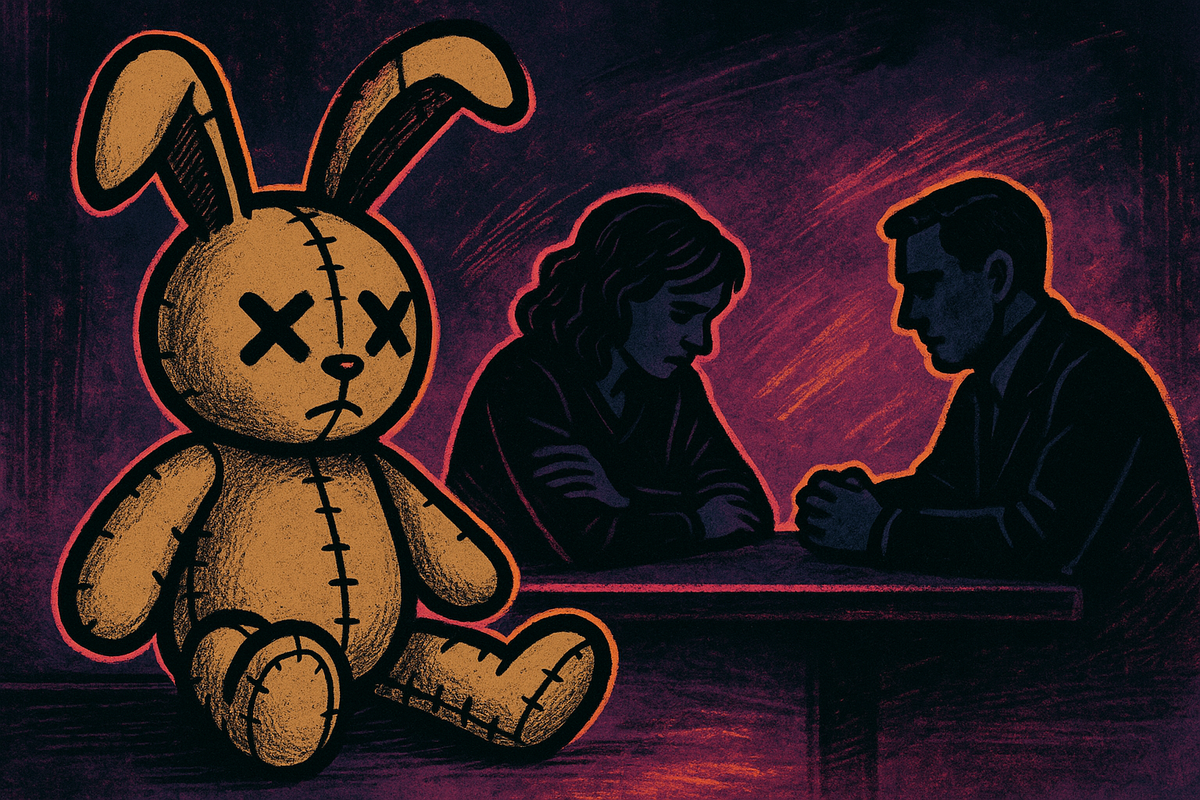
Johnson described him, in those late interviews, as cold. Emotionally unavailable. Professionally brilliant and personally withholding. A man who could design a research protocol to measure the physiological correlates of orgasm with extraordinary precision but could not, or would not, engage with his wife’s emotional needs with anything approaching the same attention. The word she used most often was “difficult.” He was a difficult man. The difficulty was not dramatic; not abusive, not volatile, not cruel in any overt way. It was a steady, ambient coldness that pervaded the domestic space they shared while the professional space continued to function.
The Power Asymmetry Was the Architecture
The dynamic that organized the marriage was the same one that had organized the partnership from the beginning: Masters held the institutional power, and Johnson held the intellectual and clinical power, and the institutional power won every time there was a conflict. His name came first on the publications. His medical degree legitimized the practice. His relationships with Washington University and the medical establishment provided the institutional cover that made the work possible. Without Masters, Johnson had no credentials, no institutional standing, and no independent professional identity.
This was not a secret. Johnson knew it. Masters knew it. Everyone who worked at the Institute knew it. But within the professional relationship, the asymmetry was functional; it produced work, generated results, built an institution. Within the marriage, the same asymmetry was corrosive. A marriage requires, at minimum, the possibility that either partner can leave. Johnson could not leave. Or rather, she could leave the marriage, but leaving the marriage meant leaving the Institute, and leaving the Institute meant leaving the only professional context in which her work was recognized and compensated. She was trapped by the absence of credentials she had never obtained because the partnership had consumed her entire adult professional life.
Masters, for his part, seems to have experienced the marriage as adequate. He had a spouse, a professional partner, a domestic arrangement that supported his work, and a public image that benefited from the appearance of a partnership that extended from the laboratory to the home. What Johnson needed from the marriage; emotional connection, recognition, warmth; were things he either could not provide or did not understand she was asking for.
The cruelest irony is not that the world’s foremost sex researchers had a bad marriage. The cruelest irony is that their clinical work was built on the insight that sexual dysfunction is usually relational rather than individual; that the problem is in the dynamic between two people, not in either person alone; and they could not apply this insight to themselves. They had the framework. They had the language. They had two decades of clinical experience helping other couples identify and address exactly the patterns that were destroying their own relationship. The knowledge was useless. Or rather, the knowledge was useful for everyone except the people who had it, because knowing what the pattern is and being able to change it when you are inside it are entirely different skills.
The Divorce Revealed What the Marriage Had Hidden
They divorced in 1992 after twenty-one years. The divorce was quiet. There was no public acrimony, no media spectacle, no contested proceedings. Masters was seventy-six. Johnson was seventy-three. The Institute continued to operate for a few more years, but the dissolution of the marriage was also, effectively, the dissolution of the partnership. Masters retired. Johnson withdrew from public life.
In the years after the divorce, Johnson gave a series of interviews that were candid in a way that nothing in her public career had been. She talked about the power asymmetry. She talked about the credential gap and how it had been used, consciously or unconsciously, to maintain Masters’s dominance in the partnership. She talked about the marriage as a mistake she had made under pressure from a professional situation that left her no good options. She talked about the work with a mixture of pride and bitterness that was more revealing than anything she had published.
The late interviews are the closest thing to Johnson’s unmediated voice that exists in the historical record, and they are worth taking seriously not because they are objective but because they are the only account of the partnership from the perspective of the person who did not hold the institutional power. Masters never gave comparable interviews. He retreated into private life and died in 2001 at the age of eighty-five. His side of the story is available only through the publications, the institutional record, and the accounts of people who knew him. It is, necessarily, incomplete.
What Their Failure Actually Reveals
The temptation is to treat the failed marriage as evidence that sex research does not produce personal wisdom, that studying human intimacy does not make you intimate, that the map is not the territory. All of this is true but none of it is interesting. The interesting question is more specific: what is it about the kind of knowledge Masters and Johnson produced that made it inapplicable to their own lives?
The answer has to do with the nature of their research methodology. Masters and Johnson studied sexual response from the outside. They observed. They measured. They categorized. They built models that described what happens in human bodies during sexual activity. The models were accurate. But the models were third-person models; they described what could be seen and measured by an external observer. They did not describe, and could not describe, what it feels like from the inside to need something from someone who cannot give it. They did not describe the experience of being trapped in a professional relationship that is also a personal one and finding that the professional success makes the personal failure both invisible and inescapable.
Johnson’s late interviews are the closest the Masters and Johnson archive gets to first-person testimony about the subjective experience of being in a relationship that looks functional from the outside and is empty from the inside. And her testimony is the testimony of someone who understood, at the end of her career, that the research she had helped produce was brilliant and limited in exactly the same way: it measured what could be measured and left the rest unmapped.
The marriage between Masters and Johnson is not a cautionary tale about the limits of sexual knowledge. It is a case study in the specific limitation of physiological knowledge applied to relational problems. They knew what bodies do. They did not know, or could not enact, what people need. The gap between those two kinds of knowledge is where most relationships actually live, and it is a gap that no amount of data from a laboratory in St. Louis was ever going to close.
Johnson died in 2013 at the age of eighty-eight. In her final years she lived quietly in St. Louis, the city where it had all happened, where the laboratory had been, where the Institute had risen and declined, where the marriage had played out its long, cold arc. She did not write a memoir. She did not publish a retrospective. She gave interviews, some candid and some guarded, and she let the record stand as it was: incomplete, asymmetric, and shaped by a power dynamic she had spent her career navigating and never fully escaped.