
Kitchen Table Poly: We're All Having Brunch
Metamours as friends, partners sharing holidays, everyone at the same table. Kitchen table poly is secure attachment heaven — and anxious attachment hell.

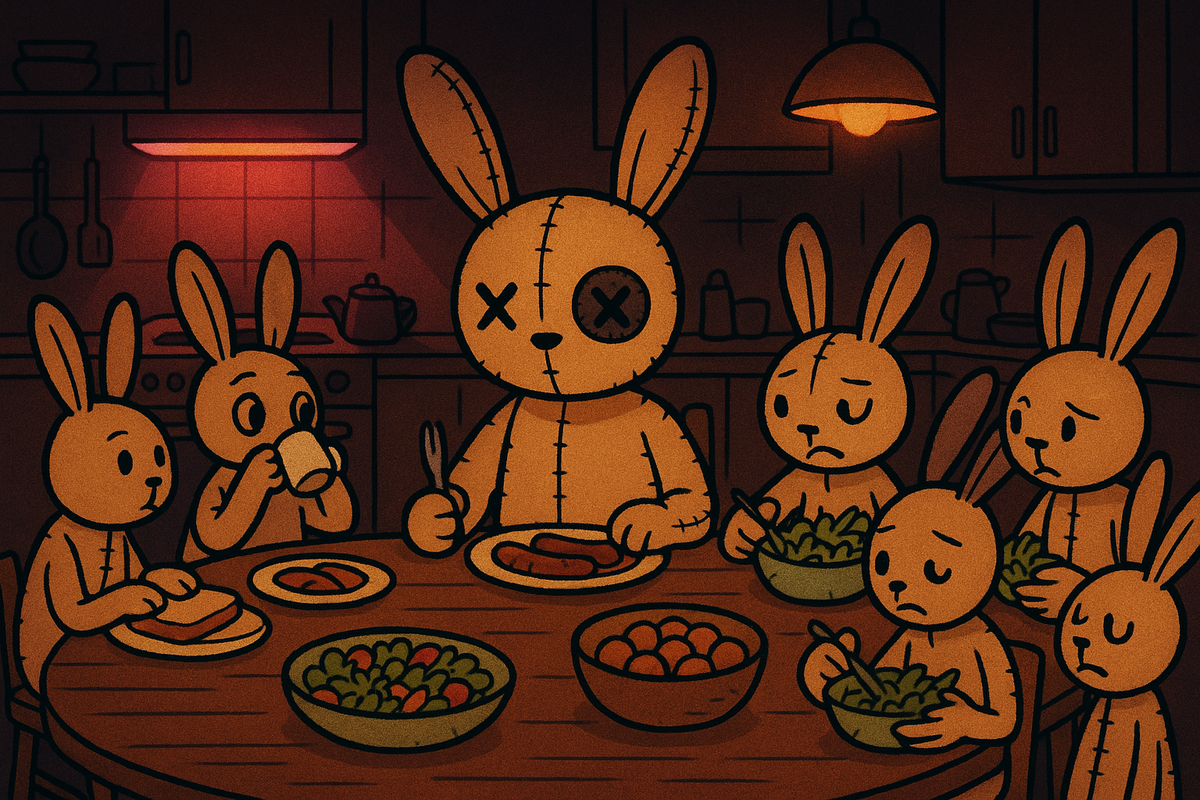
Kitchen table poly is exposure therapy for possessiveness. You can't avoid seeing your partner with their other partner. You're going to be at the same brunch.
This is polyamory's version of chosen family—everyone in the polycule knows each other, shares meals, celebrates holidays together. Your metamour isn't a stranger. They're someone you've had dinner with, maybe someone you text, someone who might become a genuine friend.
It's the warmest, most connected version of poly that exists. When it works.
What It Looks Like
In kitchen table poly:
Everyone knows everyone. You've met your metamours. They've met theirs. There are no hidden partners.
Group activities happen. Dinners, vacations, holidays. The polycule does things together, not just in separate dyads.
Metamour relationships matter. You have a relationship with your metamour even though you're not romantically involved. It might be friendship. It might be "people who care about the same person." But it's something.
Communication flows freely. People talk directly rather than routing everything through hinges. "I'm going to text your girlfriend directly about the party" is normal.
Kids (if any) know multiple adults. Children in kitchen table poly families often have multiple parental figures. Holidays have big tables.
Why People Want This
Chosen family. The nuclear family model is isolating. Two parents, some kids, everyone else at arm's length. Kitchen table poly offers something richer—an extended network of people who actually show up.
Support redundancy. If one relationship is struggling, you have others. If you need help, multiple people can provide it. The isolation of the couple unit dissolves into a web of support.
Transparency ease. No secrets to maintain. No navigating what your partner does or doesn't know about your other partners. Everything is on the table—literally.
Compersion opportunities. Watching your partner be happy with someone else, and having a relationship with that someone yourself, deepens compersion. It's easier to feel joy about someone you know and like than about a stranger.
Richer social life. Instant social network. Built-in friends who share life circumstances. Never being the only poly person in the room.
Who It Works For
Secure attachment: The foundation. You need to be able to handle intimacy with multiple people simultaneously without jealousy spiraling. Kitchen table poly is exposure therapy for possessiveness—you can't avoid seeing your partner with their other partner.
High social bandwidth: You have to actually like having lots of relationships to maintain. Introverts who need significant solo time often find kitchen table poly exhausting.
Low jealousy baseline: Seeing your partner casually affectionate with their other partner at the kitchen table happens constantly. If this triggers you every time, you'll be triggered constantly.
Community orientation: You value collective over individual. You want to be embedded in a network, not isolated in a dyad.
Who It Overwhelms
Anxious attachment: Every interaction is a potential jealousy trigger. Your partner laughed longer at their joke than yours. They touched their arm while talking. Constant exposure means constant vigilance, and the nervous system never rests.
Privacy-oriented people: Some people need separation between their relationships. They don't want their lovers to be friends with each other. The forced intimacy of kitchen table poly feels violating.
Introverts: Kitchen table poly is socially demanding. If you recharge alone, having your recovery space filled with metamours is draining.
People with incompatible metamours: Sometimes you and your metamour just don't get along. In kitchen table poly, that tension can't be avoided. You're going to be at the same table.
The Metamour Relationship Challenge
Kitchen table poly requires some kind of positive relationship with your metamours. Not romance—but at least goodwill.
This is hard because:
You didn't choose them. Your partner chose them. You might never have become friends naturally. They might hold political views you hate, have annoying habits, or just not be your kind of person. But they're dating someone you love, so you're expected to make it work.
You're sharing someone. However you slice it, the time and energy your partner gives them is time and energy not given to you. Finding genuine warmth through that awareness isn't automatic. Even with secure attachment, there's a cognitive dissonance in being friends with someone who's also your competition for resources.
Comparison is inevitable. You see them. You see how your partner is with them. You compare yourself—whether you want to or not. Are they more affectionate with them? More playful? More sexually intense? You can tell yourself comparison is pointless, but your nervous system doesn't care.
The vulnerability asymmetry. You're being asked to be friendly with someone who sees your partner naked, knows their intimate desires, maybe knows things about them you don't. There's an exposure that can feel destabilizing, especially if you're anxious attachment.
Some metamour pairs become genuine friends—best friends, even. Others maintain cordial acquaintanceship. Both can work in kitchen table poly. What can't work is active dislike with no room for distance.
Metamour Archetypes (And How They Function)
The genuine friend. You actually like them independent of your shared partner. You'd hang out even if the romantic connection ended. This is the kitchen table ideal. Rare, but deeply stabilizing when it happens.
The cordial acquaintance. You're friendly at group events, exchange pleasantries, respect each other. No deep bond, but no tension. This is the most common functional metamour relationship.
The awkward overlap. You have nothing in common. Conversation is strained. You're polite because you both love the same person, but it's work. This is manageable in kitchen table poly if the shared partner doesn't force interaction beyond what's natural.
The rival. You actively dislike them, or they dislike you. Maybe it's personality clash. Maybe it's jealousy. Maybe they said something shitty once and you can't forgive it. Kitchen table poly can't sustain this. Either the relationships need to shift to parallel poly (less interaction) or someone's leaving.
The former partner. Your current partner is still close with an ex who's in the polycule. This adds history and complexity. Sometimes it's beautiful—they've processed the romantic end and built genuine friendship. Sometimes it's a minefield of unresolved attachment.
The Scheduling Reality
Kitchen table poly is a logistics challenge:
Group events need coordination. Getting five adults' schedules to align for dinner is harder than scheduling dyadic dates.
Intimacy still needs dyadic time. You can't only have group hangs. Each relationship needs individual attention. That means scheduling both group and individual time—more calendar, not less.
Emotional labor multiplies. Facilitating metamour relationships, processing group dynamics, making everyone feel included—someone's doing this work. Often the hinges. It's a lot.
The Communication Complexity
Kitchen table poly creates specific communication challenges:
The telephone game. Information passes through multiple people and gets distorted. Your partner tells their other partner something about you. That partner mentions it to their other partner. By the time it circles back to you, the message has mutated. Direct communication helps, but not everyone is comfortable with that level of openness.
Oversharing and undersharing. How much do you tell your metamour about your relationship with the shared partner? Too much feels like violating your partner's privacy. Too little feels like keeping secrets. The right amount varies by everyone involved, and negotiating it is constant.
Conflict ripple effects. If you and your partner have a fight, and your partner vents to their other partner, now your metamour knows you're in conflict. This can create awkwardness, taking of sides, or unsolicited advice. Your private relationship struggles become semi-public.
Group decision-making. In tight kitchen table polycules, decisions that affect one person often affect everyone. Moving to a new city, having a child, major career change—these aren't just couple decisions when you're deeply intertwined with other relationships. Navigating whose input matters and how much is complex.
The Boundary Challenges
Kitchen table poly can blur boundaries in unhealthy ways:
Enmeshment. When does "we're all family" become "I have no space for myself"? Some kitchen table polycules become claustrophobically close, with no room for individual identity. Your polycule knows everything about you. They have opinions about your choices. Your autonomy dissolves into group consensus.
Differentiation erosion. Each relationship should have its own character. In heavy kitchen table poly, all relationships can start feeling the same—one big communal experience rather than distinct connections. You lose the unique intimacy that comes from relationship-specific rituals, inside jokes, and private experiences.
Pressure to connect. "You should be friends with my other partner" becomes expectation. People who'd naturally prefer parallel poly feel obligated to perform kitchen table connection they don't genuinely feel. The performance becomes exhausting, and resentment builds.
Triangulation. Using one relationship to avoid dealing with another. Instead of addressing an issue with your partner directly, you complain to your metamour. Or your partner uses their other relationship as an excuse: "I can't see you tonight, I'm with them"—when the real issue is they need space from you specifically.
Compulsory closeness. Forced group activities when you'd rather have alone time or one-on-one time with your partner. The calendar fills with group dinners, polycule game nights, shared vacations. If you're an introvert, this can feel like drowning.
The Best-Case Scenario
When kitchen table poly works, it's extraordinary:
Built-in support network. You have multiple people who care about you, know your life, and will show up when you need help. Someone to watch the kids. Someone to help you move. Someone to talk through a work crisis. The isolation of the nuclear family dissolves.
Modeling healthy relationships for children. Kids in functional kitchen table poly families see multiple adults modeling communication, conflict resolution, affection, and respect. They learn that love isn't zero-sum and that families can be built intentionally rather than just inherited.
Reduced partner pressure. Your partner doesn't have to be everything to you. They don't have to meet all your needs—emotional, social, intellectual, sexual. The pressure that crushes monogamous couples gets distributed across multiple relationships.
Genuine compersion. Watching your partner be loved by someone you also care about creates a feedback loop of warmth. You're happy they're happy. They're happy you're happy. The polycule becomes a positive-sum game rather than competition.
Chosen family that actually functions. Many people's biological families are dysfunctional, distant, or abusive. A tight kitchen table polycule can provide the family structure humans seem to need—without the toxicity of the family you were born into.
The Honest Pitch
Kitchen table polyamory is the warmest, most connected poly style—a chosen family around a shared table, mutual support, and compersion made tangible.
It's also the most demanding poly style. It requires secure attachment, high social bandwidth, low jealousy, and metamours you actually get along with. It's not default poly—it's a specific configuration that fits specific people.
If you crave community, if you light up in groups, if seeing your partner happy with others genuinely warms you, kitchen table might be your home.
If you need privacy, separation, and space to recover from social interaction, kitchen table will exhaust you.
Your attachment style shapes what kind of table you can sit at. Know yourself before you pull up a chair.
And if you're already at the table but feeling suffocated, it's okay to ask for more distance. Kitchen table isn't a moral achievement. It's one option among many. Choose the structure that serves your actual needs, not the one that sounds most evolved.