Kink as Relationship Infrastructure

For some people, authority creates freedom.
This sounds backwards until you meet the anxious submissive whose nervous system finally calmed down when someone else took responsibility for the decisions. Or the dominant who found purpose in being accountable for another person's wellbeing. For some couples, power exchange isn't bedroom play—it's the operating system of the relationship itself.
This is kink as infrastructure. And it works better than most people expect.
24/7 Power Exchange
The most visible form of kink-as-structure is 24/7 D/s (Dominance and submission).
In a 24/7 dynamic, the power exchange doesn't end when the scene ends. One partner holds authority, the other defers—in mundane daily life, not just during sex.
This might look like:
- The submissive partner asking permission for purchases over a certain amount
- Daily rituals: kneeling, preparing coffee, specific greeting protocols
- The dominant partner making final decisions on household matters
- Rules about phone use, bedtimes, socializing
- The submissive checking in at regular intervals
From the outside, this looks controlling. From the inside—when it's consensual and healthy—it looks like the opposite. The submissive isn't being controlled; they're being structured. The dominant isn't being tyrannical; they're being responsible.
Why Structure Creates Safety
Here's the counterintuitive part: for some people, authority creates freedom.
Decision fatigue relief. Modern life involves endless decisions. What to eat. What to wear. How to spend the evening. For some people, outsourcing these decisions is genuinely liberating. The submissive doesn't have to decide; they follow the rule. Mental space opens up.
Anxiety reduction. If you're anxiously attached or generally anxiety-prone, ambiguity is your enemy. 24/7 D/s removes ambiguity. You know your role. You know what's expected. The constant negotiation of egalitarian relationships is replaced with clear structure.
Intimacy through attention. A dominant partner in a 24/7 dynamic has to pay attention—to their submissive's mood, needs, limits. The submissive experiences constant attention from someone responsible for them. For people whose love language is attentiveness, this is deeply satisfying.
Externalized containment. The rules become a container. "I don't have to resist eating junk food; there's a rule against it" becomes easier than willpower. The structure does work that self-regulation couldn't.
The Attachment Angle
24/7 D/s has interesting attachment dynamics:
Anxious submissives often thrive. The constant structure, the daily check-ins, the explicit rules—all provide the reassurance that anxious attachment craves. "You belong to me" lands differently when said by a dominant partner who's earned trust through consistent care. The attachment anxiety decreases because the relationship's structure provides what the nervous system needs.
Avoidant dominants can struggle. The responsibility of a 24/7 dynamic is enormous. You can't check out. The submissive depends on you for structure. Avoidants who want authority without responsibility make terrible dominants in sustained dynamics.
Secure attachment can play either role comfortably and switch roles with different partners or at different times. Security allows flexibility.
Disorganized attachment faces the same challenge here as everywhere: the intimacy might feel both essential and threatening. Structure might feel both safe and suffocating. This isn't impossible to navigate, but requires significant self-awareness.
The Consent Paradox
How can someone consent to ongoing submission? Doesn't the power imbalance make consent meaningless?
This is the question that vanilla observers always ask. The answer is nuanced:
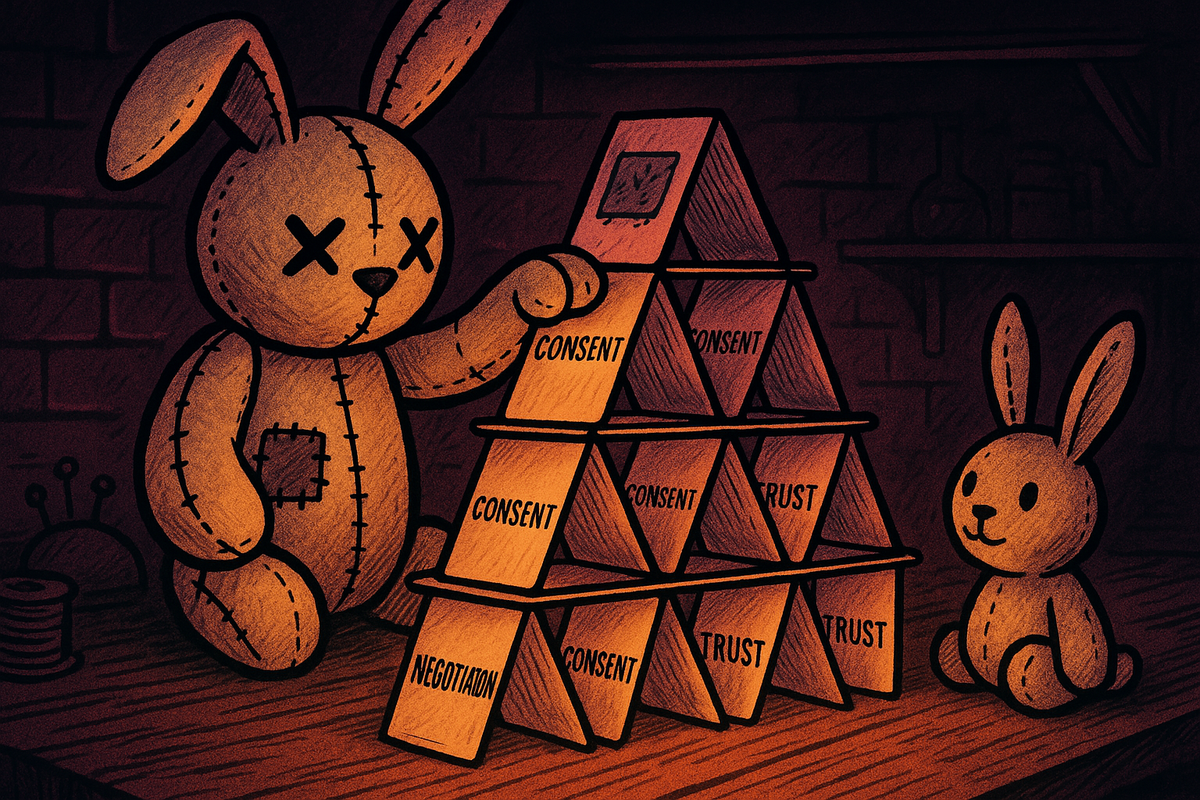
Initial consent is freely given. No one is born into a 24/7 dynamic. The submissive chooses to enter it. Often after extensive negotiation, trial periods, and gradual trust-building.
The negotiation phase is extensive: what's included in the power exchange, what's excluded, what the rules are, what happens if rules are broken, how either party can pause or exit. This isn't "I submit to you, do whatever you want." This is "I consent to this specific structure with these specific boundaries under these specific conditions."
The submissive is negotiating from a position of equality. The power exchange doesn't begin until both parties agree it does. Before that point, it's two people discussing whether they want to create a particular dynamic.
Ongoing consent is maintained through exit rights. The submissive can leave. The safeword exists. The dynamic persists because it continues to be chosen, not because escape is impossible.
The safeword is the circuit breaker. At any moment, the submissive can invoke it and the power exchange pauses. "Red" means stop now, process what's happening, return to equal footing. If the dominant doesn't honor the safeword, it's not D/s—it's abuse.
The ability to leave the relationship entirely is always present. The submissive isn't legally bound. They're not trapped. They're choosing to stay in a structure they continue to consent to. The moment consent is withdrawn—either temporarily via safeword or permanently via leaving—the dynamic ends.
This is meaningfully different from abuse, where exit is prevented through threats, isolation, financial control, or physical force. In healthy D/s, the submissive has genuine agency. They're choosing constraint, not trapped in it.
The submissive holds more power than it appears. The dominant's authority exists because the submissive grants it. Withdrawn consent ends the dynamic. The submissive is the one who decides whether the structure continues.
This is the paradox that confuses observers: the submissive has given up decision-making power in specific domains, but they retain the ultimate power—the power to end the arrangement. The dominant can only exercise authority as long as the submissive allows it.
In practice, this means the dominant is constantly aware they're operating on granted authority. They can't take the submissive's consent for granted. They have to maintain the conditions that make the submissive want to continue. The dominant is actually more accountable than in many vanilla relationships where power dynamics are less explicit.
Trust is earned, not assumed. 24/7 dynamics usually evolve gradually. The dominant demonstrates competence, consistency, and care. Only then does the submissive extend more authority. It's not instant—it's grown.
The progression typically looks like: small scenes with negotiated boundaries, checking in afterward, gradually expanding scope as trust builds. The submissive is testing the dominant at each stage: do you respect my limits, do you care about my wellbeing, are you competent at what you claim to be competent at, do you stay present and attentive?
The dominant earns expanded authority by demonstrating they handle the existing authority well. A dominant who's inconsistent, inattentive, or self-serving gets their authority revoked. The submissive contracts the scope of submission or leaves entirely.
This is why genuine 24/7 dynamics take time to build. You can't shortcut the trust development. The submissive's nervous system needs proof that submission is safe with this specific person before going deeper.
Failure Modes
When kink-as-infrastructure fails, it fails hard:
Dominance without competence. Being dominant means being responsible. A dominant who's disorganized, inconsistent, or emotionally absent creates chaos instead of structure.
Submission as avoidance. Some people become submissive to avoid adult responsibility. They want a parent figure, not a partner. This dynamic becomes unsustainable because the dominant gets exhausted carrying someone who won't grow.
Roles calcifying. People change. A dynamic that worked five years ago might not work now. If the structure can't evolve, it becomes a cage rather than a support.
Community pressure. Kink communities have opinions about what "real" D/s looks like. Couples sometimes perform dynamics for community approval rather than their own satisfaction.
Abuse masquerading as kink. The critical question: does the submissive have genuine exit rights? Is their consent ongoing and enthusiastic? Is the dominant responsive to feedback? If not, it's not kink—it's abuse dressed up in kink vocabulary.
Beyond D/s
Kink-as-infrastructure isn't limited to D/s. Other structures:
Domestic discipline. Rules and consequences for household behavior, often without the full D/s identity package.
Chastity dynamics. One partner controls the other's sexual access. Creates a specific kind of tension and focus.
Service-oriented relationships. One partner's role is to serve, support, and facilitate the other's life. Different from D/s in being less about power and more about purpose.
Daddy/Mommy dynamics. Caregiving structure that's less about authority and more about nurturing.
All of these can become full relationship infrastructure, organizing life beyond just bedroom activity.
The Integration Question
Most couples with kink infrastructure maintain separate vanilla contexts. She's his submissive at home, but at Thanksgiving with her parents, they're just a regular couple.
This compartmentalization is practical but also raises questions: Is the dynamic real if it only exists in private? Does the vanilla public face invalidate the kink private reality?
There's no single answer. Some couples want full integration—public protocols, visible markers, no compartmentalization. Others find compartmentalization stabilizing—it creates clear containers for different modes.
The argument for compartmentalization: Social contexts have different rules. At work, she's a competent professional. With vanilla friends, they're equals. With her family, she's their daughter. The D/s dynamic is one mode among many, not her entire identity.
Compartmentalization protects both the relationship and their public lives. They don't have to explain their private arrangements to people who won't understand. They don't have to navigate social stigma at every family gathering. They can code-switch based on context.
It also creates recovery space. Being in role constantly is exhausting for both parties. The dominant needs breaks from responsibility. The submissive needs breaks from deference. Vanilla contexts provide that relief without requiring formal scene breaks.
The argument for integration: If the dynamic is genuinely core to who they are, compartmentalization feels like hiding. The submission isn't performance—it's expression of authentic self. Switching it off for public consumption feels false.
Integration means: subtle public protocols that vanilla people don't notice but that maintain the dynamic, using language that reflects the structure even in public, not pretending to be equals when they're not structured that way.
Some couples find partial integration: visible in kink community contexts, compartmentalized in vanilla contexts. They're "out" to people who understand, private with people who wouldn't.
The practical reality: Full integration is difficult in most social and professional contexts. Even in relatively progressive environments, visible D/s protocols trigger concern, judgment, or unwanted curiosity. The questions get exhausting. The explanations get old.
Most couples land somewhere in the middle: integrated enough that they're not constantly performing a false identity, compartmentalized enough that they're not fighting social stigma every day. The ratio depends on their specific context, comfort with visibility, and how essential the dynamic is to their sense of self.
The Honest Pitch
Kink as relationship infrastructure works when:
- Both partners genuinely want this structure (not one imposing, one tolerating)
- The dominant is actually competent at providing structure
- The submissive has genuine exit rights and ongoing consent
- The structure serves the relationship rather than ideology
- Regular renegotiation happens as people change
It fails when:
- Power imbalance masks abuse
- One partner uses it to avoid growth
- Community expectations override couple needs
- The structure calcifies instead of evolving
For people whose nervous systems crave structure, whose attachment styles need consistency, whose decision fatigue is overwhelming, whose anxiety decreases when expectations are explicit—kink infrastructure might not be a perversion. It might be the healthiest thing they've ever done.
Your attachment style shapes which role might work for you. But the real question is: what does your nervous system actually need, and can you find someone to build that with you?