Your Kids Aren't Distracted—They're Running a Higher Frame Rate
ADHD isn't an epidemic — it's a mismatch. The attention environment changed; the diagnosis followed. Disorder is always relative to environment.

Your Kids Aren't Distracted—They're Running a Higher Frame Rate
Attention-deficit disorder diagnoses have increased by 42% in the last decade. The obvious explanation is that something's wrong with kids. The more interesting explanation is that something changed in the environment, and the kids are responding rationally.
Here's a thought experiment: take a neurotypical adult from 1975 and drop them into a modern teenager's information environment. Notifications pinging from multiple apps. Group chats scrolling constantly. Algorithmic feeds designed by the smartest people in the world to capture and hold attention. Social dynamics playing out across platforms simultaneously.
How long before that 1975 adult looks "distracted"?
The diagnosis of disorder is always relative to the environment. When the environment shifts radically, the definition of "normal" attention becomes a moving target.
The Frame Rate Metaphor
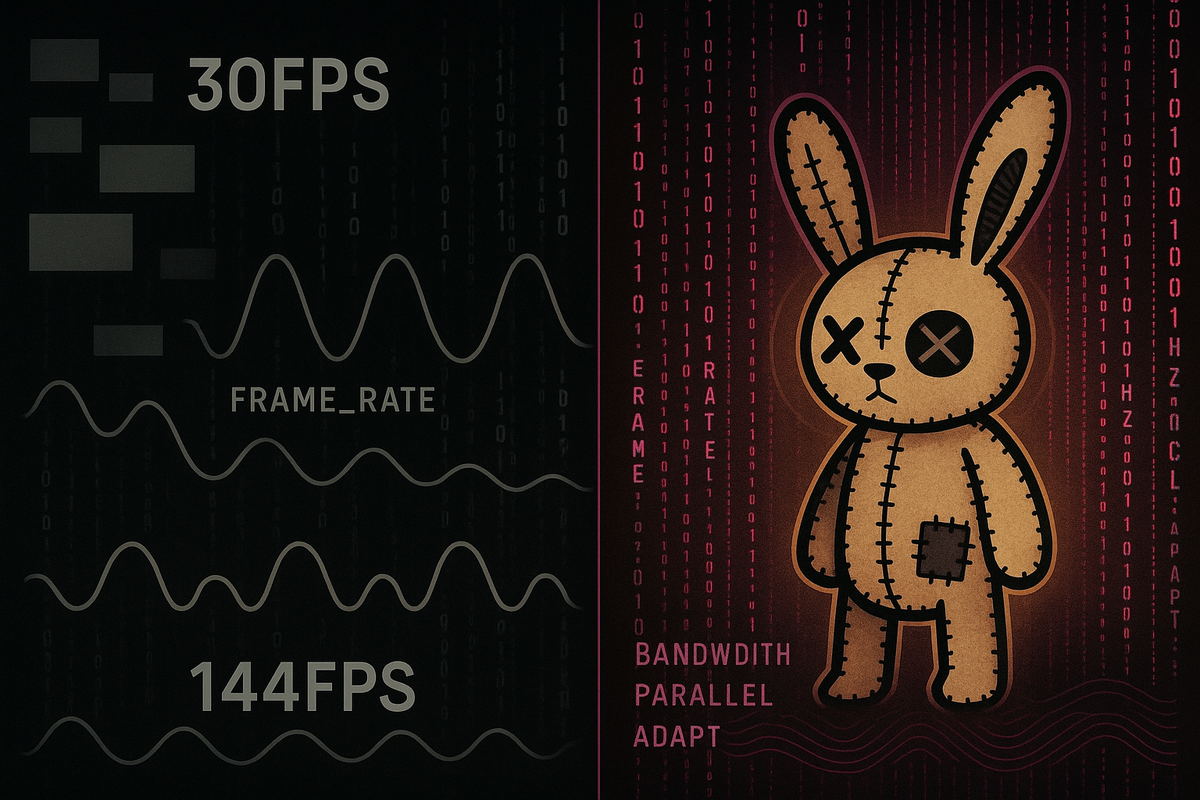
Video games run at different frame rates. 30 frames per second was standard for years. Then 60 became the norm. Now competitive gamers demand 144 or higher. Each jump represents more information processed per unit of time.
Your kid's attention isn't broken. It's running at a higher frame rate than yours.
They're processing more inputs, across more channels, with more context-switching, than any previous generation. What looks like "inability to focus" might actually be "inability to slow down to the pace that your generation considers normal."
When a 144fps gamer plays a 30fps game, it feels sluggish, almost unplayable. When your kid sits through a lecture designed for attention patterns from 1985, they experience something similar.
The question isn't "why can't they pay attention?" The question is "attention at what frame rate, in what environment, to what ends?"
ADHD as Relative Disorder
The DSM defines ADHD by symptoms that cause dysfunction in daily life. But dysfunction is contextual. A trait that causes problems in one environment might be neutral or even advantageous in another.
Consider the core ADHD traits:
Difficulty sustaining attention on tasks. True—when the task is unstimulating. The same kid can hyperfocus on a video game for six hours because the game is designed to match their frame rate.
Easily distracted by extraneous stimuli. True—when the stimuli are irrelevant. In an information-rich environment, the ability to notice new inputs quickly might be adaptive.
Difficulty organizing tasks and activities. True—when the organizational structure is imposed externally. Many "disorganized" kids have elaborate internal systems you just can't see.
Avoids tasks requiring sustained mental effort. True—when the effort feels pointless. Effort-avoidance on tasks that don't matter isn't dysfunction; it's efficiency.
The DSM criteria were calibrated to an environment with slower information flow, fewer stimuli competing for attention, and clearer hierarchies of task importance. In that environment, the traits that define ADHD genuinely caused dysfunction.
The environment changed. The criteria didn't.
The Bandwidth Explosion
Your parents' childhood environment demanded attention regulation across maybe three channels: the physical world in front of them, conversations with people present, and maybe a book or TV show.
Your kid's environment demands attention regulation across:
- Physical immediate environment
- Text conversations (multiple simultaneous threads)
- Social media feeds (multiple platforms)
- Notifications from apps
- Group chats
- Email (yes, they eventually get there)
- Streaming content
- Gaming environments
- Video calls
- Whatever new platform emerged last month
This isn't a complaint. It's just the terrain. The kids who grow up in this terrain develop attention patterns suited to it.
When you ask why they can't focus like you did, you're asking why the person who learned to drive on a six-lane highway doesn't navigate the same way as someone who learned on country roads.
The Regulation Question
Here's what's genuinely concerning: not the high frame rate itself, but the external capture of attention.
Previous generations had to develop internal attention regulation because there wasn't much external competition for their attention. If you wanted stimulation, you had to generate it or seek it out.
Current generations develop in an environment where external forces—algorithms, notifications, game designers, social dynamics—are constantly competing to capture and hold attention. The need for internal regulation is partially outsourced to external triggers.
This creates real challenges:
- Difficulty self-starting on tasks without external prompts
- Dependence on stimulation to maintain engagement
- Less practice with boredom tolerance
- Reduced experience with sustained, self-directed focus
But notice: these are training gaps, not brain deficits. The capacity for internal attention regulation isn't broken; it's under-developed because the environment didn't require it.
The appropriate response isn't diagnosis. It's recognizing what capacities need deliberate development because the environment doesn't develop them automatically anymore.
What Looks Like Disorder Is Sometimes Skill
Your kid's ability to context-switch rapidly, maintain multiple conversation threads, process information from several sources simultaneously, and track social dynamics across platforms—these are skills.
They're not the skills you learned. They're not the skills school rewards. They're not the skills that "sustained attention" measures capture.
But they're skills.
In an environment that increasingly demands parallel processing, distributed attention, and rapid context-switching, the "distractible" kid might be better prepared than the "focused" one.
The kid who can't sit through a two-hour lecture can often navigate information environments that would overwhelm their professors. The question is whether we're measuring the right things.
The Self-Fulfilling Diagnosis
Here's where it gets dark: when you tell a kid they have a disorder, they often start acting like it.
Label a child "ADHD" and you've given them an identity framework. A story about why they struggle. An explanation that locates the problem inside them rather than in the interaction between their traits and their environment.
Some kids find this liberating—finally, an explanation. Others find it limiting—now they're "the ADHD kid" and expectations adjust accordingly.
The label can be useful (especially for accessing accommodations) and harmful (especially for self-concept) simultaneously. It's a tool, not a truth.
The more interesting question isn't "does this child have ADHD?" but "what is this child's attention pattern, and how does it interact with the demands they face?"
The Reframe
Your kid isn't distracted. They're adapted to an environment with higher information density and more parallel demands than any environment humans have ever inhabited.
That adaptation has costs:
- Less practice with deep, sustained focus
- Dependence on external stimulation
- Difficulty with slow, linear information delivery
- Mismatch with institutions designed for different attention patterns
And benefits:
- Rapid context-switching
- Parallel processing
- High-information-throughput tolerance
- Fluency in distributed attention
The costs are real and worth addressing. But addressing them doesn't require believing your kid is broken. It requires recognizing that some capacities need deliberate development because the environment no longer develops them automatically.
The frame rate is higher. That's not a disorder. It's an adaptation.
The question is whether we can help them develop the full range of attention capacities—including the slow, sustained kind—without pathologizing the fast, distributed kind they already have.
This is Part 3 of the Kids Are Alright series. Next: "Screen Time Panic Is a Category Error."