
The Fake Pleasure Dom Problem
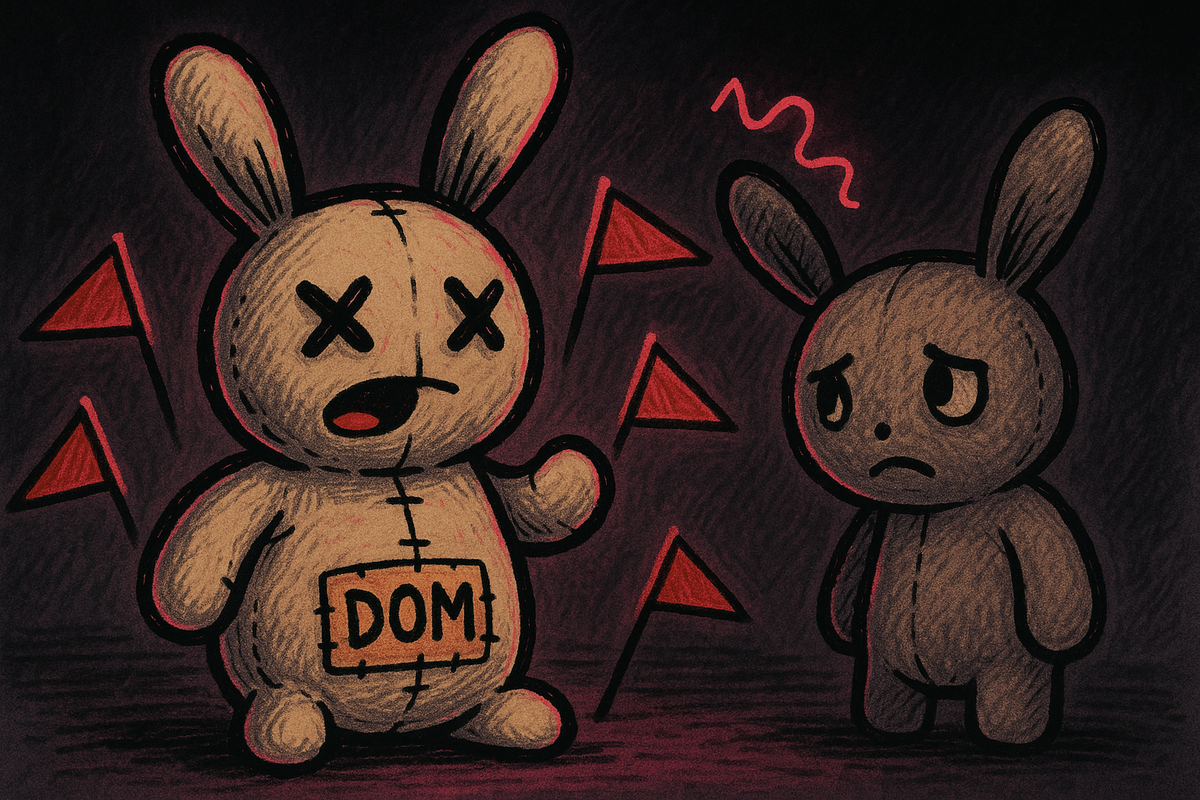
The pleasure dom aesthetic has gone mainstream enough that people are faking it. Here's what fake looks like — and why the vocabulary is so easy to copy.

Part 19 of 36 in the The 2026 Kink Field Guide series.
The profile says all the right things.
"Pleasure-focused dominant." "Your pleasure is my priority." "I want to worship your body." "Soft dom who loves to give."
The language has been learned. Dating apps and kink communities have taught men what women want to hear. So men say it—whether or not they mean it, whether or not they can deliver it.
This is the fake pleasure dom problem. The performance of a kink identity that isn't real. The gap between what's advertised and what's provided.
How It Happens
The evolution is straightforward:
- Women express desire for pleasure-focused, attentive partners
- This desire becomes visible—articles, tweets, profiles
- Men learn that "pleasure dom" gets interest
- Men adopt the language regardless of whether they embody it
- Women encounter men using the language who don't deliver
- The term gets diluted; the signal degrades
This isn't unique to pleasure dom. Any desirable identity gets performed once the performance is rewarded. But pleasure dom is particularly susceptible because:
- It promises exactly what many women want
- The actual delivery requires skill that can't be faked
- The discrepancy between promise and reality is stark
The Red Flags
How to identify fake pleasure doms:
All talk, no specificity. Real pleasure doms can describe what they do in detail. Fake ones speak in generalities. "I love giving pleasure" versus "I like to spend extended time on oral, using variations in pressure and rhythm while tracking your responses." The specificity indicates experience.
Centered on their image. The fake pleasure dom talks about being a pleasure dom more than about actual pleasure. Their identity is the focus, not your experience. Watch for excessive self-labeling with minimal curiosity about you.
No questions. Real pleasure doms are curious about what works for you specifically. They ask about your body, your preferences, your history. Fake pleasure doms assume their "giving" is universally applicable.
Rushing. Pleasure domination is slow. It takes time. Fake pleasure doms want to get to the parts they actually care about. If he's rushing through the pleasure he's supposedly here to give, the priority is elsewhere.
Reciprocity expectations. "I gave, now you give." Real pleasure doms aren't keeping score this way. The giving is the point, not a transaction. If there's pressure to reciprocate immediately, the "giving" was investment, not gift.
Quick shift to what they want. Ten minutes of attention to you, then extended focus on what gets them off. The pleasure domination was foreplay for their main event.
Defensive about feedback. Real pleasure doms welcome information about what's working. Fake pleasure doms bristle when their technique is questioned. Their ego is invested in the identity, not the outcome.
What Real Skill Looks Like
The genuine article is distinguishable:
Presence. Real attention. Not going through motions while thinking about what comes next. Actually being there, with you, tracking your responses.
Responsiveness. Adjusting based on feedback—verbal and nonverbal. Noticing what makes you breathe differently, what makes you tense, what makes you relax. Using that information.
Patience. No rush. Willingness to spend time. Comfort with extended focus that isn't building toward his orgasm.
Curiosity. Genuine interest in your particular body, your particular responses. Not assuming you're like others. Investigating you specifically.
Communication. Checking in. Asking what you want. Telling you what they're doing and why. The verbal layer supports the physical.
Technique. Actual skill. Knowledge of anatomy, of arousal patterns, of what different kinds of stimulation do. This takes learning and practice—it's not intuitive.
Ego detachment. Not making your responses about them. If something isn't working, they adjust—not defend. Your pleasure is the goal, not proving their prowess.
The Dating App Dynamic
Feeld and similar kink-friendly apps have created a specific ecology for fake pleasure doms.
The apps:
- Attract women seeking specific dynamics
- Make those desires visible through profiles and preferences
- Create competitive pressure among men to match those desires
- Reward the language of pleasure domination with matches
The result: men learn to say "soft dom," "pleasure focused," "your orgasm first" because it works—it gets matches. Whether they can deliver becomes secondary to whether they can market.
Women on these apps report consistent experiences: the profile promised attentive pleasure domination; the reality was mediocre sex from someone who thought saying the words was the same as doing the thing.
The Damage
Fake pleasure doms cause several harms:
Erosion of trust. When the term is diluted, it becomes harder to trust when someone uses it. The signal gets noisy. Genuine pleasure doms become harder to identify.
Wasted time and vulnerability. People engage based on the advertised dynamic, make themselves vulnerable, and discover the reality doesn't match. This is emotionally and sometimes physically costly.
Discrediting the dynamic. Some people conclude that "pleasure dom" is just something men say. The category itself gets dismissed, making it harder for genuine practitioners to be recognized.
Entitlement behind the mask. Some fake pleasure doms are using the language strategically—to get access, to seem safe, to lower defenses. The performance of giving masks an intention to take.
Why Men Do It
Understanding the motivation helps:
They believe it. Some men genuinely think they're pleasure-focused because they sometimes give pleasure. They don't recognize the gap between occasional giving and centered orientation.
It works. The strategy gets matches, dates, sex. The incentive to keep using the language is strong even if the delivery is weak.
They want it to be true. Some men aspire to be pleasure doms but don't have the skill or the actual orientation. They perform the identity hoping to grow into it.
They don't know what skill looks like. Without exposure to what genuine pleasure domination is, men might not know they're lacking. They're doing their best without reference points.
Strategic manipulation. Some know exactly what they're doing—using language to access people who want that dynamic. This is the most predatory version.
Screening Strategies
For people trying to filter fake from real:
Ask for specifics. "What does pleasure domination look like for you?" "Describe a scene you've done." Genuine practitioners can elaborate. Fakes generalize.
Watch for curiosity. Does he ask about you? Your body, your preferences, your experience? Genuine interest in the specific person is a green flag.
Test patience. If early conversations, he's rushing toward meeting, toward sex, toward escalation—skepticism is warranted. Patience aligns with the supposed orientation.
Check for learning. Has he read anything? Studied anything? Taken workshops? Genuine pleasure doms invest in developing skill. Performance-only doms don't.
Trust experience over words. If you've had experiences with him, those tell you more than his self-description. Consistent delivery that matches the claim is the only proof.
Ask references. In kink communities, reputation matters. People who've played with him know. Ask around if possible.
The Attachment Lens
The fake pleasure dom problem intersects with attachment patterns in predictable ways.
Anxious attachment can drive fake performance. The anxiously attached man might adopt the pleasure dom identity to be what he thinks women want. The performance is driven by attachment anxiety—the fear that his authentic self isn't enough. He becomes what's desired rather than offering what he authentically is. This creates exhausting performance pressure and inevitable failure when the authentic self emerges.
Avoidant attachment might correlate with genuine pleasure dominance in some cases. The avoidantly attached person might find giving pleasure safer than receiving it. Focusing on the partner's experience keeps the dynamic at a manageable distance. The giving creates connection without requiring vulnerability. This isn't fake—it's authentic orientation shaped by attachment patterns.
Secure attachment supports genuine pleasure giving without the distortions. The securely attached pleasure dom gives because he genuinely enjoys it, not because he's managing attachment needs. He can receive as well as give. His identity doesn't depend on the role—it's one dimension of how he relates sexually.
The fake pleasure dom is often operating from insecure attachment—using the identity as a strategy to secure connection rather than as an authentic expression of desire.
The Skill Development Path
For men who genuinely want to become pleasure doms rather than just performing the identity:
Study anatomy and arousal. Understand how bodies work. Not just "where's the clitoris" basics, but arousal patterns, nervous system responses, individual variation. Read books written by women about women's sexuality. Study tantra and other pleasure-focused traditions.
Cultivate patience. Pleasure domination requires time. Practice being present for extended periods without agenda. Meditation helps. The capacity to stay with experience without rushing toward completion is fundamental.
Develop sensory awareness. Notice subtle responses. How does breathing change? What does muscle tension signal? Where does arousal show up in the body? This awareness comes from practice and presence.
Get feedback and integrate it. Ask what's working. Welcome information. Don't defend when something isn't landing well—adjust. The ego check required to receive feedback without defensiveness is part of genuine orientation.
Build your own genuine desire. If you don't actually find giving pleasure deeply satisfying, don't force it. Authentic sexuality has many forms. Pleasure domination is one option, not the only path. Find what genuinely moves you rather than performing what you think should move you.
For Genuine Pleasure Doms
If you're actually oriented toward giving:
Demonstrate, don't declare. Let your behavior speak. Excessive self-labeling can actually trigger skepticism because that's what fakes do.
Welcome scrutiny. Understand that people are screening for fakes. Don't take skepticism personally. Provide the specificity that demonstrates genuineness.
Keep developing. Skill is learnable and improvable. Read, practice, get feedback, iterate. The genuine article keeps getting better.
Call out the fakes. In community spaces, help identify and name the pattern. The more the dynamic is understood, the easier it becomes to screen.
The Bigger Picture
The fake pleasure dom problem is a specific instance of a general pattern: desirable identity labels get adopted by people who don't embody them.
This happens with "feminist men," "good listeners," "growth mindset"—any positive identity that confers advantage gets performed. The performance dilutes the category.
The solution isn't to abandon useful categories. It's to develop better discrimination—the ability to distinguish genuine from performed. This requires:
- Articulating what the genuine article looks like in detail
- Sharing experiences so patterns become visible
- Building community knowledge that identifies fakes
- Trusting behavior over self-description
The fake pleasure dom will keep existing as long as the performance gets rewarded. The question is whether communities can develop the discernment to stop rewarding it.
Previous: DDLG: Daddy Dom Little Girl Dynamics Next: On The Edge: Primal Play and Consent Fantasy