Cuckold Culture: The Erotics of Inadequacy

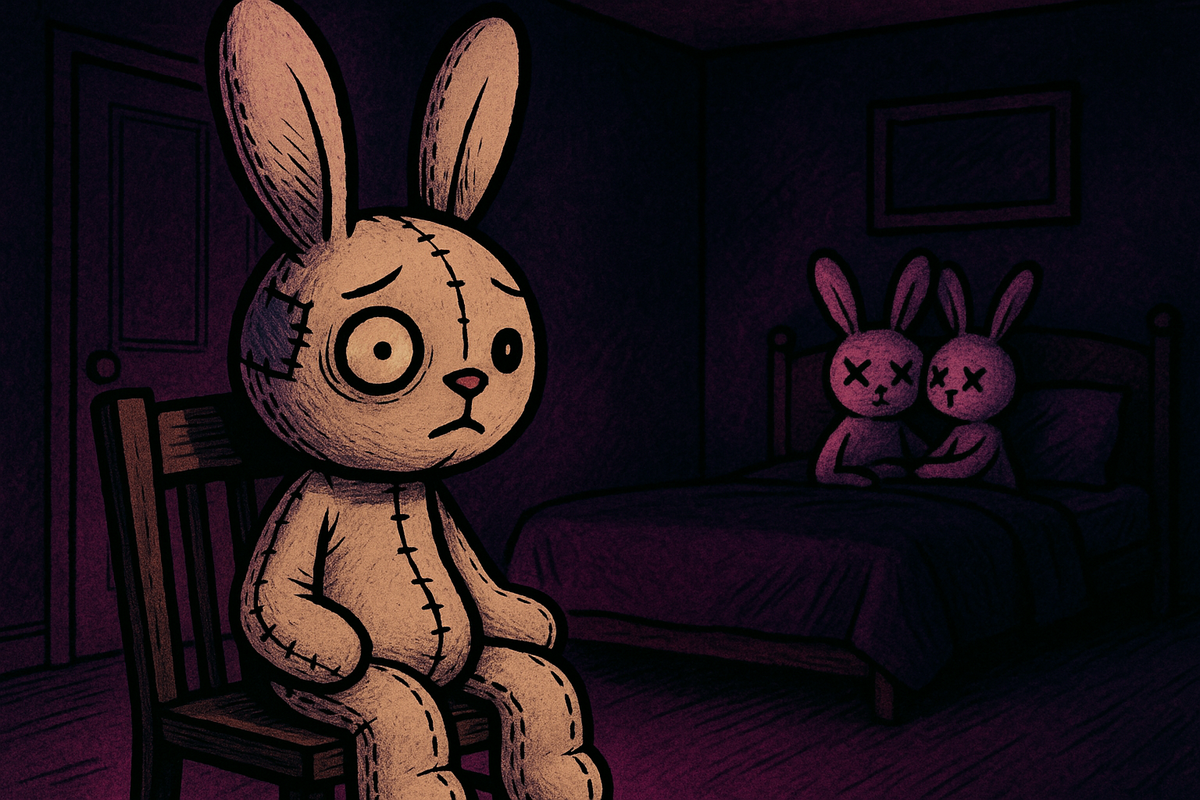
Anxiously attached men who live in terror of not being enough have found a strange solution: they've made "not enough" the fantasy.
The wife has sex with another man. The husband knows—same as hotwifing. But in cuckolding, his inadequacy is central to the erotic charge. He's not enough. The other man is better. And somehow this is the hottest thing he's ever experienced.
This makes no obvious evolutionary sense. It makes no obvious psychological sense. And yet it's one of the most common male sexual fantasies that exists. What's going on?
The Paradox at the Core
Here's the inversion that makes cuckolding so psychologically interesting: the men most drawn to this kink are often the men most terrified of inadequacy.
The fear of not being enough. The fear of being replaced. The fear that she secretly wants someone else. These are the core anxieties of anxiously attached men—and cuckolding takes them and eroticizes them.
The nightmare becomes the fantasy. The worst fear becomes the turn-on. Psychology does this sometimes: we eroticize what terrifies us as a way of mastering it. The anxiety that would paralyze us in daily life becomes controllable when it's sexual play. Instead of dreading the thing, we script it, stage it, and come.
This can be adaptive—processing anxiety through controlled exposure. Or it can be destructive—reinforcing worthlessness narratives. The difference comes down to whether you're playing with the fear or confirming it.
The Psychodynamic Mechanism
Cuckolding operates on multiple psychological layers simultaneously:
Control through surrender. The cuckold orchestrates his own humiliation. He's not actually powerless—he set the scene, negotiated the boundaries, chose to participate. The illusion of powerlessness while maintaining actual control can be intensely relieving for men who carry heavy performance pressure in daily life. For an hour, someone else is responsible. He can stop performing adequacy and just experience.
Compersion as permission structure. Some cuckolds report genuine compersion—pleasure in their partner's pleasure. Watching her experience intense satisfaction, even from someone else, can trigger empathetic joy. This is especially true for men who've internalized the idea that her sexual satisfaction is their responsibility. If the bull delivers what he can't, and she's happy, some part of him relaxes. The pressure to be everything dissolves.
Voyeurism and objectification. Watching sex is different from having sex. The cuckold gets to observe his wife as a sexual being separate from himself. Many men in long-term relationships stop seeing their partners as erotic objects—they become mom, co-parent, roommate. Cuckolding can restore the erotic gaze by letting him watch her be sexual with someone who still sees her that way.
Masochism as relief. Some people find pain clarifying. Emotional masochism works the same way. The humiliation is sharp, clear, intense—and intensely present. It cuts through the numbness of everyday anxiety. The cuckold knows exactly what he's feeling because the scene makes it explicit. Uncertainty becomes certainty, even if the certainty is negative.
The Evolutionary Angle
Sperm competition theory offers a partial explanation. Male sexual response increases when a mate has been with another man—this is observed across species. Competition triggers arousal. Your body prepares for reproductive rivalry.
Cuckolding hijacks this circuit deliberately. The scenario is designed to trigger competition arousal: another man with your wife. Your body responds as if your genes are at stake—because evolutionarily, they were.
But this explains the arousal mechanism, not the humiliation element. Sperm competition would predict you'd want to compete and win. Cuckolding scripts you as the loser. The evolutionary drive is being inverted, not followed.
The Structure
Classic cuckolding involves:
The wife (or "hotwife" or "vixen"): She has sex with other men, called "bulls."
The bull: Presented as superior—bigger, more dominant, more attractive, better in bed.
The cuckold: The husband, who watches, knows, or is told about the encounter. His "inferiority" is part of the script.
The humiliation element: Verbal, visual, or psychological emphasis on the cuckold's inadequacy. "He could never do this to me." "Watch how a real man fucks." "You're not enough for me."
The intensity varies enormously. Some cuckolding is playful teasing. Some is elaborate degradation. Some couples never involve a real third party—it's all dirty talk about hypothetical bulls.
Attachment Dynamics
Anxiously attached cuckolds are disproportionately common. They've eroticized their worst fear. The key question is whether this functions as exposure therapy or as wound reinforcement.
Signs it's working: He feels closer to his wife after scenes. The anxiety is discharged through play rather than contaminating daily life. He can turn it off—it's a scene, not an identity. He doesn't need escalating intensity to feel satisfied.
Signs it's not: He feels worse after scenes. The humiliation script has started to feel true rather than played. He needs more and more extreme scenarios. She's lost genuine respect for him. The game has eaten the relationship.
Avoidantly attached cuckolds are less common—avoidants usually don't seek humiliation. But the distance the dynamic creates might appeal: she's with someone else, he's not required to perform. Intimacy without actual intimacy.
Securely attached cuckolds exist, though it sounds contradictory. They're genuinely secure in the relationship and use cuckolding as play, not as confirmation of actual inadequacy. The key marker: they can turn it off completely. Outside the bedroom, there's no power imbalance.
The wife's position matters too. She's being asked to say things like "you're not enough." If she's anxiously attached, this might feel cruel and uncomfortable. If she's secure or naturally dominant, she might enjoy the power while knowing it's performance.
The Wife's Position: Often Overlooked
The psychological focus is usually on the cuckold, but the wife's experience matters just as much—and is often more complicated.
Performing cruelty for someone you love. She's being asked to say genuinely hurtful things: "You're not enough." "He's better than you." "I don't even feel you inside me." If she loves him, this can feel emotionally violating even when he's begging for it. Some women can compartmentalize—it's a scene, it's play, it's performance. Others can't separate the performance from the message, and saying these things degrades their actual respect for him.
The Madonna-whore trap. Many cuckold husbands want their wives to be sexually adventurous with bulls but remain emotionally pure with them. She's supposed to fuck other men enthusiastically while maintaining that he's still her primary emotional connection. This is the Madonna-whore complex inverted: she's the whore for others, the Madonna for him. Navigating this without losing yourself is difficult.
Genuine desire vs. service. Some wives develop genuine sexual interest in the bulls. Others are performing for their husbands. The difference matters. If she's genuinely turned on by the bull, the cuckold gets what he wants—real evidence of his inadequacy. If she's performing, he might sense the inauthenticity and feel cheated. But if she's genuinely into the bull, she might develop actual feelings, which breaks the containment the fantasy requires.
Power without safety. The wife in cuckolding scenarios often holds surface power—she's the desired one, the one being pursued, the one delivering the humiliation. But this power exists entirely within a frame her husband constructed. If he decides the game is over, it's over. She's powerful only as long as he permits it, which means it's not real power at all.
The Escalation Pattern
Cuckolding has a documented tendency to escalate:
Fantasy first. Then sexting about hypothetical bulls. Then him watching. Then bigger, more dominant bulls. Then denial—he's not allowed to have sex with her at all. Then increasingly extreme humiliation. Then it stops being a scene and becomes the actual relationship dynamic.
Some couples want this. A full-time cuckolding relationship genuinely satisfies them.
Others escalate compulsively, chasing the high. He realizes the humiliation stopped being hot and started being true. She realizes she's lost actual respect for him. The line between "performing inadequacy" and "being inadequate" disappeared.
The difference is usually whether escalation is conscious and desired versus driven by tolerance and diminishing returns—the same pattern that makes any compulsion destructive.
Warning signs of unhealthy escalation:
- He needs more extreme scenarios each time to achieve the same arousal
- She's started to believe the things she says in scenes
- He feels worse about himself after scenes, not relieved
- They can't have regular sex anymore without the cuckolding frame
- The dynamic has leaked out of the bedroom into daily interactions
- Either partner feels trapped—wanting to stop but unable to without destroying the relationship
The Cultural Context: Why Now?
Cuckolding fantasies have always existed, but the internet made them visible and normalized them. Before online communities, men with these fantasies thought they were alone, broken, perverted. Now there are forums, subreddits, entire porn categories. What was shameful became shared, and shared became normal.
But the rise of cuckolding culture also maps onto a specific cultural moment: men who've been told their entire lives that they need to be providers, protectors, sexually dominant—and who can't live up to those scripts. Economic precarity means many men can't be providers. Feminist gains mean many women don't need protectors. Sexual liberation means women have access to many partners, not just one.
The traditional masculine role is collapsing, and cuckolding eroticizes that collapse. Instead of fighting the loss of status, it makes the loss the point. You're not enough—economically, sexually, physically—and that's the fantasy. The culture produces the anxiety, and the kink metabolizes it.
This doesn't make the kink invalid. It makes it historically specific. Cuckolding is partly a response to a particular kind of masculine crisis. Understanding that helps contextualize why it feels compelling to so many men right now.
The Distinction From Hotwifing
Cuckolding and hotwifing both involve a wife having sex with other men, but the psychological framing is opposite.
Hotwifing: The husband is proud. His wife is so desirable that other men want her, and he's secure enough to share. He's the generous king allowing his queen to take lovers. There's no humiliation—there's abundance and confidence.
Cuckolding: The husband is inadequate. His wife needs other men because he's not enough. He's the failure being replaced by superior men. The humiliation is the point.
Same acts, opposite meanings. Some couples drift between the two framings depending on mood. Others are firmly in one camp. The distinction matters because it reveals what psychological need the dynamic is serving.
Practical Considerations If You're Exploring This
If cuckolding genuinely appeals to you and your partner, here's what functioning practitioners emphasize:
Aftercare is non-negotiable. After a scene, both partners need reconnection. Physical affection, verbal affirmation that the scene was play, discussion of what worked and what didn't. Without aftercare, the humiliation lingers and becomes corrosive.
Clear boundaries before you start. What's allowed? What's off-limits? What words can she say? How far can she go? These need to be negotiated in advance, not discovered mid-scene when someone's already hurt.
Start small and slow. Begin with fantasy talk during sex. Then maybe texting about hypothetical bulls. Actual involvement of a third party should come much later, after you've tested your reactions in lower-stakes contexts.
Exit ramps at every stage. Either partner should be able to stop the scene immediately without guilt or blame. The safeword applies to emotional discomfort, not just physical.
Separate the scene from daily life. The degradation stays in the bedroom. Outside of scenes, the relationship needs to be genuinely respectful and affectionate. If the dynamic bleeds into normal life, it's no longer play—it's the actual relationship, and that's often destructive.
The Honest Assessment
Cuckolding is a valid kink when all parties genuinely consent. It's potentially therapeutic for processing inadequacy fears through controlled exposure. It's potentially destructive when compulsive or when it reinforces genuine worthlessness beliefs. It's dependent on extremely strong communication and aftercare. It's not for couples where either partner is "just trying it" to please the other.
Your attachment style shapes your relationship to this kink. Anxious attachment is overrepresented—which might mean healthy processing of fears, or might mean reinforcing wounds. The kink itself is neutral. What you do with it isn't.
If you're considering it: fantasy first. Check in obsessively. Build in exit ramps. And be honest about whether you're playing with the fear or just confirming it.
The difference between therapeutic exposure and wound reinforcement is whether you can turn it off. If the fantasy stays in the fantasy, you're probably fine. If it's started to feel true, you've crossed a line that's hard to uncross.