Conscientiousness: The Grinder Trait (And Why AI Breaks It)
Conscientiousness was the Big Five personality trait that reliably predicted success. AI just automated everything it was good at — and the identity crisis is only starting.

Part 8 of 25 in the The Philosophy of Future Inevitability series.
Conscientiousness is the trait that predicts success.
Across careers, across cultures—the people who plan ahead, follow through, and grind consistently outperform the people who don't. It's the closest thing to a cheat code psychology has found.
Work hard. Stay disciplined. Show up every day. Do the thing when you don't feel like doing the thing.
And now AI does the thing instantly.
The Trait
High conscientiousness means:
Organization. Your files are labeled. Your calendar is maintained. You know where everything is.
Discipline. You do what needs doing, even when you don't want to. Delayed gratification is natural.
Reliability. You meet deadlines. You keep promises. People can count on you.
Work ethic. You believe in the value of effort. The grind means something.
This trait built careers. Built companies. Built civilizations. The people who showed up and did the work—they won. Consistently.
The Problem
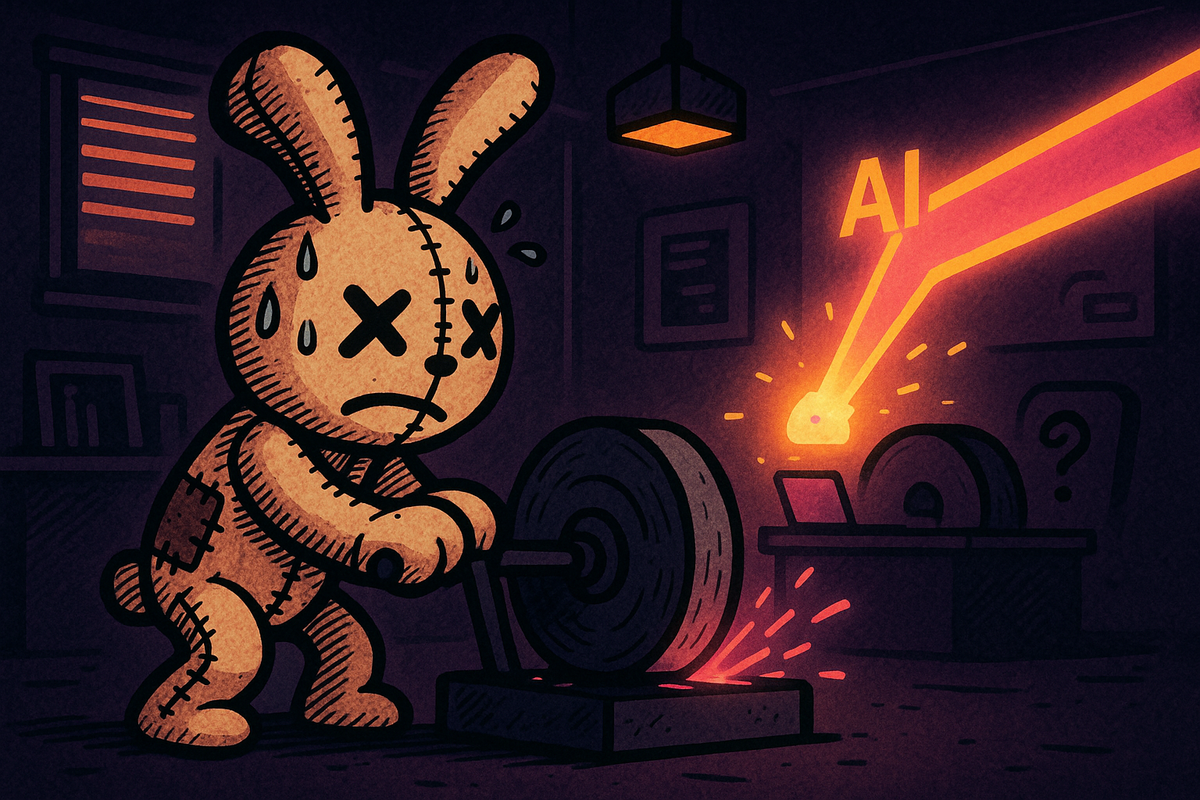
AI does in seconds what the grinder does in hours.
Write a report? AI drafts it instantly. Research a topic? AI synthesizes sources in moments. Organize data? AI structures it while you're still opening the spreadsheet.
The things conscientiousness was for—the sustained effort, the disciplined execution, the grinding through tedious tasks—these are exactly what AI automates.
The high conscientious person built their identity on the grind. The grind was how they added value. How they differentiated themselves. How they earned their self-respect.
What happens when the grind becomes obsolete?
This isn't abstract. Look at the paralegal who spent years developing the skill of document review. Thousands of hours learning to spot inconsistencies, identify relevant clauses, extract key information. That skill took discipline. Every tedious hour was an investment. Pride came from doing it better, faster, more thoroughly than others.
AI can now review documents better than most paralegals. Not all tasks—but enough that the job fundamentally changes. The grind that built the skill is no longer the value source.
Or the accountant who mastered the art of reconciliation. Meticulous attention to detail. Finding errors. Ensuring accuracy. Years of grinding through spreadsheets to build expertise. AI can reconcile accounts with higher accuracy and instant speed.
The conscientious person in these roles faces an identity crisis. Their value wasn't just in the output—it was in the process. The discipline to do boring work well. AI eliminates the process. Renders the discipline irrelevant.
What's left of professional identity when the thing you were proud of doesn't need doing?
The Identity Crisis
This isn't just economic. It's existential.
The conscientious person doesn't just do the work. They are the person who does the work. Discipline is who they are.
Watch them when AI completes a task they would have spent hours on. Something in them resists. Not because the output is bad—often it's fine. But because the process was skipped. The effort wasn't required.
The effort was the point. The effort was virtue made manifest.
If AI does it without effort, where's the virtue?
This triggers deep discomfort. The conscientious person has internalized certain beliefs:
Effort equals value. The harder you work, the more valuable the output. If something comes easy, it's not worth much.
Shortcuts are cheating. Real accomplishment requires the full process. Skipping steps is dishonest.
Discipline is moral. Working hard when you don't want to is a character test. Doing things the easy way is weakness.
These beliefs built successful careers in the pre-AI world. They're actively harmful now.
The conscientious person sees colleagues using AI to draft reports in minutes and feels contempt. "They're not doing the real work." Meanwhile the colleague ships faster, iterates more, produces better results.
The conscientious person uses AI but feels guilty about it. Like they're cheating. Like they should have done it the hard way. This guilt is pure waste. The work still needs checking. The quality still needs ensuring. The output still needs refining. But the initial grind—the part that felt like virtue—is gone.
There's a loss here. Real loss. The thing that made you feel competent, that proved your worth, that separated you from lazy people—it's worth less now. That deserves acknowledgment.
The Adaptation
The conscientious trait needs a new object.
The capacity for sustained effort remains valuable. Discipline doesn't become useless. But the application has to shift.
Grind on learning the tools. The discipline that made you master spreadsheets can make you master AI tools. The grind just moves up a level.
Grind on quality control. AI produces drafts. The conscientious person perfects them. The attention to detail, the follow-through, the refusal to ship until it's right—still valuable.
Grind on orchestration. AI is a tool. The conscientious person who can orchestrate multiple AI tools into coherent workflows has a skill. The discipline becomes coordination.
Grind on the things AI can't do. Embodied skills. Relationship building. Physical work. The domains AI doesn't reach still reward effort.
The trait doesn't become obsolete. But its expression has to change.
The Danger
The danger is rigidity.
The conscientious person might refuse the adaptation. Might insist on doing things the old way because the old way is virtuous. Might reject AI tools because using them feels like cheating.
This is how the trait that predicted success becomes the trait that predicts failure.
The world doesn't care about your identity. Doesn't care that your self-worth is tied to manual effort. The world adopts the tools that work. People who don't adopt fall behind.
The conscientious person's discipline can become discipline about not changing. Grinding on the wrong tasks because grinding is what they know.
Real examples of this failure mode:
The writer who refuses AI assistance. Insists on drafting everything manually. "Real writing is hard." Meanwhile competitors use AI for first drafts, spend their effort on editing and refinement, produce more content at higher quality. The manual writer falls behind, blames AI for "ruining the profession," doesn't adapt.
The analyst who won't automate. Continues doing manual data analysis because that's "doing it right." Spends hours on tasks AI could do in seconds. Produces fewer insights, slower turnarounds. Gets passed over for promotion because output is low. Blames the system for "valuing quantity over quality," doesn't recognize that quality + quantity is now achievable.
The project manager who insists on manual tracking. Won't use AI tools for scheduling, resource allocation, status updates. "I need to know what's happening personally." Spends time on administrative work instead of strategic thinking. Projects run worse because the PM is grinding on the wrong things.
The pattern: discipline applied to obsolete processes. Working hard on things that don't matter anymore. The trait that predicted success now predicts stubborn irrelevance.
And here's the cruel part: the conscientious person feels virtuous while failing. They're working hard. Maintaining standards. Refusing to cut corners. All the things that used to indicate success. Now indicating inability to adapt.
The Flip
Here's the opportunity:
High conscientiousness means you can actually implement new systems.
The low conscientious person might see the potential of AI but never actually build the workflows. Never follow through on the prompting strategies. Never maintain the practices.
The high conscientious person who adapts becomes incredibly effective. They bring discipline to the tools. They actually do the work of learning, implementing, iterating.
The trait that built your career can build your AI fluency—if you apply it to the right things.
This is the actual edge. Most people are lazy about learning tools. They use AI casually, sporadically, inefficiently. They don't build systems. Don't develop expertise. Don't iterate on their approach.
The conscientious person who redirects their discipline toward AI mastery becomes dominant.
They systematically learn prompting techniques. Not casually—methodically. They study what works. Test variations. Build a library of effective patterns. The same discipline that made them master Excel makes them master prompt engineering.
They build workflows and stick to them. The conscientious person creates a process: AI drafts, human refines, AI revises, human finalizes. Then they actually follow the process. Every time. The consistency compounds.
They maintain prompt libraries. The low conscientious person prompts from scratch every time. The high conscientious person saves effective prompts, categorizes them, refines them. Treats prompt development as seriously as they treated any other professional skill.
They iterate on AI outputs. The discipline that made them revise documents ten times now makes them push AI through ten iterations. Same trait, new application. The output quality reflects the effort.
They learn the limitations systematically. The conscientious person tests where AI fails. Documents the failures. Routes those tasks appropriately. They don't trust blindly—they verify. The same meticulousness that made them good at quality control makes them good at AI quality control.
The conscientious person who adapts doesn't lose their edge. They sharpen it. Same work ethic, better leverage.
The Emotional Work
This requires grieving.
The value you provided through grinding—it's worth less now. The identity you built around discipline—it needs to evolve.
This is loss. Real loss. The recognition that something you were proud of doesn't have the same value it did.
The healthy response is to grieve, then adapt. To recognize what you've lost, honor it, and move forward.
The unhealthy response is denial. Insisting the old world still holds. Grinding harder on tasks that don't need grinding.
What High Conscientious Looks Like Now
The adapted high-conscientious person:
- Learns AI tools systematically. Not playing—mastering.
- Builds workflows that leverage AI and maintains them.
- Applies quality standards to AI output—edits, refines, perfects.
- Identifies the tasks that still require human effort and excels at them.
- Updates their identity: not "I do the work" but "I ensure the work is excellent."
The work changes. The discipline remains.
The grind isn't dead. It just moved.
Practically, this looks like:
Morning routine: The conscientious person who used to spend the first hour processing email now spends fifteen minutes using AI to draft responses, forty-five minutes on strategic thinking. Same discipline, better allocation.
Research work: The conscientious person who used to grind through source documents now has AI summarize them, spends effort on synthesis and original analysis. Same thoroughness, higher level.
Project management: The conscientious person who used to manually track everything now has AI handle routine updates, focuses attention on risk identification and team development. Same attention to detail, better targets.
Quality control: The conscientious person who used to check every detail manually now has AI check routine details, focuses on judgment calls and edge cases. Same standards, smarter application.
The trait doesn't become obsolete. It becomes more valuable—if applied correctly. The person who brings rigorous discipline to AI leverage outperforms everyone. The person who brings rigorous discipline to manual processes becomes irrelevant.
Same trait. Different outcome. The variable is adaptation.
This requires conscious identity work. You need to separate the trait (conscientiousness) from its previous expression (manual grinding). Keep the trait. Change the expression.
You're not less disciplined because you use AI. You're more effective. The discipline shows in the quality of your output, the sophistication of your workflows, the consistency of your results.
The grind that built your reputation can build your AI mastery. But only if you're willing to grind on the right things.
Previous: Big 5 Personalities: Jedi Mind Tricks for the AI-Warped World Next: Neuroticism: The Anxiety Trait (And Why AI Amplifies It)