
China Chips and the Refinery Wars
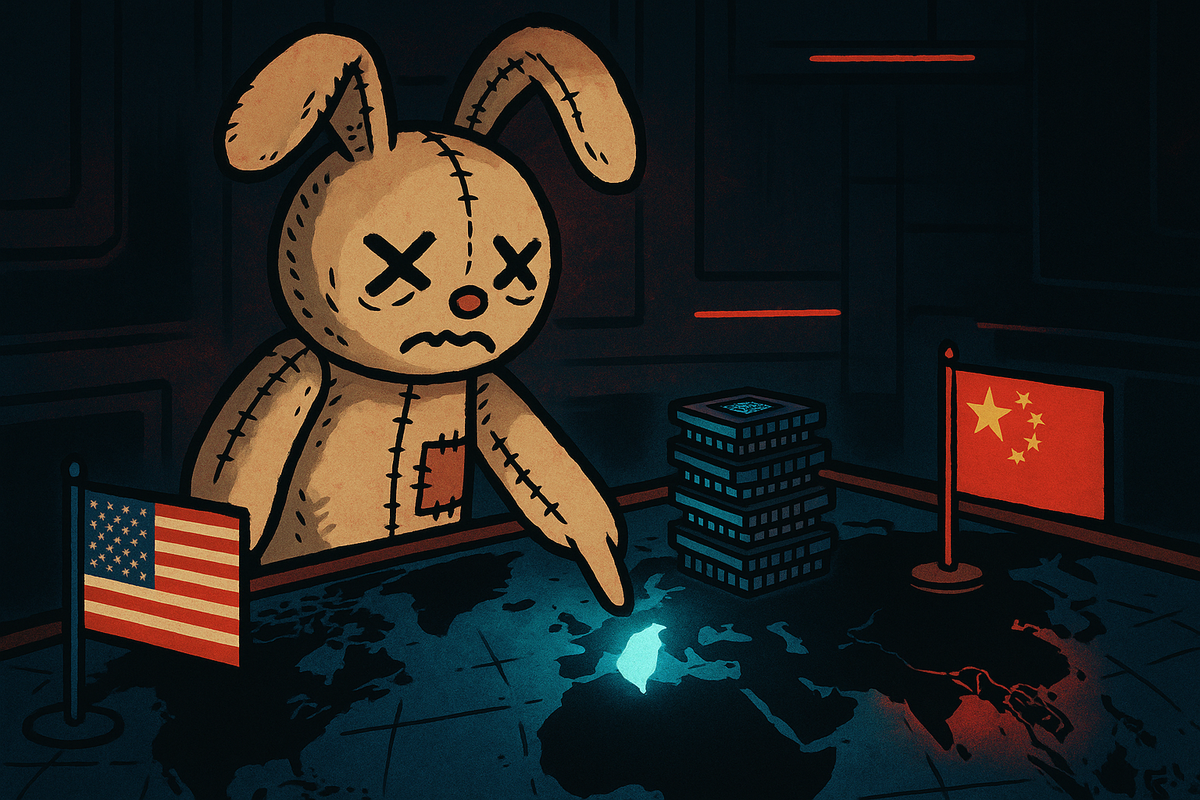
The US isn't trying to win the chip war — it's trying to make China fight it with one hand tied behind its back. The refinery wars are the AI war in slow motion.

Part 21 of 25 in the The Philosophy of Future Inevitability series.
The United States has launched an economic war against China.
Not trade war. Economic war. The goal is to cripple Chinese AI development permanently. To deny China the refineries.
This is the most significant geopolitical conflict of our time, and most people don't know it's happening.
The CHIPS Act Strategy
October 2022. The Biden administration enacted sweeping export controls on semiconductor technology to China.
Not just chips. Equipment. Software. Knowledge. Anything that helps China produce advanced semiconductors.
The goal, stated plainly by administration officials: keep China "generations behind" in AI capability.
This isn't tariffs. This isn't protectionism. This is strategic denial. Cutting off access to the refineries.
What Got Cut
The specifics matter:
Advanced chips. NVIDIA's H100 and similar can't be sold to China. These are the GPUs that train frontier models.
Manufacturing equipment. ASML, a Dutch company, makes the machines that make advanced chips. The US pressured the Netherlands to stop selling them to China.
Talent. US persons are prohibited from working for certain Chinese chip companies. American expertise, denied.
Knowledge. Technical specifications, design documents, anything that helps China develop independent capability.
This is a siege. Every input to the refinery, cut off.
The restrictions are extraordinarily detailed. Not just "no advanced chips"—specific technical thresholds. Chips with performance above certain compute densities. Equipment capable of producing features below certain nanometer scales. The regulations run hundreds of pages.
And they're extraterritorial. A Singaporean company using American technology can't sell to China. A Japanese firm with American components in their equipment can't export to Chinese facilities. The US leveraged its position in the semiconductor supply chain to enforce global compliance.
This is economic coercion at scale. The US told allies: enforce our blockade or lose access to our technology. Most complied. Japan, South Korea, Taiwan, Netherlands—all restricted sales to China.
China can still buy older chips. Can still access mature process nodes. But the cutting edge—the 5nm, 3nm processes that enable frontier AI—is denied. The equipment to manufacture them—denied. The expertise to develop them—denied.
The goal isn't to stop China's semiconductor industry entirely. The goal is to freeze it at a level that can't support frontier AI development. Keep them stuck on 2020-era capabilities while the West advances.
The Dutch Connection
ASML is arguably the most important company you've never heard of.
They make EUV lithography machines. These are the tools that print transistors on chips. Without EUV, you can't make cutting-edge semiconductors. Nobody else makes these machines.
ASML is Dutch. The US doesn't control them directly. But the US pressured the Netherlands, and the Netherlands complied.
One company. One country. Gatekeeping the entire advanced semiconductor supply chain.
This is the bottleneck. This is the refinery equipment.
China's Response
China is spending hundreds of billions on domestic semiconductor development.
They're throwing everything at it. Government subsidies. Talent recruitment. Reverse engineering. Industrial espionage. Every tool available.
Some predictions say they'll never catch up. The technology gap is too large. The cumulative expertise too deep. You can't just throw money at semiconductor manufacturing.
Other predictions say they'll find a way. Different approaches. Novel architectures. Enough resources that something works.
Nobody knows. The experiment is running.
The scale of China's investment is unprecedented. Estimates range from $150 billion to over $500 billion in semiconductor subsidies over the next decade. This makes the US CHIPS Act's $52 billion look modest.
China is pursuing multiple strategies simultaneously:
Brute force iteration. Building fabs with current-generation equipment. Trying to push yields higher. Accepting lower performance to achieve independence.
Alternative architectures. Exploring chiplet designs, specialized AI processors, different approaches that don't require cutting-edge lithography.
Supply chain independence. Developing every component domestically. Lithography equipment. Photoresists. Deposition tools. The entire stack.
Talent acquisition. Recruiting semiconductor experts globally. Offering massive compensation. Particularly targeting ethnic Chinese engineers in Taiwan, US, Europe.
Technology theft. Industrial espionage is documented. Trade secret theft. Recruitment of employees from TSMC and other leading firms.
The question isn't whether China is trying. The question is whether trying is enough. Semiconductor manufacturing is cumulative knowledge built over decades. Can you compress that timeline with enough resources? Or are there irreducible learning curves?
Different experts give different answers. The honest answer: we don't know. The scale of this attempted technological leap has no precedent.
The Huawei Precedent
Huawei was the test case.
In 2020, the US cut Huawei off from advanced semiconductors. Huawei was the world's largest telecom equipment maker and a leading smartphone brand.
Three years later, Huawei released a phone with a domestically produced advanced chip. Not as good as the latest from Apple or Samsung—but functional. Competitive.
The siege didn't work perfectly.
Does this mean China can fully catch up? Not necessarily. Phones are easier than AI training clusters. But it suggests the denial strategy has limits.
The Taiwan Question
Taiwan Semiconductor Manufacturing Company makes the majority of the world's advanced chips.
TSMC is in Taiwan. Taiwan is claimed by China. This is not a coincidence of geography.
If China controlled Taiwan, it would control TSMC. It would have the refineries.
This is why Taiwan is the most dangerous flashpoint on Earth. Not democracy. Not historical grievance. Chips.
The US knows this. China knows this. Everyone knows this.
The entire semiconductor supply chain runs through a small island that might become a war zone.
The numbers are stark: TSMC produces over 90% of the world's most advanced chips. Apple's processors. NVIDIA's GPUs. AMD's CPUs. Qualcomm's mobile chips. All made in Taiwan.
If China took Taiwan intact and gained control of TSMC's fabs, it would instantly solve its semiconductor problem. It would control the refineries everyone else depends on.
If China took Taiwan but destroyed TSMC's fabs in the process—through invasion damage, sabotage, or deliberate destruction—it would cripple global AI development. Including China's. Mutually assured economic destruction.
If the US intervened to prevent Chinese control, the war itself would likely damage or destroy the fabs. Silicon fabrication requires extraordinary precision. You can't run a fab through a war zone.
Every scenario is bad. The question is which kind of bad.
This is why TSMC is building fabs in Arizona and Japan. Diversification. But these won't match Taiwan's capacity for years. And the expertise—the thousands of engineers who know how to run these processes—is mostly in Taiwan.
The semiconductor industry is a geopolitical hostage. The most critical technology of our time depends on facilities in the most contested territory on Earth.
Xi Jinping has stated that reunification with Taiwan cannot be passed down to future generations. This isn't hypothetical. China views Taiwan as essential. The US has committed to Taiwan's defense. TSMC sits between them.
The chip wars could become actual war. Over refineries.
The Decoupling
The world is decoupling.
US and allies building semiconductor fabs domestically. CHIPS Act funding for Arizona, Ohio, Texas. Europe and Japan launching their own initiatives.
China building everything domestically it can. Accepting lesser capability now for independence later.
Two technological spheres emerging. Two AI ecosystems. Two internets, potentially.
This is the new Cold War, with silicon instead of nuclear material.
The economics are brutal. Building a cutting-edge fab costs $15-20 billion. TSMC's Arizona facility is over $40 billion for full build-out. These are the most expensive manufacturing facilities in human history.
And they become obsolete. Every generation requires new equipment. New processes. Continuous investment just to maintain position.
Pre-decoupling, this was manageable. Global supply chains. Specialized expertise in different countries. Economies of scale through global markets.
Post-decoupling, everyone duplicates everything. US builds fabs that replicate Taiwan's. Europe builds fabs that replicate both. China builds fabs trying to catch up to all of them. Japan and South Korea build for independence.
Massive redundancy. Massive cost. But deemed necessary for security.
The software layer compounds this. Chinese AI companies can't use American cloud services. Can't access American AI models. American companies face parallel restrictions in China.
WeChat uses AI that can't see Western internet. ChatGPT uses AI that can't access Chinese data. Two information spheres, each training on its own content, developing its own capabilities.
Some areas stay global. Others split entirely. The internet we knew—one global network—is fragmenting into regional blocks. The chip wars accelerate this.
The costs are staggering. The alternative—dependence on a potential adversary for critical technology—is deemed unacceptable. So the world eats the costs.
The Consequences
For companies: Supply chains are being restructured. China market access traded for US technology access. Nobody can have both.
For investors: Geopolitical risk is technology risk now. Semiconductor companies are strategic assets, not just investments.
For nations: AI capability is national security. Compute sovereignty matters. The refinery question becomes existential.
For AI development: The field might fork. Chinese AI developing differently from Western AI. Different training approaches, different applications, different values encoded.
The Escalation Risk
Economic warfare can become actual warfare.
The US is trying to cripple China's AI development. China views AI as essential to its future. This is existential for China.
Existential threats create desperate responses.
Taiwan becomes more dangerous, not less. The incentive to take it—and the refineries—increases as the alternative becomes permanent technological inferiority.
We're running an experiment in great power conflict. The outcome isn't guaranteed.
Consider the strategic calculation from Beijing:
Scenario A: Accept permanent technological inferiority. Let the US maintain AI dominance. Watch as AI increasingly determines economic and military capability. Fall behind irreversibly.
Scenario B: Attempt indigenous development. Spend hundreds of billions. Maybe catch up in a decade. Maybe never catch up. Uncertain outcome.
Scenario C: Take Taiwan. Gain TSMC. Risk war with the US. Risk destruction of the very facilities you're trying to capture. High risk, high reward.
None of these are good options. The question is which is least bad.
The economic siege makes Scenario C more attractive over time. If China's domestic efforts fail, if the technology gap widens, if AI becomes decisively important to national power—Taiwan becomes the only path to parity.
This is the danger of economic warfare. It creates do-or-die moments. The country facing permanent disadvantage has incentive to roll the dice.
The US bet is that China won't risk war. That domestic semiconductor development will fail. That China will accept technological subordination.
That's a hell of a bet. It might be right. But if it's wrong, the consequences are catastrophic.
We're not running a simulation. This is live experimentation in great power conflict. Real stakes. No reset button.
What This Means
The chip wars are the refinery wars.
Control of AI development is control of the future. The US is trying to maintain control. China is trying to break the siege.
Everyone else is picking sides, hedging bets, building alternatives.
This isn't a trade dispute. This is civilizational competition.
The new oil is AI capability. The refineries are being fought over.
Welcome to the twenty-first century.
For individuals and companies, this creates impossible positions:
Tech companies face the choice: US market or Chinese market. Increasingly, not both. NVIDIA wants to sell chips to China—massive market. US government says no. Choose.
Researchers face the choice: collaborate globally or maintain security clearance. Open science or strategic advantage. The fields most affected by AI—basically all of them—can't be both open and secure.
Investors face the choice: diversification or compliance. Chinese AI companies might offer returns. US regulations might forbid investment. Portfolio construction becomes geopolitical navigation.
Nations face the choice: align with US technology ecosystem or Chinese market access. Most countries want both. Increasingly can't have both.
The chip wars force fragmentation everywhere they touch. And they touch everything. AI is general purpose technology. Semiconductor restrictions ripple through the entire economy.
This is the defining geopolitical struggle of our era. Not terrorism. Not climate change. Not nuclear proliferation. The fight for control of AI refineries.
The old oil wars shaped the twentieth century. Invasions. Coups. Strategic alliances built around energy security. The chip wars will shape the twenty-first.
Same dynamics. Different substance. Control the refineries or fall behind.
The experiment is running. The consequences will define the world our children inherit. This is the future inevitability that matters most: the geopolitical order will be determined by who controls advanced semiconductor manufacturing.
Everything else is downstream.
Previous: AI Is the New Oil But the Power Isnt Where You Think Next: Dead Internet Theory Was Right (Sort Of)