Blackbeard vs Woodes Rogers: Entrepreneur vs Corporate Killer
Blackbeard built the most powerful personal brand in the Atlantic. Woodes Rogers showed up with institutional backing. The outcome was never really in doubt.

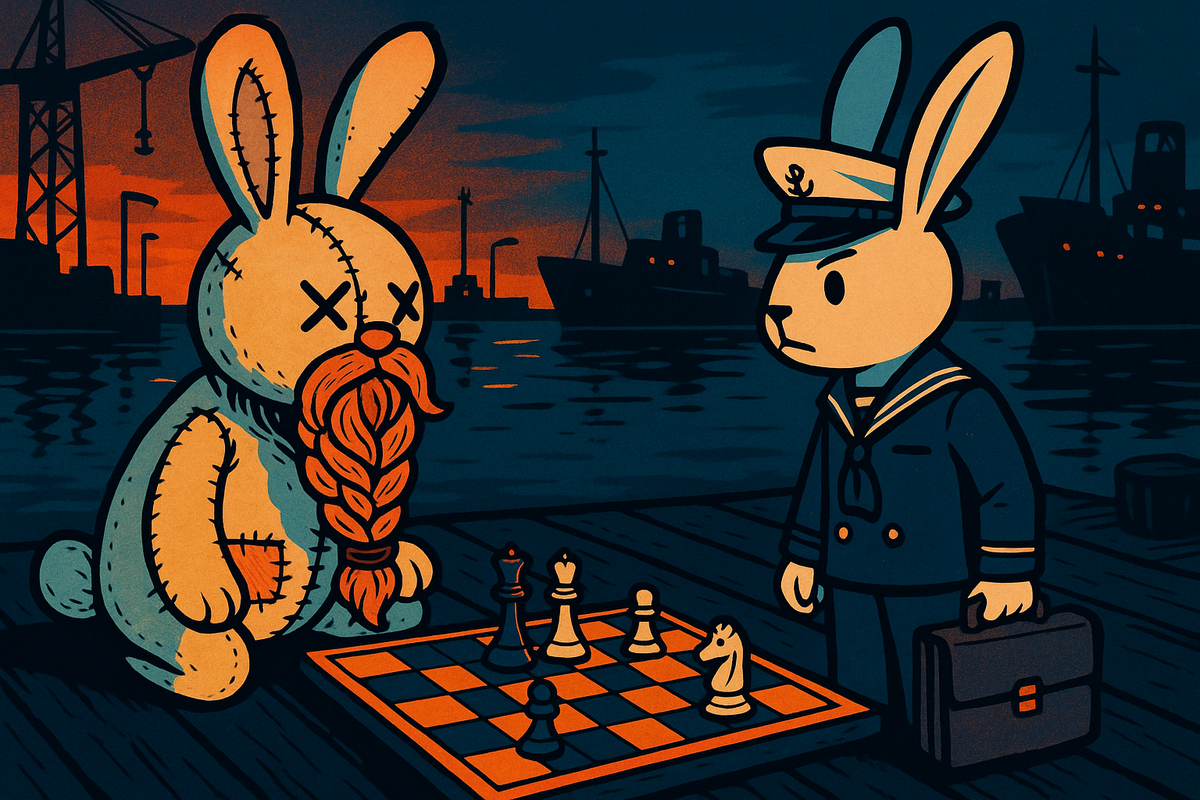
Part 9 of 13 in the Black Sails: A Leadership Masterclass series.
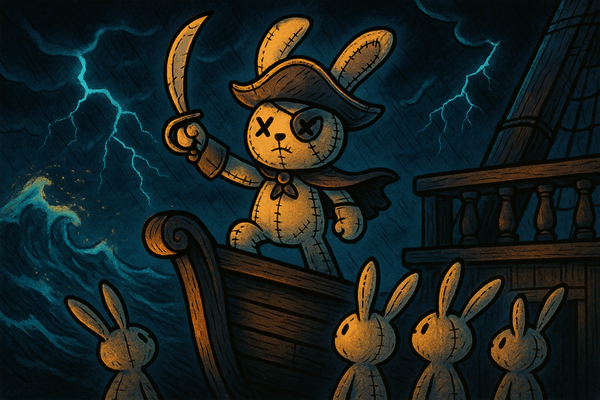
Edward Teach built a brand so powerful that ships surrendered at the sight of his flag.
No venture backing. No institutional support. No MBA. He created Blackbeard from nothing—a performance art piece made of fire, legend, and the understanding that fear is cheaper than violence.
Then Woodes Rogers arrives with the British Crown behind him.
Unlimited runway. Institutional legitimacy. The authority of empire. Rogers doesn't need to build a brand. He has a budget. He doesn't need reputation. He has a commission. He doesn't need to be feared. He has the navy.
This is the moment every founder dreads: when the Fortune 500 decides your market is interesting.
Blackbeard is theater.
The wild beard. The slow-burning fuses in his hair during battle. The flag that promised death. The stories that grew with each retelling until Teach himself couldn't distinguish man from myth.
Most of it was performance. Teach wasn't the deadliest pirate—wasn't even close. But he understood something crucial: if your reputation is fearsome enough, you don't have to fight. Ships surrender. Towns pay tribute. The brand does the work the violence would have done.
This is founder energy distilled. Make the market believe you're bigger than you are. Scale reputation faster than capability. Fake it until reality catches up—or until it doesn't matter because everyone already believes.
Teach was a growth hacker two hundred years before the term existed.
Rogers doesn't need any of this.
He arrives in Nassau with ships, soldiers, and something more powerful than either: legitimacy. He has a royal pardon to offer—amnesty for pirates who surrender—and a noose for those who don't.
Rogers doesn't have to convince anyone of anything. He doesn't have to build relationships, earn trust, or negotiate from weakness. He represents the Crown. The Crown makes the rules about rules.
This is corporate power entering the startup's market. They have budget, lawyers, distribution, lobbyists. They don't need to innovate because they can acquire. They don't need your permission because they have shareholders. They don't need to be clever because they can be relentless.
The startup that felt unstoppable last quarter now feels like a rounding error.
The asymmetry is brutal.
Teach has to maintain his reputation. Every challenge threatens the fiction. If someone calls his bluff—if someone fights back and wins—the brand collapses instantly. Reputation is a magic trick; the moment anyone sees the wires, it's over.
Rogers doesn't have this problem. His authority comes from the institution, not his performance. He can lose battles and remain legitimate. He can make mistakes and keep command. The institution absorbs failures that would destroy an individual.
Teach has to win every time. Rogers just has to not die.
This is the startup-incumbent asymmetry laid bare. The startup has to perform constantly—every quarter matters, every round has to close, every story has to land. The incumbent just has to outlast. They can absorb losses while the startup exhausts itself.
Teach built his position through continuous performance. Every encounter reinforced or weakened the brand. No safety net. No institutional backing. Just the accumulated weight of stories that could evaporate if reality contradicted them too strongly.
Rogers arrives with centuries of institutional legitimacy behind him. The Crown has survived countless challenges. Governors have failed before; the institution persists. Rogers can fail personally without the system failing. Teach's failure is system failure—because Teach is the system.
This is why founders burn out and corporate operators don't. The founder carries the entire company's credibility. The operator is replaceable. Burden versus insulation. The operator has less upside. But also less existential risk.
There's a window when Teach has the advantage.
Early on, the empire isn't paying attention. Pirates are a nuisance, not a priority. In this window, Teach builds. Captures ships. Accumulates resources. Creates the Blackbeard myth.
This is the disruption window every founder exploits. When the giants are looking elsewhere. When the market seems too small to matter. When you can build the thing before they realize it threatens them.
Move fast while no one's watching. Get big enough to matter before anyone notices you matter.
Then they notice.
The empire wakes up.
Trade is disrupted. Colonial governors complain. The costs of ignoring the problem exceed the costs of addressing it.
The Crown sends Rogers.
This is the moment. The corporate response. Amazon entering your market. Google launching a competitive product. Microsoft acquiring your competitor and integrating the feature for free.
Everything that was founder advantage becomes founder weakness. Speed becomes recklessness. Agility becomes lack of infrastructure. The reputation that scared merchants doesn't scare the navy. The audacity that won prizes becomes suicide against overwhelming force.
The game changed. The old playbook doesn't work anymore.
What can Teach do when Rogers arrives?
Fight directly. Suicide. The British navy has more ships, more guns, more men. Direct confrontation ends one way.
Run. Possible. Abandon Nassau, find new waters. But running concedes the territory. And there's always another Rogers coming. You can't run forever.
Go legitimate. Take the pardon. Become a British subject again. But that means giving up everything that made you Blackbeard.
Find allies. Unite the pirates. Create a coalition that can resist. But pirates don't unite well—too many egos, too many competing interests. The coordination problem that corporate doesn't have.
None of these options are good. That's the point. When the empire finally focuses on you, your options narrow to variations of bad.
The show humanizes Rogers more than you'd expect.
He's not a villain—he's a competent administrator trying to solve a problem. He has his own pressures: investors back in London, a commission to fulfill, a career on the line.
Rogers is a middle manager with power. He's not the Crown; he's someone the Crown sent. If he fails, he's ruined. If he succeeds, someone else gets promoted.
This creates dynamics the pirates can't see. Rogers is playing a game they don't understand—institutional survival, bureaucratic politics, managing up while managing down.
The entrepreneur thinks they're fighting a person. They're fighting a system. The person is replaceable. The system persists. You kill Rogers and they send another Rogers. You can't kill the system by killing its representatives.
Rogers' most powerful weapon isn't ships. It's legitimacy.
He can offer pardons. A path back to normal life. The thing many pirates actually want—to stop running, to stop fighting, to be citizens again.
This splits the pirates more effectively than any battle could. Some want to fight to the death. Others just want out. Rogers drives a wedge into this difference.
The corporate incumbent does this too. Acqui-hires. Partnership offers. Employment for founders who'll abandon their companies. The system offers absorption. Some take it. More than you'd expect take it.
Teach can't counter this. Teach can only offer continued piracy—continued running, continued fighting, continued marginality. For pirates who are tired, Rogers' offer wins.
Teach loses because he's playing the wrong game.
He's optimized for a world where the empire isn't watching. For building in the margins. For reputation and audacity. That game ended. The new game is about resources and endurance.
Teach's strengths don't transfer. His brand doesn't scare soldiers following orders. His audacity is just recklessness against overwhelming force. The skills that won phase one are liabilities in phase two.
This is the founder who succeeded in the early phase failing in the mature phase. Different skills. Different games. The scrappy disruptor rarely becomes the institutional operator. They get replaced by people like Rogers—competent, boring, backed by resources.
The tragedy is that Teach sees it happening. He knows the disruption window is closing. He knows Rogers represents a phase transition. But knowing doesn't give him different skills. He's Blackbeard. He can't stop being Blackbeard without becoming nobody.
This is the founder's identity trap. Your strength is your brand. Your brand is your identity. When the market changes and your brand becomes obsolete, you have to either evolve—become someone else—or die as yourself.
Most founders can't make that transition. They are what they built. The scrappiness, the audacity, the personal brand—these aren't strategies they chose. They're who they are. When the environment stops rewarding those traits, they don't adapt. They double down. They become more themselves, even as being themselves becomes fatal.
Teach goes down fighting. Probably the only way he could go down. Rogers wins. Probably the only way this could have ended. The show doesn't moralize. It just shows the mechanics. Different games reward different players. When the game changes, yesterday's winners become tomorrow's casualties.
What would it take for Teach to win?
Change the game. Don't fight the navy at sea. Fight asymmetrically—guerrilla tactics, make occupation costly. But this requires patience pirates don't have.
Find your own institution. Ally with Spain. Ally with France. Find a counter-empire that benefits from British trouble. But this requires geopolitics skills Teach doesn't have.
Build actual infrastructure. Stop being pirates. Become a state. Develop legitimacy of your own. But this means becoming what they fled.
Outlast Rogers personally. Wait for the Crown to lose interest. But this requires surviving long enough—which requires not fighting battles you can't win.
None of these are what Teach is good at. That's the tragedy. His skills were perfect for phase one. Phase two requires a different person.
Blackbeard vs. Woodes Rogers is the startup vs. incumbent story told with cannons.
The entrepreneur builds something remarkable from nothing. Reputation, audacity, speed. They win while the giants sleep.
Then the giants wake up.
When institutional power focuses on you, everything changes. Your advantages become weaknesses. Your agility becomes insignificance. Your brand becomes irrelevance.
Some founders make the transition. They learn institutional games. They become what they fought.
Most don't. They're Teach, not Rogers. Built for building, not defending. When the corporate killer enters the market, they don't know how to respond.
The show is unsentimental about this. Teach isn't wrong for being Teach. Rogers isn't evil for being Rogers. They're optimized for different games. When those games collide, one optimization wins and the other loses. No morality required. Just mechanics.
The founders who survive are the ones who see the phase change coming and adapt before it arrives. Who build institutional capabilities while they're still playing the entrepreneur game. Who become Rogers before Rogers shows up.
Most can't. Most won't. They're builders, not consolidators. Disruptors, not operators. The skills are too different. The psychology is too different. The things that make you good at one make you bad at the other.
Know the game you're playing. Know that phase one doesn't last. Know that somewhere, a Woodes Rogers is getting his commission.
The disruption window is real. The value created is real. But so is the expiration date.
Previous: Max: From the Bottom to Platform Control Next: The Pirate Republic: A Startup That Can't Scale