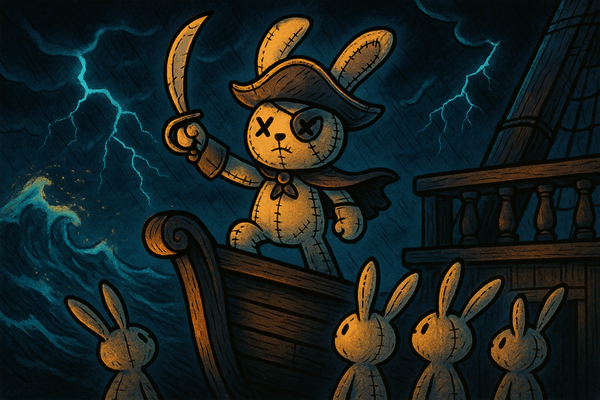
Elite Overproduction on the High Seas: Turchin in Nassau
Too many alphas, not enough ships. Turchin's elite overproduction theory didn't need a textbook — it needed a pirate port.

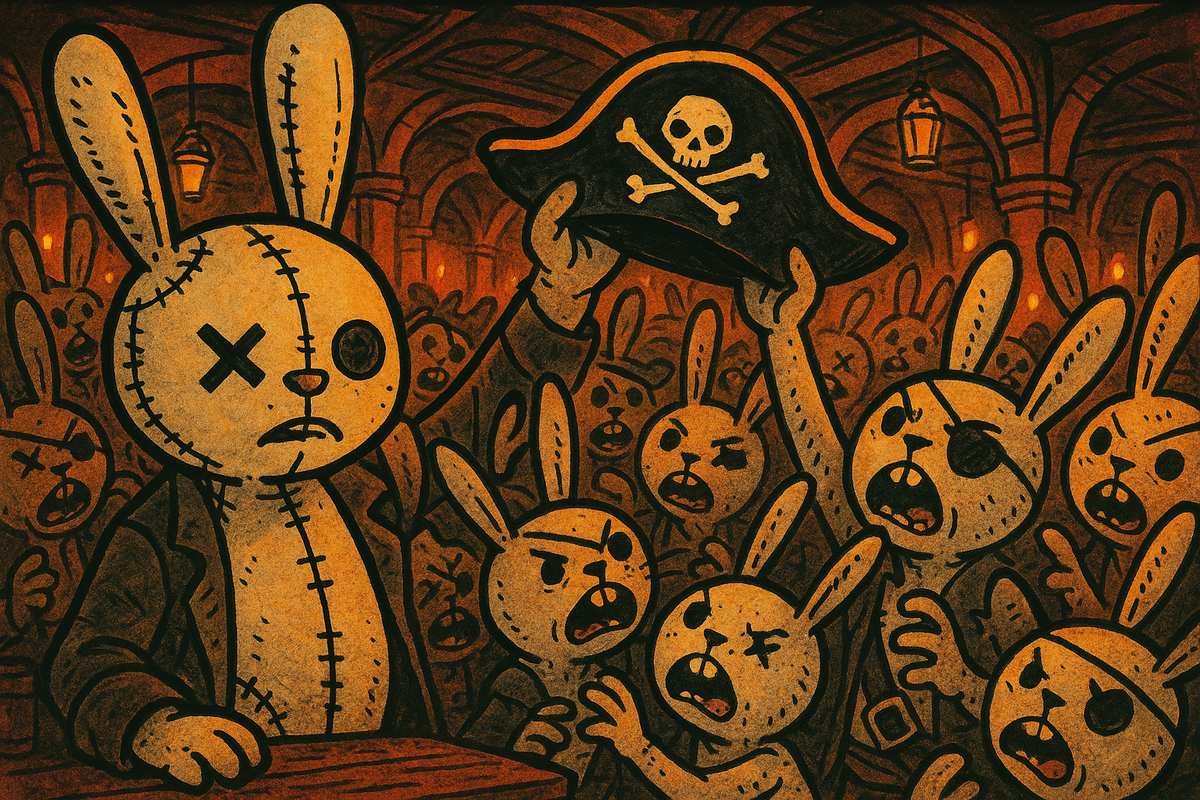
Part 11 of 13 in the Black Sails: A Leadership Masterclass series.
Peter Turchin has a theory about why societies tear themselves apart.
It's not economics alone. Not politics alone. It's the relationship between elite production and elite positions. When a society produces more elites than positions can absorb, the overflow becomes destabilizing energy.
Too many lawyers competing for too few partnerships. Too many MBAs competing for too few executive slots. Too many princes competing for one throne.
The surplus elites don't disappear. They become revolutionaries. Agitators. Founders of new movements that promise to restructure the distribution of status.
Nassau is Turchin in miniature. With cannons.
Who counts as elite in Nassau?
Captains. Men who command ships, lead crews, make decisions. The alpha position in pirate society.
In the legitimate navy, captain positions are scarce and controlled. You rise through ranks. Wait your turn. Serve under others for years. The system limits how many captains can exist.
Piracy breaks this limit.
Any man with enough ambition and a crew that will follow him can declare himself captain. No gatekeeping. No certification. No hierarchy controlling access. If you can take a ship and hold it, you're a captain.
This is meritocracy in the purest sense. Also elite overproduction in its purest form. The same qualities that create good captains—ambition, courage, intelligence, charisma—exist in many men. In the legitimate system, most wait their turn. In piracy, they all try at once.
Watch Black Sails count the captains:
Flint. Vane. Hornigold. Rackham. Teach. Bonny (effectively). Low. And more in the background—too many to track.
Each sees himself as the protagonist. Each expects deference. Each operates from the assumption that his judgment matters most, his ambitions come first, his vision deserves primacy.
They can't all be right. There aren't enough ships, crews, prizes, or respect to satisfy everyone. The math doesn't work.
So they compete. And competition among elites isn't polite marketplace competition. It's violent. It's deadly. It's the kind of competition that destroys societies faster than external enemies ever could.
When there are more elites than positions, violence becomes the sorting mechanism.
In legitimate society, sorting happens through institutions. Exams. Credentials. Seniority. Connections. You compete through approved channels. The violence is abstracted—career death, not actual death.
Nassau has no institutions. No approved channels. Nothing to mediate competition except force.
So captains kill each other. Crews destroy other crews. The talented eliminate each other because that's the only way to resolve the competition.
Vane kills to maintain position. Flint kills to advance his mission. Silver maneuvers to avoid being killed. Everyone's aware the competition might turn lethal at any moment.
This isn't barbarism. It's logic. When no other sorting mechanism exists, violence fills the gap.
Every boom creates elite overproduction.
The dot-com era produced too many founders. The crypto era produced too many projects. The AI era is producing too many startups. Each boom creates more people who see themselves as leaders than there are successful leadership positions available.
Most will fail. The market is the sorting mechanism—brutal, impersonal, efficient. The failures don't usually die literally, but their companies die. Their visions die. Their identities as founders die.
This is Turchin applied to economics. Boom periods aren't just about money. They're about producing elites—people who believe they deserve to lead—faster than the system can absorb them.
The overflow creates volatility. The failed founders become bitter. Become critics, agitators, or they try again with more desperation. The energy has to go somewhere.
Nassau is experiencing this at compressed timescale. Piracy creates sudden wealth opportunities. Men who would have died as sailors in the legitimate navy become captains in months. The barrier to entry collapses. Anyone capable and ambitious can try.
The result: dozens of captains competing for the same prizes. Same markets. Same crews. Same resources. The expansion of opportunity doesn't create proportional expansion of success. It creates competition. And competition among aspiring elites is zero-sum and violent.
Turchin's data shows this pattern across societies and centuries. Expand access to elite status faster than you expand elite positions, and you get instability. The disappointed elites don't accept their failure quietly. They have the skills, connections, and credibility to cause problems. They expected to rule. When they don't, they try to break the system that excluded them.
Nassau shows this in microcosm. Failed captains don't become sailors again. They plot, scheme, betray. They'd rather burn the republic than accept subordinate positions. The psychology of elite aspiration doesn't gracefully accept downward mobility.
In theory, elite overproduction should self-correct.
If being a captain is dangerous, fewer people should want it. If competition is lethal, potential elites should choose safer paths. Supply should adjust to match positions.
It doesn't work this way. Several reasons:
Selection for risk tolerance. The people who become pirates are already risk-tolerant. They've self-selected for ambition that outweighs caution. Telling them "it's dangerous" doesn't deter—it attracts.
Sunk cost. Once you've gone pirate, you can't easily go back. The legitimate world won't have you. You're committed to the path even if the path is crowded.
Information problems. From outside, Nassau looks like opportunity. The failures are less visible than the successes. New arrivals overestimate their chances.
Status drives. Captaincy isn't just practical—it's identity. Being a captain means something. Men pursue it for the meaning, not just the material rewards.
So the overproduction continues. More captains than ships. More ambition than opportunity. More competition than anyone can survive.
The characters try various solutions:
Coalition building. Flint tries to unite captains against the common enemy. If external threat is large enough, internal competition should pause. The captains become generals in an army rather than rivals in a market.
It works partially. When Rogers arrives, the pirates do cooperate. But the cooperation is fragile because the underlying competition hasn't resolved. The moment external pressure decreases, internal conflict resumes.
Hierarchy creation. Someone becomes king of the pirates. A recognized leader who other captains defer to. This would create legitimate sorting—the king decides who leads what.
It never quite happens. Teach has the stature but not the interest. Flint has the vision but not the legitimacy. No one can claim the position convincingly.
Exit. Some captains leave. Take the pardon. Find other waters. This reduces competition by reducing participants.
But exit is limited. Most can't leave. Most won't. The competition continues with those who remain.
None of these solutions address the core problem: too many people with captain-level ambition and capability, too few captain-level positions. The mathematics doesn't work.
In traditional navies, the bottleneck is institutional. You can't become a captain without promotion through ranks. This limits supply. Piracy removes that bottleneck. Any capable person with a crew can captain. Supply explodes. Demand remains constant. Competition intensifies until it becomes destructive.
The modern equivalent: credential inflation. When everyone has a degree, degrees stop being selective. When everyone can launch a startup, startups stop being special. When everyone can become a thought leader, thought leadership becomes noise.
The expansion of opportunity paradoxically makes success harder. More competition for the same finite rewards. The barrier to entry drops. The barrier to success rises. And the people stuck in the middle—qualified but not successful—become destabilizing energy.
This is Nassau's trap. They've democratized access to leadership without expanding leadership positions. The result isn't equality. It's chaos.
Turchin's model predicts what happens to societies with sustained elite overproduction: instability, violence, eventual collapse or transformation.
Nassau follows the prediction exactly.
The instability is constant. No configuration lasts. Alliances form and break. Leaders rise and fall. The system never reaches equilibrium.
The violence escalates. What starts as competition becomes war. What starts as rivalry becomes destruction. The casualties mount.
The transformation comes from outside. Rogers represents the empire's solution: absorb or destroy the surplus elites. Pardon the ones who'll submit. Kill the ones who won't. Reduce elite competition by reducing elites.
This is how elite overproduction typically resolves. Not through internal mechanisms, but through external force that restructures the system.
Turchin's work isn't about pirates. It's about contemporary societies.
He argues the United States—and other developed nations—are in an elite overproduction phase right now. Too many people with elite credentials. Too few positions that match their expectations. The overflow becoming political instability.
The evidence he cites: credential inflation, political polarization, declining trust in institutions, rise of populist movements. These are symptoms of a system that produces more leaders than it can employ.
Black Sails offers a miniature version. The pirates are credential-holders—capable, ambitious, leadership-ready—in a system that can't absorb them. Their competition tears the republic apart.
If Turchin is right, we're watching a larger version of the same dynamic. Different scale, different specifics. Same underlying mathematics.
Elite overproduction is a structural problem, not a moral one.
The pirate captains aren't bad people. They're not unusually violent or ambitious. They're people with legitimate claims to leadership in a system that can't satisfy those claims.
This is the tragedy. Individual virtue doesn't solve structural problems. You can be a good captain—capable, fair, brave—and still be part of a dynamic that destroys everyone.
The solution has to be structural. Either create more positions (expand the pie), regulate elite production (control access to captain status), or accept external restructuring (let the empire impose order).
Nassau does none of these effectively. So Nassau falls.
Not because the pirates were worse than other men. Because the mathematics of elite competition have only so many solutions, and the pirates couldn't find one.
Here's the contemporary application: every time someone says "just work harder" or "be more ambitious" or "anyone can make it," they're ignoring the mathematics. Individual effort matters. But individual effort operates within structural constraints.
If there are 100 qualified people and 10 positions, 90 will fail. Telling them to work harder doesn't change the math. It just intensifies competition, increases burnout, and creates 90 disappointed people who thought they did everything right.
Turchin's warning: societies that produce more elites than elite positions risk instability. The disappointed ambitious are more dangerous than the never-ambitious. They have skills, networks, legitimacy. When they don't get what they expected, they have the tools to cause problems.
Nassau is that warning in fast-forward. Elite overproduction → competition → violence → collapse. The sequence is predictable. The captains could see it happening. No individual captain could stop it, because stopping it would require collective action, and collective action requires exactly the sort of hierarchy they refused to create.
Turchin on the high seas. Structural dynamics that no individual can escape—even when they can see them clearly.
Previous: The Pirate Republic: A Startup That Can't Scale Next: The Urca Gold: What Happens When the Mission Succeeds