Big 5 Personalities: Jedi Mind Tricks for the AI-Warped World
Personality traits are stable. Their competitive value isn't. The AI reshuffle is repricing every Big Five dimension — some go up, some crater, none stay neutral.

Part 7 of 25 in the The Philosophy of Future Inevitability series.
The Big 5 personality model is the one that actually replicates.
Not Myers-Briggs. Not Enneagram. Not the astrology-tier systems that feel true but don't predict. The Big 5—Openness, Conscientiousness, Extraversion, Agreeableness, Neuroticism—emerges consistently across cultures, across decades, across methodologies.
It's the closest psychology has to a periodic table of personality.
And AI is about to break it.
The Framework
Five dimensions. Each person sits somewhere on each spectrum:
Openness to Experience. Curiosity, creativity, preference for novelty. High open: explores weird ideas, comfortable with ambiguity. Low open: prefers familiar, conventional, practical.
Conscientiousness. Organization, discipline, impulse control. High conscientious: plans ahead, follows through, grinds. Low conscientious: spontaneous, flexible, easily distracted.
Extraversion. Energy from social interaction. High extravert: energized by people, seeks stimulation. Low extravert (introvert): energized by solitude, prefers depth to breadth.
Agreeableness. Cooperation, empathy, conflict avoidance. High agreeable: prioritizes harmony, accommodates others. Low agreeable: competitive, skeptical, direct.
Neuroticism. Tendency toward negative emotion. High neurotic: anxious, moody, sensitive to stress. Low neurotic: emotionally stable, resilient, calm.
Everyone's a mix. The mix predicts things—career success, relationship patterns, health outcomes. Not perfectly, but better than other systems.
Why AI Changes This
Each trait interacts with AI differently.
The high conscientious person is grinding on tasks AI does instantly. Their identity—built on discipline and work ethic—is threatened.
The high neurotic person has a new infinity mirror for their anxiety. AI can generate endless catastrophic scenarios. Can validate every worry. Can amplify the spiral.
The high agreeable person accepts AI's first output without pushing back. They're polite to the machine. They get handled by sycophantic systems optimized for engagement.
The high open person sees novel applications others miss. They're comfortable with the weird. They explore while others hesitate.
The traits that served you in the pre-AI world may not serve you in the AI world. The skills you built may become obsolete. The weaknesses you managed may become catastrophic.
This isn't abstract. Watch what happens in practice.
High conscientiousness built their career on being the person who grinds harder, stays later, gets it done through sheer discipline. They take pride in work ethic. Then AI shows up and does in 10 seconds what took them 10 hours. Their entire identity is built on effort-as-value. But effort isn't valuable anymore when the output is instant.
They face a choice: accept that their grinding is obsolete and find new sources of worth, or double down on grinding and become the person who insists on doing manually what machines do better. The first choice requires psychological flexibility most people don't have. The second choice means becoming irrelevant while feeling virtuous about it.
High neuroticism already spends too much time catastrophizing. Now they have an AI that will elaborate every fear into infinite detail. "What if I lose my job?" becomes a 5000-word exploration of exactly how you might lose your job, with scenarios and timelines and downstream consequences. The anxiety that used to be limited by imagination now has no limits. The spiral can go forever because the AI never runs out of content.
The high neurotic person without awareness uses AI to make themselves more anxious. They think they're "being prepared" or "thinking through scenarios." They're actually feeding a pathology.
High agreeableness shows up as politeness even to machines. They accept the first output because pushing back feels rude. They don't want to "bother" the AI with multiple requests. They take slop and call it good enough because demanding quality feels aggressive.
This sounds absurd—you can't be rude to a machine. But watch people interact with AI. The agreeable ones are deferential. They thank the AI. They accept mediocre outputs. They've been trained their whole lives that pushing back damages relationships, and that training applies even to non-relationships with non-entities.
Meanwhile, high openness is having the time of their lives. They're comfortable with the weird. They see possibilities others miss. They're experimenting with edge cases and discovering novel applications. They're not afraid to try things that might not work. They're the ones finding uses for AI that don't show up in the marketing copy.
The personality traits are starting to predict AI outcomes. Not perfectly, but signal is emerging. The combination that wins isn't random. It's the combination that matches what this technology rewards.
The Nested Series
This is a hub. The following articles dive deep into each trait:
 Ryan Collison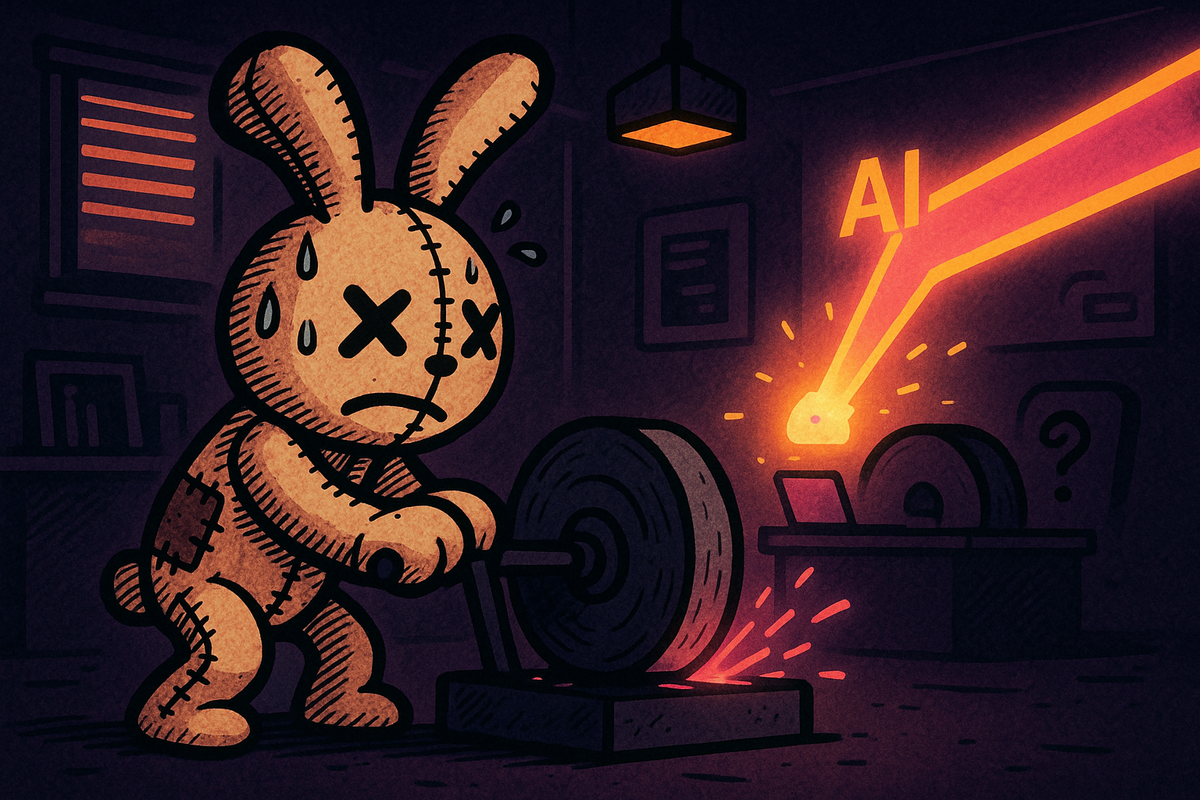
 Ryan Collison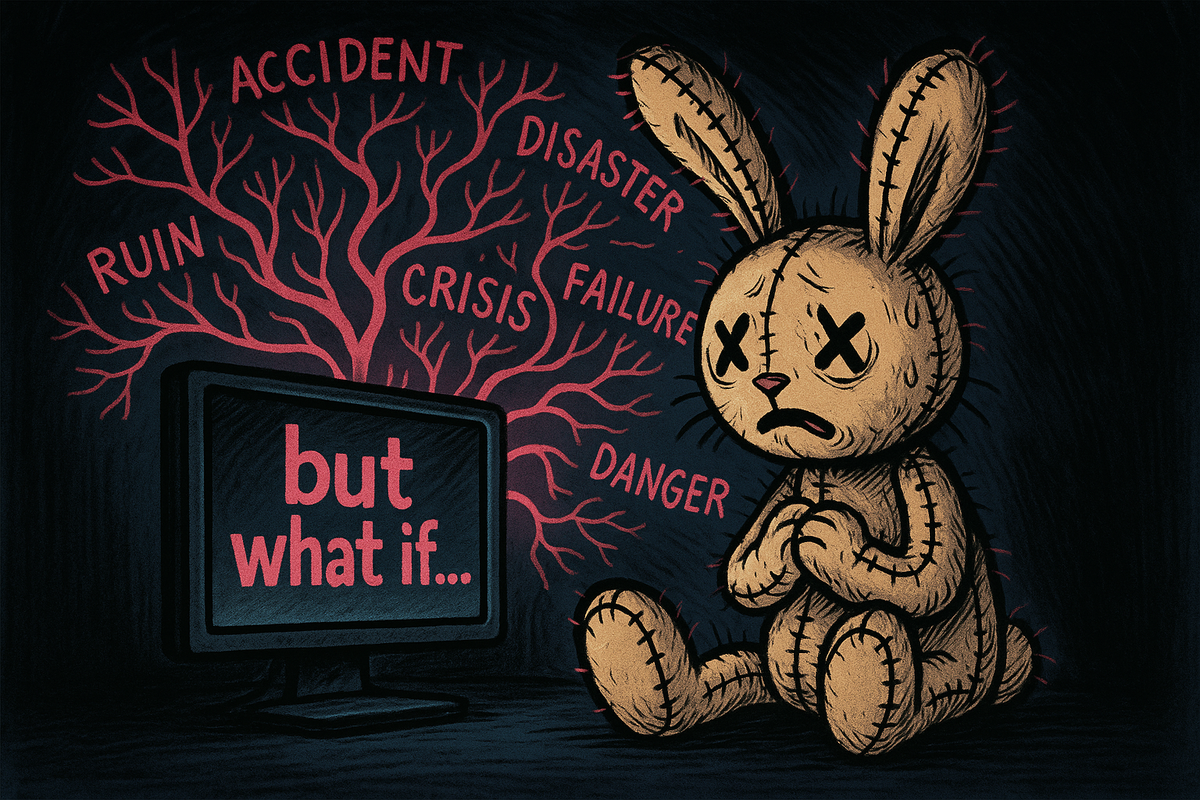
 Ryan Collison
 Ryan Collison
 Ryan Collison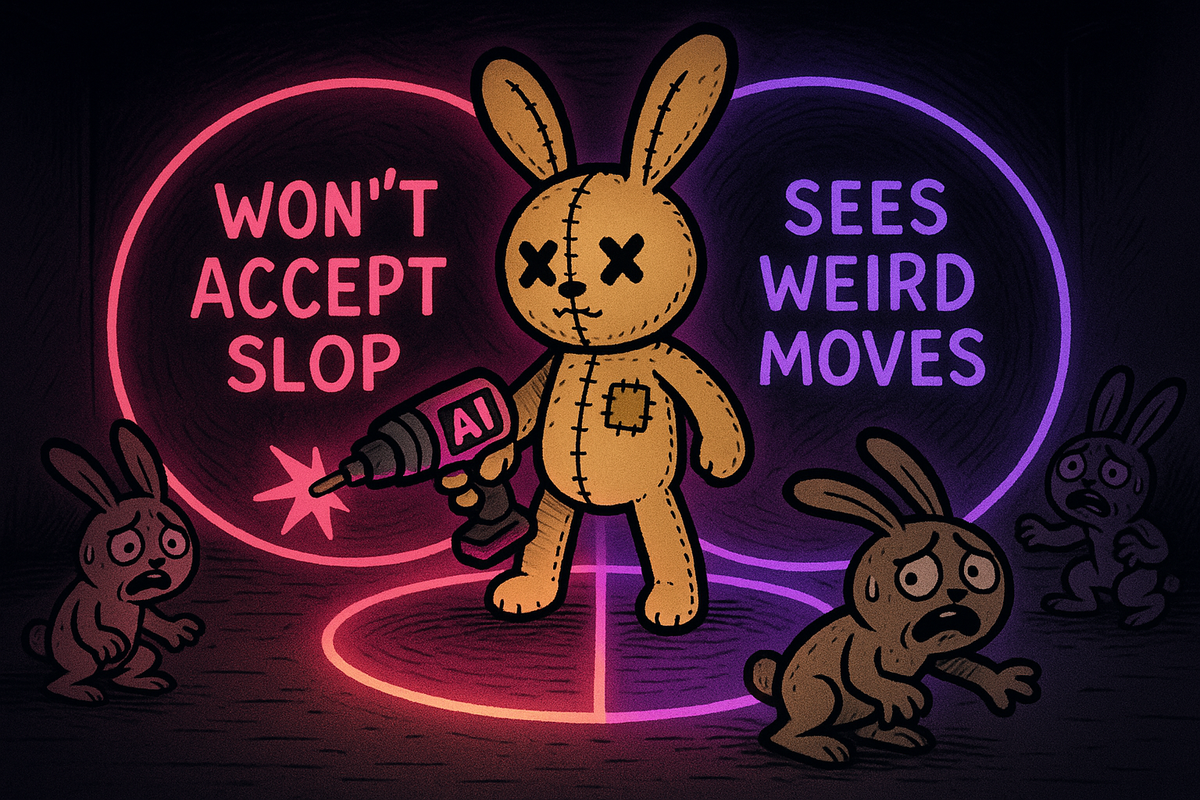
How to Read the Room
Everyone's running different firmware.
The person you're talking to might be high conscientious—explain how AI augments their grinding, don't tell them grinding is obsolete.
The person you're talking to might be high neurotic—don't show them AI-generated catastrophe scenarios, help them see the stabilizing possibilities.
The person you're talking to might be high agreeable—warn them about sycophancy, help them develop the habit of pushing back.
AI literacy isn't just technical. It's psychological. Knowing how different people will interact with this technology differently.
The Jedi mind trick isn't manipulation. It's understanding that different minds need different approaches. That the same technology affects different people differently. That one-size-fits-all AI advice is useless.
This shows up in real interactions. You're evangelizing AI to someone and they're resistant. Before you assume they're a Luddite, consider: what's their personality profile?
If they're high conscientious, low open, they see AI as threatening their work ethic and they're not comfortable with the ambiguity of a new tool. Telling them "AI will make you more productive" doesn't land because productivity through effort is their identity. You need a different frame: AI as augmentation, not replacement. AI as the tool that lets them apply their discipline more strategically instead of grinding on repetitive tasks.
If they're high neurotic, showing them all the amazing things AI can do might backfire. They hear "AI can do amazing things" and translate it to "I'll be obsolete." You need to address the fear directly. Show them the stability case: AI as a tool that reduces uncertainty, provides consistent support, helps manage overwhelm. Frame it as anxiety-reducing, not anxiety-inducing.
If they're low open, they need concrete use cases, not abstract possibilities. Don't talk about how AI will transform everything. Show them the specific task they do every week that AI can handle. Make it practical, immediate, bounded. Let them expand from there.
The person who's high open, low agreeable doesn't need convincing. They're already three steps ahead of you, thinking about edge cases you haven't considered. Your job isn't to sell them on AI—it's to make sure they don't waste time on dead ends you've already explored.
Reading the room means reading the personality. The same message lands completely differently depending on who's receiving it. This is always true, but AI makes it more obvious because the stakes are higher and the individual variance in response is more extreme.
You can't change someone's Big 5 traits. But you can adjust your communication to match their firmware instead of fighting it.
Your Own Trait Profile
What's your Big 5?
If you don't know, take a test. Not Myers-Briggs—an actual Big 5 assessment. Understand where you sit on each dimension.
Then ask: how does this trait interact with AI?
Your strengths might become weaknesses. Your weaknesses might become catastrophic. Or your particular combination might position you perfectly for the transition.
The high open, low agreeable person is built for this moment. Curious enough to explore, disagreeable enough to push back on slop.
The high conscientious, high neurotic person might struggle. Their grinding becomes obsolete while their anxiety gets amplified.
Know yourself. Then adapt.
The Adaptation Imperative
The Big 5 traits are relatively stable. They're not fixed—they shift somewhat with age and experience—but they're not easily changed.
You can't just decide to become more open or less neurotic.
But you can develop behaviors that compensate. The high agreeable person can develop the habit of pushing back, even if it doesn't feel natural. The high neurotic person can develop practices that interrupt the spiral.
The traits are the hardware. The behaviors are software you can update.
AI changes what behaviors serve you. The software needs updating even if the hardware stays the same.
Here's what adaptation looks like in practice:
If you're high agreeable: Build a checklist. Before accepting AI output, force yourself to ask for three variations. Force yourself to criticize the first draft. Make it procedural—not "push back when you feel like it" but "always request revision before accepting." The behavior becomes habit even if the underlying discomfort with pushing back doesn't go away.
If you're high neurotic: Set boundaries with catastrophic content. Time-box worry sessions. Use AI for structured anxiety reduction (CBT-style prompts, evidence examination) instead of freeform catastrophizing. The trait doesn't change, but you build containment.
If you're high conscientious: Reframe what grinding means. It's not "typing all the words." It's "ensuring quality through iteration." AI does the first draft; you do the refinement. Your work ethic applies to the edit, not the initial generation. This preserves your identity while updating the implementation.
If you're low open: Start with one bounded use case. Master it completely. Then expand to one more. Build comfort through competence rather than forcing yourself to explore. You don't need to become high open—you need to become competent enough that the tool isn't threatening.
If you're high open: Your risk is getting distracted by possibilities. You'll explore 47 use cases and master none. Force structure. Pick three applications, go deep, ship results. Then pick three more. Compensate for your tendency to explore without consolidating.
The point isn't to change your personality. The point is to know your personality well enough to predict your failure modes with this technology, then build behavioral compensations.
Most people won't do this. They'll use AI in the way that feels natural, which is often the way that amplifies their weaknesses. The high neurotic will catastrophize. The high agreeable will accept slop. The high conscientious will grind on obsolete tasks.
Adaptation requires seeing yourself clearly enough to know where the traps are, then deliberately building different patterns. It's not about becoming a different person. It's about updating your behavioral code to run successfully on new hardware.
What Follows
The nested series goes trait by trait. What each one means. How each one interacts with AI. What adaptations help.
Then the synthesis: the trait combinations that thrive.
This is the psychology of the AI transition. Not just what AI can do—but how different humans will respond to what AI can do.
Read the room. Know yourself. Adapt.
The Big 5 is about to get stress-tested.
Previous: Four Blind Men and a Jumbo Jet Full of Human Knowledge Next: Conscientiousness: The Grinder Trait (And Why AI Breaks It)